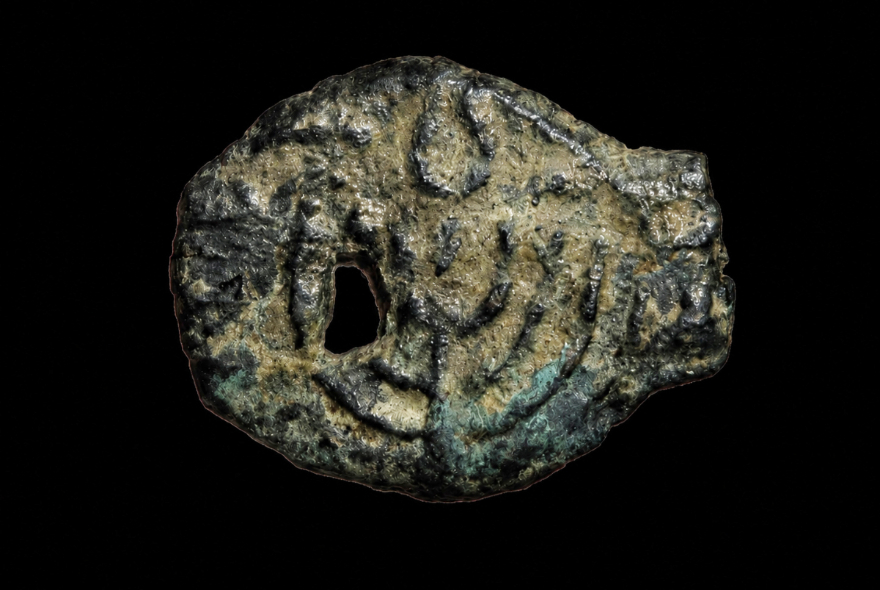
An ancient and rare coin with a depiction of the seven-branched menorah that stood in the Second Temple, and another rare coin from Ashkelon - the second of its kind known in the world, were returned to Israel on Monday this week in an official ceremony in New York.
What is diabetes and prediabetes, how do we avoid them, and what are the warning signs? • Promoter
This follows a complex international operation by inspectors from the Robbery Prevention Unit at the Israel Antiquities Authority in collaboration with Homeland Security agents and members of the Special Unit for Supervision of the Smuggling of Antiquities to the US at the New York Attorney General's Office.
 Want more news, videos and stories? Join the Haredim 10 WhatsApp channel >>
The coins were minted in ancient times in the Land of Israel, torn from their land in antiquities looting, and smuggled out of the country. The coins were then put up for sale at auction houses in the United States to the highest bidder.
Intelligence information recently passed on by the inspectors of the Robbery Prevention Unit at the Israel Antiquities Authority to the US authorities led to the opening of an investigation against the auction houses and the sellers themselves. Several investigative actions in rapid cooperation led to the establishment of an evidentiary infrastructure against the suspects, and ultimately the coins were confiscated for the benefit of the State of Israel.
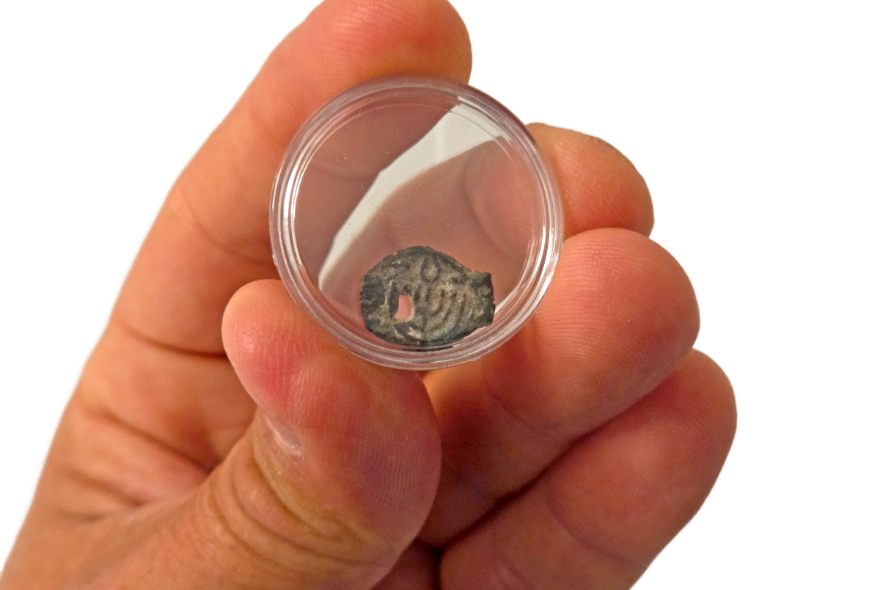
Photo: Dr. Eitan Klein, Israel Antiquities Authority
One of the coins is a bronze coin minted during the reign of the last Hasmonean king, Mattathias Antigonus, who ruled from 40-37 BCE in Jerusalem. On one side of the coin appears a model of a seven-branched menorah - and this is one of the earliest artistic representations of the menorah.
In fact, this is the only Jewish coin on which a depiction of the seven-branched menorah from the Temple appears. On the other side of the coin appears a depiction of the Table of Showbread, another Jewish symbol depicting one of the Temple vessels.
King Mattathias Antigonus' choice to display distinct Jewish symbols on the coin probably stemmed from his desire to gain the support of the Jewish people, as during these years he was struggling for control of the Land of Israel with King Herod, who was supported by the Romans.
Due to its rarity, and mainly due to its symbolism, as the last coin of Hasmonean independence and as the symbol of the State of Israel, the coin was defined as an item of national value that is prohibited from export.
The second coin returned to the State of Israel yesterday is a silver tetradrachma coin from the Persian period, minted at the Ashkelon mint. It is one of the rarest ancient coins minted in the Land of Israel, and only one other coin of its kind is known to exist.
The design of the coin draws inspiration from the Athenian tetradrachma - the most powerful and common coin in the region at the time. On one side of the coin is a helmeted face, and on the other side an owl with its wings spread. In the upper right corner of this side, the letters Alef and Nun appear in Phoenician script - an abbreviation for the name of the mint of the city of Ashkelon. This coin is also prohibited from being exported from the State of Israel due to its rarity.
At the official return ceremony of the coins, held at the New York District Attorney's Office, Colonel Matthew Bogdanos, head of the Antiquities Trade Unit, said: "These extraordinary coins represent an important piece of history that is finally coming home. Furthermore, they represent an extraordinary partnership between the Antiquities Trade Unit in New York and the Israel Antiquities Authority. This is a partnership that should serve as a model for the return of looted cultural heritage around the world.".
Ilan Hadad, the supervisor of the antiquities trade in the Antiquities Authority's Robbery Prevention Unit: "The illegal trade in antiquities is a dismal international phenomenon, which constitutes an economic engine for the phenomenon of antiquities robbery and damage to cultural heritage assets. For the sake of money, antiquities from the State of Israel are uprooted from the earth after thousands of years, smuggled and sold abroad. The inspectors of the Robbery Prevention Unit at the Antiquities Authority are fighting the phenomenon at all levels in order to preserve and protect the heritage and ancient assets of the State of Israel.
Dr. Eitan Klein, Deputy Director of the Antiquities Robbery Prevention Unit, who represented the state at the antiquities restitution ceremony: "The illegal trade in looted antiquities is a widespread international phenomenon, which requires cooperation between countries and enforcement agencies around the world. The Israel Antiquities Authority is at the forefront of the struggle to protect and preserve the unique cultural heritage assets of the State of Israel, and manages international collaborations."