The Ministry of Finance, the Investment Authority at the Ministry of Economy and Industry, the Ministry of Energy and Infrastructure, and the Ministry of Environmental Protection are publishing the track for promoting conversion and efficiency projects in fuel consumption and efficiency in electricity consumption in the industrial sector.
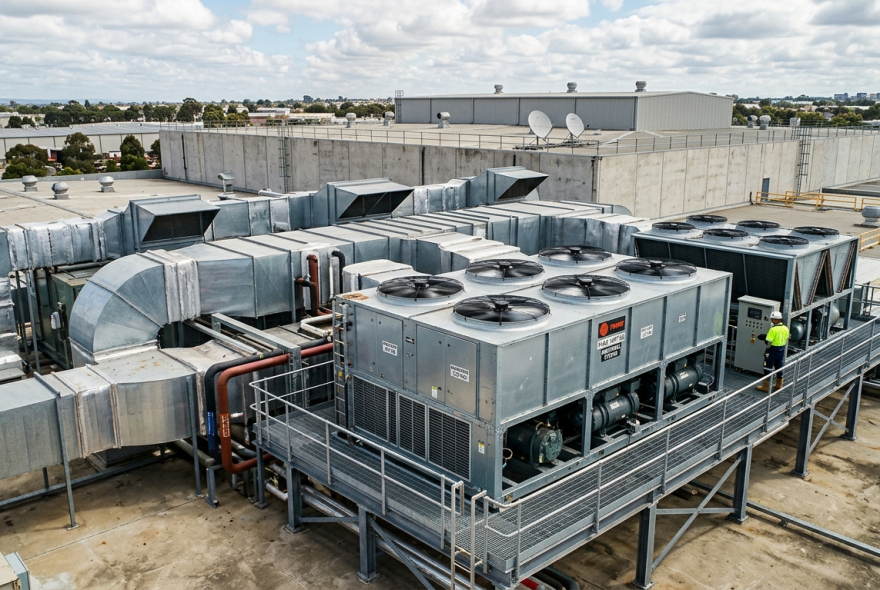
Last year, grants were awarded to companies that replaced air conditioning systems and steam boilers.
The track is being implemented in accordance with a government decision regarding a support and assistance mechanism for industry upon the entry into force of the "carbon tax"; government assistance for this track will amount to 300 million shekels, which will be spread over three years.
 Want more news, videos and stories? Join the Haredim 10 WhatsApp channel >>
The grant track is operated by the Investment Authority at the Ministry of Economy and Industry, as part of the implementation of the government's decision on the carbon tax from 2024. The plan includes extensive government assistance in the amount of 300 million shekels to be spread over three years. This step constitutes a central pillar in the implementation of the National Energy Efficiency Plan promoted by the Ministry of Energy and Infrastructure. The goal of the move is to support the transition of Israeli industry to an efficient and competitive energy economy, while reducing greenhouse gas emissions and providing tools to comply with the new taxation framework.
The current call for proposals includes a number of innovations that will help promote projects with a significant local environmental impact:
• Expansion of eligible sectors: For the first time, additional high-emission industries will also be able to submit applications for assistance, including: cold stores, industrial laundries, institutional catering services, waste treatment facilities, and selected mining and quarrying industries.
• The threshold requirements for refrigerants (HFCs) have been tightened and updated: This will allow support for systems based on refrigerants with low global warming potential (GWP) only, in places where a viable technological alternative exists. In this way, the state ensures that public investments are directed to technologies that will remain relevant over time under the restrictions of the Montreal Protocol.
• Projects converting fuels to electricity, hydrogen or compressed natural gas are not required to meet the threshold of one new shekel investment in a project per ton of greenhouse gas emissions reduction in order to enable support for ambitious projects that have significant benefits in reducing air pollution.
As part of the program, grants will be distributed, at a rate of 50%-25% and up to an aid ceiling of 3.5 million shekels, for investments within the framework of two different support tracks:
• Track A: Efficiency in fuel consumption or conversion of fuels to electricity, hydrogen and natural gas - the fuels participating in the track are fuel oil, LPG, natural gas, in accordance with the updated "Excise Duty Order".
• Track B: Efficiency in electricity consumption and reduction of greenhouse gas emissions - replacing electrical equipment with more advanced equipment, installing energy-saving measures and other efficiency measures.
Minister of Environmental Protection, Idit Silman: "The joint plan is part of a long-term government policy that connects protecting the environment and public health with strengthening Israeli industry. Together, the ministries are working to create certainty and practical tools for factories, which will allow them to reduce emissions, become more energy efficient, and make the transition to a low-carbon economy today. This reduces air pollution and climate impacts and also strengthens the competitiveness and resilience of industry in Israel. This is a move that serves the entire public and provides a cleaner environment alongside an advanced and stable industry.""
Minister of Finance, Bezalel Smotrich: "The energy efficiency grants are real news for Israeli industry, which will allow our factories to open a technological gap and become more advanced than their global competitors. The carbon tax, within the framework of which the grants are given, ensures that the money will stay here for the benefit of Israeli citizens instead of moving to Europe, and at the same time encourages industry to become more efficient and reduce pollution. All of this is made possible thanks to a huge support of about NIS 1 billion, which means that the industry will not only not be harmed by the tax, but will also be able to profit from it - especially those factories that will become more efficient than the set target."'
Minister of Energy and Infrastructure, Eli Cohen: "The grants to industry are a significant pillar in the implementation of the national energy efficiency plan that the ministry is responsible for executing. Within this framework, reducing the expenses of factories will lead to the continuation of the processes that we are leading to lower the cost of living for the public in Israel and increase the competition of Israeli industry.""