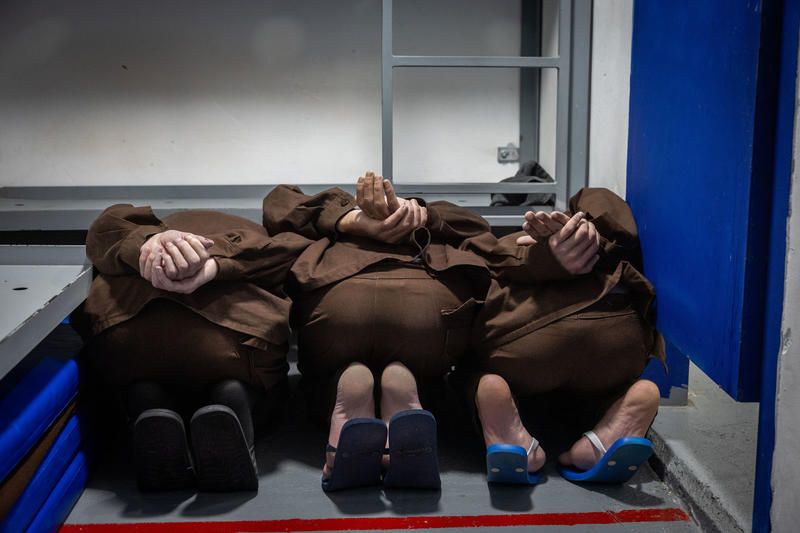
The High Court of Justice published a decision today (Thursday) concluding a lengthy proceeding that dealt with claims of non-compliance with a ruling on the provision of food to terrorists imprisoned in Israeli prisons.
The hearing was held before Judges Dafna Barak-Erez, David Mintz, and Ofer Grosskopf, following a request under a contempt of court ordinance filed by the petitioners, claiming that the state is not meeting its obligations established in a previous ruling.
The original ruling, issued in September 2025, determined that the state must provide security prisoners with food that guarantees basic living conditions in accordance with the law. It was also determined at the time that the actual situation was inadequate, and that operational steps were required to improve the situation.
 Want more news, videos and stories? Join the Haredim 10 WhatsApp channel >>
During the current proceedings, the respondents - the Minister of National Security, the Commissioner of the Prison Service, and the Legal Advisor to the Government - presented a series of steps that were taken following the ruling.
Among other things, it was noted that quarterly weighings were introduced for all security prisoners, monitoring of prisoners with low weight, updating food menus every three months, and formulating procedures for food distribution.
In addition, the respondents clarified that the field levels were instructed to exercise "operational flexibility," which means the possibility of providing additional food when the need arises, within the framework of professional discretion.
The judges emphasized in their decision that the obligation to provide adequate food applies to all security prisoners, not just those who are underweight. They also noted that the ruling requires ensuring not only menu planning, but also actual access to food and the possibility of receiving a supplement if necessary.
Despite the petitioners' claims regarding cases of food shortages, the High Court ruled that a sufficient foundation had not been laid to prove a systemic violation of the ruling. The judges clarified that the standard for invoking the contempt of court order is strict, and that the current procedure is not suitable for investigating individual cases.
Accordingly, it was determined that individual claims by prisoners regarding food shortages will be determined in personal petitions, based on concrete data such as weight, nutritional status, and the degree of compliance with requests for additional food.
The judges noted that during the proceedings, confidential materials were also submitted on behalf of the state, but determined that they did not make a real contribution to the decision.
At the conclusion of the decision, the High Court emphasized that the state is committed not only to the statements made during the procedure, but also to their actual implementation over time, while ensuring compliance with the established legal standard.