1.
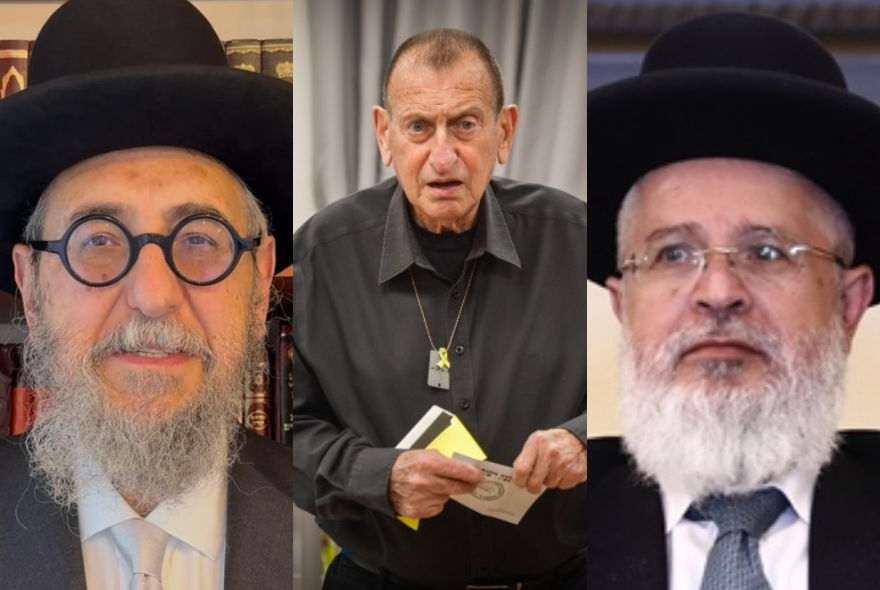
Did Shas close a deal 'under the table' with Tel Aviv Mayor Ron Huldai? It's hard to believe, but that's what appears to be happening.
The period, a period of division between Haredim and secularists. Logic dictates that most members of the Tel Aviv council, including the mayor, should invariably elect as rabbi in the city someone who is closer to their worldview when it comes to recruiting Haredim, at the very least.
 Want more news, videos and stories? Join the Haredim 10 WhatsApp channel >>
For example, candidate Rabbi Chaim Amsalem promotes a worldview of Torah along with going to work, and his sons even served in the IDF and are in the reserves, although he himself did not serve in the army in the past. His sons also work for a living. This is part of their father's worldview.
But the battle, which is heating up, seems more and more surprising. Even exciting.
Most of the events are taking place behind the scenes. Some claim that threads have been woven for months between Shas officials and city officials. Above the surface, there are no signs indicating this, you will find no evidence other than vigorous denials.
The results that will be received on election day - this coming Sunday, April 26th, 9th of Iyar - will prove what really happened behind the scenes, as the end will testify to its beginning.
2.
For 8 years, the city of Tel Aviv has been without a chief rabbi. Many residents of the big city didn't really mind. But Shas has been pushing hard to hold elections - and the decision is getting closer.
The main candidates remaining on the final line are Rabbi Zebadiah Cohen, head of the Tel Aviv rabbis, who enjoys the support of Shas; Rabbi Haim Amsalem, a former Shas MK who retired from its ranks during the lifetime of Maran Rabbi Ovadia, and Rabbi Aryeh Levin, who serves as rabbi of North Tel Aviv.
Of the three candidates, Rabbi Levin - the grandson of the 'Tzadik of Jerusalem' - appears to have the lowest chances, although in secret elections of this type there are always likely to be surprises.
Rabbi Levin, by the way, is very popular in the city. He is a reserve officer, having served hundreds of reserve days. But as everyone knows, this is an election where a record alone - no matter how rich he is - is not enough to get elected.
3.
The next chief rabbi of Tel Aviv can be chosen by 64 eligible voters. There are at least two leftists who intend to boycott the elections, because they are not exactly happy, to say the least, about the election of a chief rabbi for the city.
Of the voters - 29 fingers are reserved for the city council members. Who will they support? Logic says that they are closer to Rabbi Haim Amsalem. However, as mentioned, there can always be behind-the-scenes 'deals' and surprises.
Besides the council members, the 'minister's representatives' - the Minister of Religious Services - include no less than 21 representatives, most of whom, as expected, are likely to vote for the candidate supported by the minister's party, namely the Shas party.
What's surprising about the whole story?
You would expect to see Mayor Ron Huldai supporting Rabbi Haim Amsalem with all his might. But that's not the case - and it's not really clear why.
It's not that Huldai was upset about the entire process of appointing a chief rabbi, but once the process got underway, he seemed to view it with rather indifference.
Will we make a deal? We may never know.
4.
This suspicion, according to which Huldai supports the Shas candidate, may lead some of the council members to challenge him and, even if they did not plan to, to vote for another candidate. In a situation where some of the council members give their vote to Rabbi Aryeh Levin, who is considered a popular rabbi in the city, this will only increase Rabbi Zabadia Cohen's chances of winning,
And the split doesn't really contribute to Rabbi Amsalem's chances.
On the other hand, there is an opinion that claims that the voices supporting Rabbi Aryeh Levin are not influenced by the voices of Rabbi Amsalem, who have been consolidated for a long time - but mainly by the voices of Rabbi Zebadiah Cohen's bloc.
But, as mentioned, only days, namely Sunday, will tell. This is a process that may be surprising and huge.
And what is already clear is that if Shas loses the rabbinate of the city of Tel Aviv, this will have enormous broader significance across many areas, including economic ones. Indeed, Tel Aviv is not Savyon.
A little after 6:00 PM on Sunday evening, we will know what happened.