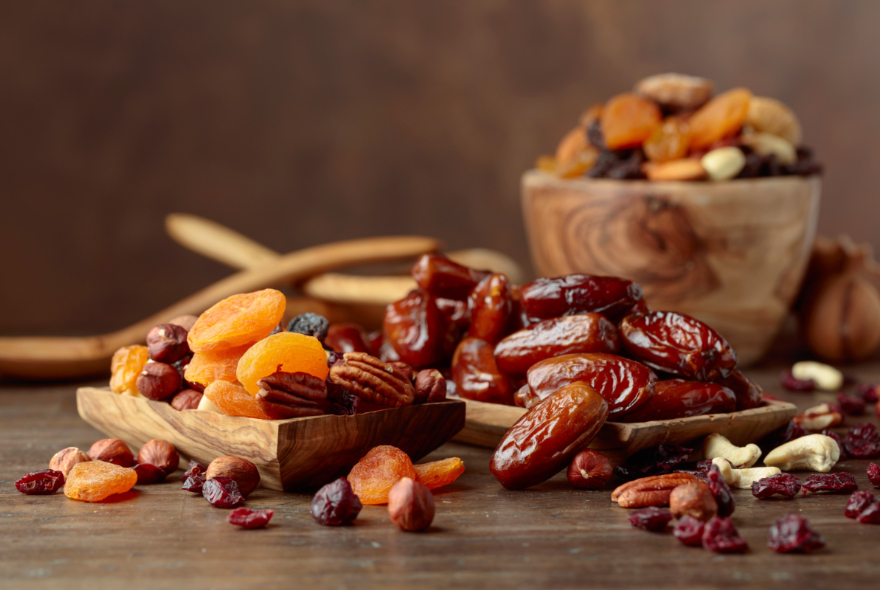
Tu B'Shavat has arrived, the dried fruits are back on the table, along with the pleasant feeling of "it's natural, so it must be healthy.".
And here's the trap: Dried fruit is not fresh fruit that has been dried in the sun, but a product that has undergone a process that concentrates natural sugar, and sometimes also receives laboratory reinforcements.
In honor of the holiday of trees, we asked Veronica Meisler, a clinical dietitian using the NLP method and consultant for Herbalife: Which dried fruits really sweeten the day in a smart way, and which ones should you stay away from?
 Want more news, videos and stories? Join the Haredim 10 WhatsApp channel >>
Plums - The ones the digestive system loves the most! Prunes are considered one of the most effective and natural 'tools' for supporting the digestive system, mainly thanks to a winning combination of dietary fiber that adds bulk to stool, along with sorbitol - a sweet ingredient that draws water into the intestines, thus relieving constipation.
Beyond that, they also contain antioxidants, which support gut bacteria. Prunes are generally a pretty 'clean' product. Their dark color is natural, and they don't need to be 'beautified'.
However, sometimes a little vegetable oil is added to prevent sticking, or a preservative to extend shelf life. Therefore, the recommendation is to look at the ingredients list and choose a product that only says "dried plums.".
Apricots - Come in two main versions: bright orange or natural brown. Orange apricots are usually preserved with sulfur dioxide (E220; allergens: contains sulfites), which are intended to prevent browning and maintain a beautiful, uniform color; these are additives that are permitted for use in controlled amounts, but in some people, especially those who suffer from asthma or are sensitive to sulfites, they may trigger a reaction such as coughing, wheezing, or discomfort.
In contrast, brown dried apricots are generally “cleaner” of additives. Nutritionally, both types have potassium and fiber.
Cranberries - A classic example of the gap between "sounding healthy" and what actually happens on the shelf. Natural dried cranberries (without additives) are relatively rare, because cranberries are originally a very sour fruit and when they are dried without additives, the flavor becomes even more concentrated.
In contrast, most dried cranberries sold are “upgraded” cranberries: sugar, concentrated fruit juices (e.g. apple) are added to sweeten them, and sometimes vegetable oil to prevent sticking and give a "juicy" texture. This turns dried cranberries into a kind of "fruit candy," easy to snack on in large quantities.
Therefore, if the ingredients list says more than just "cranberries," especially if sugar/syrup/concentrated juice/oil appears, it's best to treat it as a small sweet addition and not as a replacement for fruit.
Natural, unadulterated dried cranberries provide antioxidants from the polyphenol family, which have been linked to supporting vascular health and oxidative protection. In addition, the tart flavor remains dominant even in the dried version, which helps you consume a small amount: 1-2 tablespoons as an addition to yogurt, salad, or porridge allows you to enjoy the taste and benefits without overloading.
Dates and figs - Two stars of the holiday of Tu B'Shvat, but they differ in nature and benefit. Dates are primarily an available "energy boost": a strong sweetness that provides a dessert feeling, which is why they are excellent as a sweetener in energy pills for athletes or with coffee (instead of sugar). But precisely because of this, they are also the easiest to overdo - a few small dates quickly add up to a large dessert. Nutritionally, they contribute minerals such as potassium and a little fiber, but the bottom line is that they are a fruit that is dense in energy and concentrated natural sugar.
Dried figs, on the other hand, contribute more to a feeling of satiety thanks to their higher fiber content and chewy texture that slows down the pace of eating; they go great with yogurt, cheeses, or tahini. Therefore, for those trying to maintain balance throughout the day or looking for a "snackable and satisfying dessert," figs may sometimes be a better choice. And dates? They can be a great choice, especially when you need quick fuel during a long, intense workout.
Meisler presents an expert tip for choosing dried fruit:
• Glowing appearance - "If you see dried fruit that is a bright green, neon orange, or a uniform, shiny red, stop and ask, "Why does it look like that?" Often, the color has been preserved or enhanced with food coloring, preservatives, and sometimes added sugar and oil to create a tempting appearance and a 'juicy' texture.
This list sometimes includes dried kiwi, dried papaya, and also sweetened pineapple and mango.
• Caloric density - For comparison: 100 grams of figs or dried plums have about 250 calories, while a dried banana/banana chips can reach about 520 calories. So if you're going to choose something more calorie-dense, it's worth doing it consciously and in small quantities, and prefer something that really provides a taste and texture experience, instead of 'dried fruit' that looks innocent but actually behaves like a high-calorie snack.
Bottom line, dried fruits can be part of a great celebration, just be careful to choose the 'cleaner' ones, prefer natural flavors over bright colors, and enjoy it consciously.