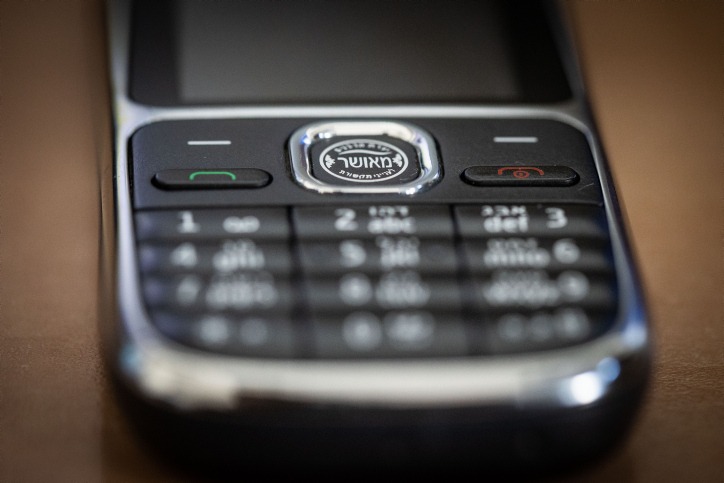
The Ministry of Communications has canceled the obligation to close outdated 2nd and 3rd generation cellular networks: The Ministry of Communications says that they conducted an audit of the cellular companies, which revealed that hundreds of thousands of old-generation cellular devices have not yet been replaced with 4th and 5th generation devices.
How will you get home quickly on the night of Hanukkah? Everything you need to know • In advance
Because of this, the ministry is eliminating the obligation to close the old networks and make room for fifth-generation networks.
 Want more news, videos and stories? Join the Haredim 10 WhatsApp channel >>
Examinations conducted by the ministry in recent months reveal a lack of preparedness for the move among some companies. Sticking to the original closing date without an appropriate solution could have left many citizens unable to call the emergency hotlines - 100,101,102.
In light of this, the ministry is leading an outline that separates the clearance of frequencies from the closure of the service: operators will be required to vacate the essential frequency bands for 5G on February 1, 2026, but will be able to continue operating the old networks on other frequencies.
The meaning of the move is that the quality of the network will depend on the cellular companies themselves: a company that manages the transition correctly and allocates resources to advanced technologies will provide its customers with a better service experience, while reliance on outdated technologies could lead to a deterioration in the quality of reception.
The ministry will regularly monitor the process of closing down old networks in the various companies and ensure that customers are informed effectively and in sufficient time before a device is disconnected from the network. At the same time, the ministry intends to significantly expand, starting in early 2026, the enforcement of operators' obligations in advanced technologies, and will provide information on this matter and on the quality of the various networks to the public.
Minister of Communications, Shlomo Kari: "We are advancing to 5G but leaving no citizen behind. The updated outline requires companies to prepare responsibly and inform the public in a timely manner. A communications company that completes the transition efficiently and quickly will benefit from a better and higher quality infrastructure for all its customers.
""The power is shifting to the consumer: Infrastructure upgrades will continue with greater intensity, but while maintaining continuity of service and the public's right to reliable, available and secure communications from anywhere in the country.""
Director General of the Ministry of Communications, Elad Makdasi: "We identified that the rate of equipment replacement does not match the forecasts, and that the information that the companies provide regarding the network closure process is inconsistent, and therefore we were required to act. The new outline shifts the center of gravity to the companies' risk management: We remove the regulatory pressure to close on a specified date, but require the operators to ensure continuity of service. We will not allow a 'black hole' situation in emergency calls, and therefore we have defined a safety net that will operate in the coming years as an essential backup.""
Main points of the outline at the hearing:
• Removing obligations to provide service in old technologies while canceling the blanket shutdown obligation: Starting January 1, 2026, operators will be able to continue operating 2nd and 3rd generation networks, according to their business judgment and the status of their subscribers.
• Frequencies clearance ("reframing"): In order to improve the quality of 5G browsing for the general public, the use of low frequencies (800/900 MHz) in older technologies will be discontinued as of February 1, 2026 - a one-month delay from the original plan, which was intended to give companies an additional period to inform customers and allow them to take gradual steps to close the networks.
• Ensuring emergency calls: The ministry intends to require infrastructure owners to operate a dedicated 2G network for emergency calls by the end of 2028. This network will serve all subscribers, even those who are not direct customers of the infrastructure owner, and will respond with additional infrastructure for full survivability.
• Implications for the consumer: Operating the old networks on the remaining (high) frequencies may lead to reception difficulties, especially inside buildings. The ministry recommends that the public be proactive and acquire devices that support 4th and 5th generation to ensure high-quality and stable service. To find out if your phone supports the advanced generations, you can call *235