
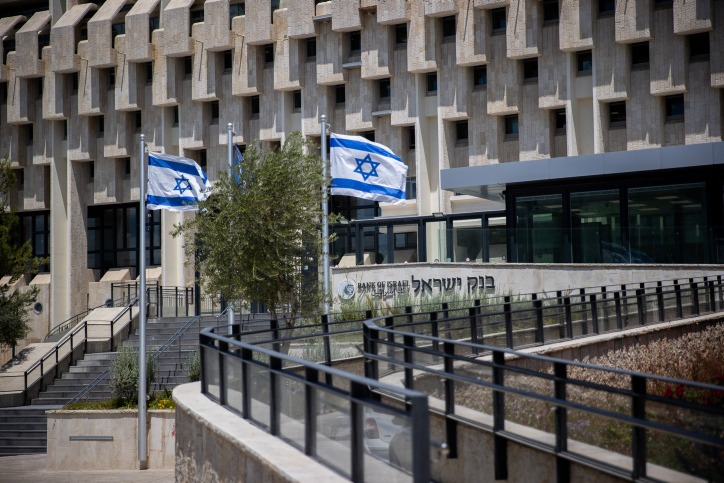
After more than two years of war: The Bank of Israel today (Monday) lowered the interest rate in the economy to a level of 4.25% - after 14 consecutive decisions in which it left it unchanged.
The Monetary Committee, headed by the Governor of the Bank of Israel, Professor Amir Yaron, lowered the interest rate by a quarter of a percentage point - from 4.5% to 4.25%.
 Want more news, videos and stories? Join the Haredim 10 WhatsApp channel >>
This is the first change since January 1, 2024. Accordingly, the prime interest rate in the economy, from which most mortgages and loans are derived, is also decreasing from a level of 6.00% to a level of 5.75%.
The decision was also made against the background of the fact that inflation currently stands at 2.51%, and has been below the target range - 31% - for several consecutive months.
In addition, the fact that an agreement was signed to end the war, despite the possibility of escalation in the north, also strengthens the move.
The move will affect the loan and mortgage repayments of many in the Israeli public. The assumption is that for an average mortgage of one million shekels for 25 years, the monthly repayment will initially decrease by about 70 shekels per month.
However, in an annual calculation, this is already an amount of hundreds of shekels, and in the long term, over the entire life of the mortgage, this is a savings that may reach more than 20,000 shekels.
Economists estimate that this is the first cut - and that more are expected to follow.
The bank explained the decision: "The Monetary Committee decided on 11/24/2025 to lower the interest rate by 0.25% to a level of 4.25%. Annual inflation has moderated and stands at 2.5% in the last two indices, with forecasters expecting a certain increase in inflation at the end of the year, followed by a decrease and stabilization around the target center.".
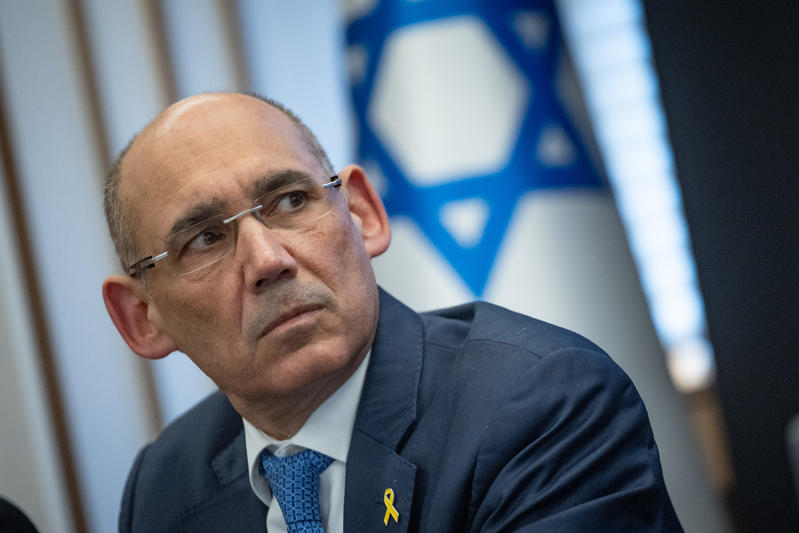
Bank Governor, Prof. Amir Yaron. Photo: Yonatan Sindel/Flash90
""Economic activity in the economy recovered sharply during the third quarter, and GDP expanded at a rate of 12.41% in annual terms, although its level is still below its long-term trend. The labor market remains tight, the ratio of vacancies to unemployed is high, and the pace of wage growth continued to increase.".
The bank added: "Apartment prices in October fell for the seventh consecutive month, and the number of apartment purchase transactions continued to decline. At the same time, local stock indexes rose and stood out in relation to the world, and the risk premium in the CDS spread fell and remained slightly above its pre-war level. Since the last interest rate decision, the shekel has appreciated by 1.3% against the dollar and 2.9% against the euro, and in effective nominal terms, the shekel has appreciated by 2.2%.".
The Monetary Committee also expressed concern and warned that inflation could rise: "The Committee assesses that there are risks that could lead to a renewed increase in inflation, including geopolitical developments and their impact on economic activity, an increase in demand under supply constraints, and fiscal developments.".
The next decision on the interest rate will be made at the start of the next calendar year – January 5, 2026.




