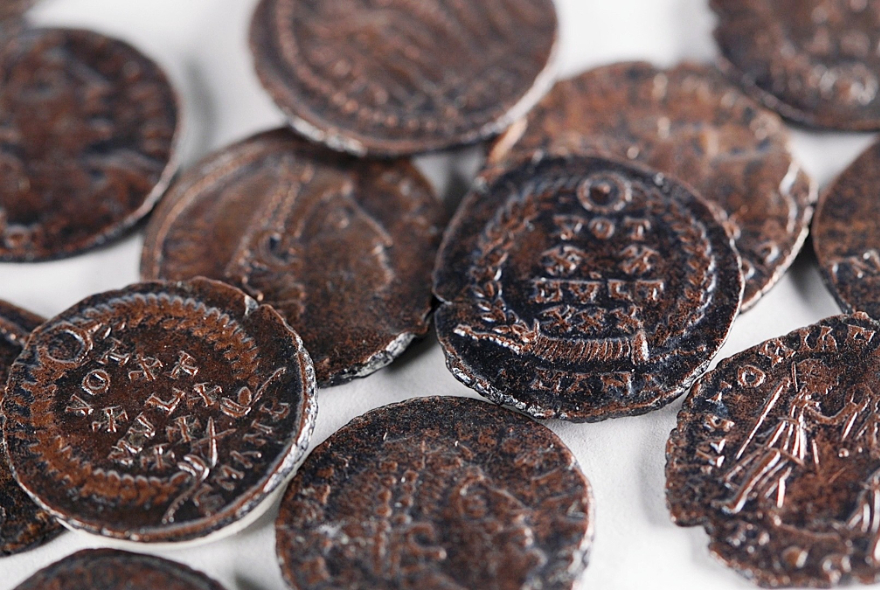
A rare cache of 22 bronze coins, more than 1,600 years old, was discovered in a small space, deep in an underground hiding place system, beneath the ancient settlement of Horbat Hukuk in the Lower Galilee.
The treasure was uncovered in a joint archaeological excavation by the Israel Antiquities Authority and the Safed Academic College, as part of the site's preparation for the public in cooperation with the Israel National Fund. The discovery will be presented for the first time today (Thursday) at the "Between Josephus and Eusebius" conference at the Kinneret Academic College.
""It appears that the hoarders carefully planned the hiding place of the treasure, hoping to return to it when the fury has passed," say researchers Uri Berger of the Israel Antiquities Authority and Prof. Yinon Shvetiel of the Safed Academic College. "The coins were discovered in a pit that was deliberately dug at the end of a narrow, winding tunnel.".
The Hukuk concealment system was apparently used by the Jews of Hukuk during the Great Revolt (66-70 CE) and was later refined and perfected in preparation for the Bar Kokhba Revolt (132-136 CE).
Naturally, when the hoard was discovered, the researchers expected it to date to these days of rebellion - but to their surprise, the coins featured the images of the emperors Constantius II and Constans I.
These were active during the period of a later revolt - the Gallic Revolt (351–352 AD), which was the last Jewish revolt under Roman rule.
""This shows that hundreds of years after the tunnels were dug, they were reused," the researchers say. "The cache provides - apparently - unique evidence that the hiding places were used during another time of distress, during the Gallus Revolt - a revolt for which historical evidence is scant.".
Photo: Emil Aljem, Israel Antiquities Authority
The Hokokuk hiding place complex is one of the largest and most complex of its kind in the Galilee. It includes a series of underground spaces linked by narrow passages and winding tunnels.
The system was largely excavated between 2019 and 2023, as part of a large-scale educational-community project taking place in Hokok. The project involves graduate students, students from the Safed Academic College, volunteers from the Cave Enthusiasts Club, soldiers, and residents from the area in excavating the site.
""Fortunately, the many volunteers who are excavating the hiding place are the ones who were privileged to discover the important treasure and experience the great moment of excitement of the discovery," says Dr. Einat Ambar-Armon, director of the Israel Antiquities Authority's Community Archaeological Center in the North. "The excavation thus became not only an important scientific event, but also an educational experience."
"And a significant community - one that brings the public closer to the heritage, and strengthens the sense of belonging and connection to the past.".
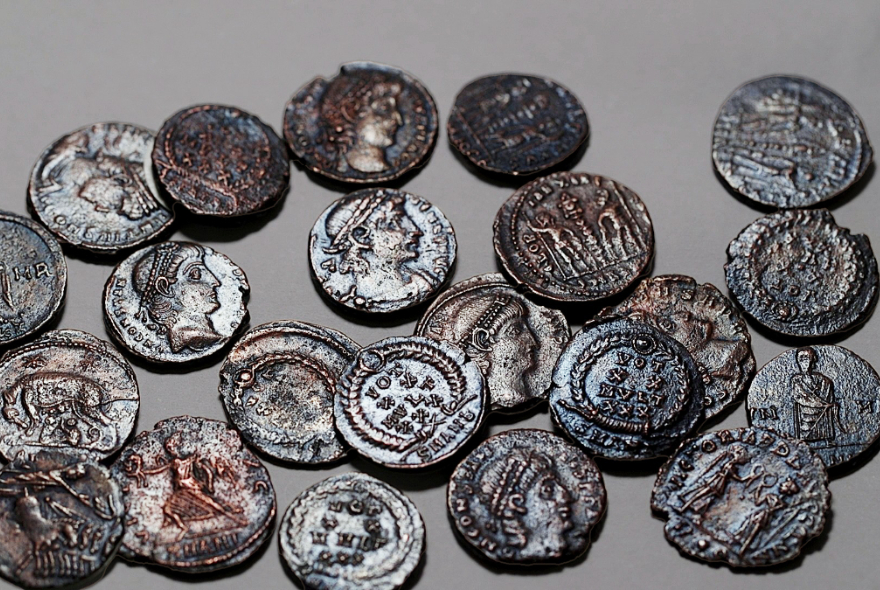
Researchers Berger and Prof. Shvetiel: "The hoard of coins from the days of the Gallus Revolt, which is hidden deep in the Hukuk burial system, joins other finds at the site that teach about the times of hardship and periods of crisis experienced by the Jews of Hukuk and the Galilee during the Roman period in the Land of Israel.".
""Fortunately, we know that shortly after this revolt - probably at the end of the period of distress - a magnificent synagogue with magnificent mosaics was built on the top of the hill, and the settlement there experienced an era of long-lasting prosperity.".
 Join the Haredim 10 Facebook page >>
 Join the X page of Haredim 10 >>
 Want more news, videos and stories? Join the Haredim 10 WhatsApp channel >>