
Ahead of the Tishrei holidays, the Ministry of Agriculture today (Tuesday) published consumption data for popular holiday foods, including fish, chicken, beef, pomegranates, apples, and wine.
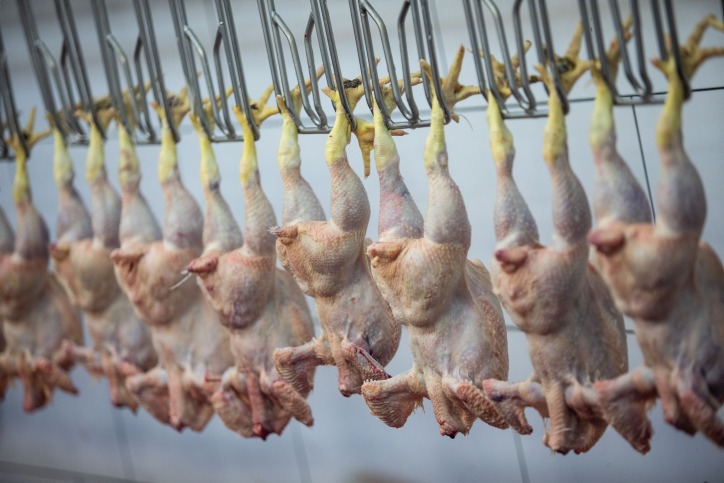
The data shows that chicken consumption in Israel is among the highest in the world - an average of 49 kg per capita per year, with average consumption jumping by approximately 291 kg before Rosh Hashanah.
Fish
 Want more news, videos and stories? Join the Haredim 10 WhatsApp channel >>
The per capita fish supply in Israel is about 9 kg per year, which is estimated at about 180 grams per week per person in terms of edible ("steamed") fish, about 25% of this amount is fresh fish.
During the shopping week leading up to Rosh Hashanah - 7 days before the holiday's eve - the Ministry of Agriculture expects an increase of approximately 47% in the amount of fish consumption in retail chains, compared to an average week throughout the year.
The leading fish in sales in retail chains during the holiday period are tilapia and salmon, with tilapia consumption standing at 43% and salmon consumption at 34%.
And what about our consumption in relation to the world? As mentioned, in Israel, the average consumption per capita as of 2024 is about 9 kg per year in terms of edible fish, which is about 20 kg per year in terms of whole fish, slightly below the global average, which is estimated at about 20.8 kg per capita.
According to OECD-FAO data, in Asia the average consumption between 2021-2023 was 24.7 kg per capita per year, in Africa 9.6 kg per capita per year, in the Americas 16.7 kg, and in Europe 20.9 kg per capita per year, in terms of whole fish.
meat
The Israeli supply per capita in 2024 was approximately 19.1 kg of beef on average (fresh and frozen). This is an increase of approximately 81.3 tons from the previous year. In 2024, the meat supply was estimated at approximately 188 thousand tons of meat.
The meat consumed in Israel can be divided into three main categories: fresh meat slaughtered in Israel (29%), imported chilled meat (19%) and imported frozen meat (52%), the latter two arriving in Israel after being slaughtered abroad. During the shopping week leading up to Rosh Hashanah, an increase in demand and consumption of approximately 64% is observed compared to the average amount of meat sold in retail chains during the rest of the year.
And what about our consumption in relation to the world? The average annual consumption of meat in Israel is higher than the average consumption in OECD countries, which is only 13.4 kg per capita. The leading countries in the world in beef consumption are Argentina, with 33.1 kg per capita, the USA with 23.3 kg per capita, and Australia with a consumption of 23 kg per capita. .
chicken
Domestic consumption of chicken in Israel in 2024 was approximately 49 kg per capita per year. Today, approximately 590 breeders operate in the local poultry industry (broiler).
According to an analysis of sales data in retail chains in 2024, during the shopping week leading up to Rosh Hashanah, chicken consumption increases by approximately 29% compared to an average week during the rest of the year.
And what about our consumption in relation to the world? Chicken consumption in Israel is among the highest in the world. According to OECD data, the global average for chicken consumption is only 21.8 kg per capita per year. The top places, along with Israel, are shared by the USA, with a consumption of 34.9 kg per capita, Peru with 33.1 kg per capita, and Australia with 31.5 kg per capita. .
Pomegranates
The pomegranate harvest in the 2025/2024 season is estimated at approximately 40,000 tons.
A significant increase in pomegranate sales can be seen in the marketing chains in the week before the holiday eve. The quantity of pomegranates sold this week constitutes approximately 15% of the total quantity sold during the entire year. The supply of pomegranates per capita in Israel is approximately 3.5 kg of pomegranates per year, including pomegranate products (such as pomegranate juice).
Apples
Israel has about 20,000 dunams of fruit-bearing apple orchards. The 2024 harvest was about 65,000 tons, and the estimated harvest for the 2025 season is about 60,000 tons.
The average Israeli eats about 14.1 kg of apples per year. During the holiday shopping week, about 74% more apples are consumed than in an average week throughout the year. The main varieties are: "Smith" (green), "Hermon Starking" (red), "Golden" (yellow), "Pink Crispy" (pink-green) and "Gala" (red).
The annual global production of apples for 2024 is estimated at approximately 84 million tons. The main apple-growing countries are: China (48 million tons per year), the European Union (11 million tons per year), the USA (5 million tons per year) and Turkey (4 million tons per year).
In general, apples love cold, so Israel is on the edge of the regions suitable for growing apples. The vast majority, about 90%, of apples in Israel are grown in the northern region, in the Galilee and Golan Heights at altitudes of at least 600 meters. Apple imports to Israel in 2024 amounted to about 58 thousand tons, coming mainly from Italy, the USA and France.
wine
Data from the Wine Vine Council shows that the average Israeli consumes about 6 liters of wine per year. This is a low figure compared to countries around the world, particularly European countries and the US. For comparison, in France wine consumption stands at about 46 liters per year. In Portugal, the world leader in wine consumption per capita, the figure stands at about 51 liters (!).
The Israeli consumer does not have a clear preference between red and white wine. However, over the years, an upward trend in white wine consumption has been observed in Israel, and there has been an upward trend in the planting of white wine varieties. In addition, there has been an upward trend in the consumption of sparkling wines, which is in line with the global trend.
Israel grows about 47,000 tons of wine grapes per year on an area of about 65,000 dunams, with notable concentrations in the Golan Heights, the Upper Galilee, the southern coastal plain, the Judean Mountains, and Jerusalem. Israeli wine production stands at about 45 million bottles of wine per year and about 11 million bottles of must. 70% of the vineyards in Israel are planted with red grape varieties, with the most popular being Cabernet Sauvignon, Carignan, and Merlot.




