A magnificent and large agricultural estate, approximately 1,600 years old, was uncovered in an excavation by the Israel Antiquities Authority, prior to the establishment of a neighborhood initiated by the Ministry of Construction and Housing, in the northern city of Kafr Qassem in central Israel.
The excavation, which is taking place within the boundaries of the Khirbet Kfar Hata archaeological site, revealed impressive remains of a Samaritan settlement that existed there for about 300 years - from the end of the Roman period to the end of the Byzantine period.
The site of Kfar Hata is described in historical sources as the birthplace of Menander, the Samaritan magician.
The Ministry of Construction and Housing cooperates with representatives of the Israel Antiquities Authority in the field and assists in conservation activities, while promoting the development of the neighborhood in other areas.
Ella Nagorsky and Dr. Daniel Leahy Griswold, directors of the excavation on behalf of the Israel Antiquities Authority: "The size and splendor of the buildings we discovered, the architectural pieces, the quality of the mosaic floors and the impressive agricultural facilities, indicate great wealth and prosperity of the local Samaritan community over the years.".
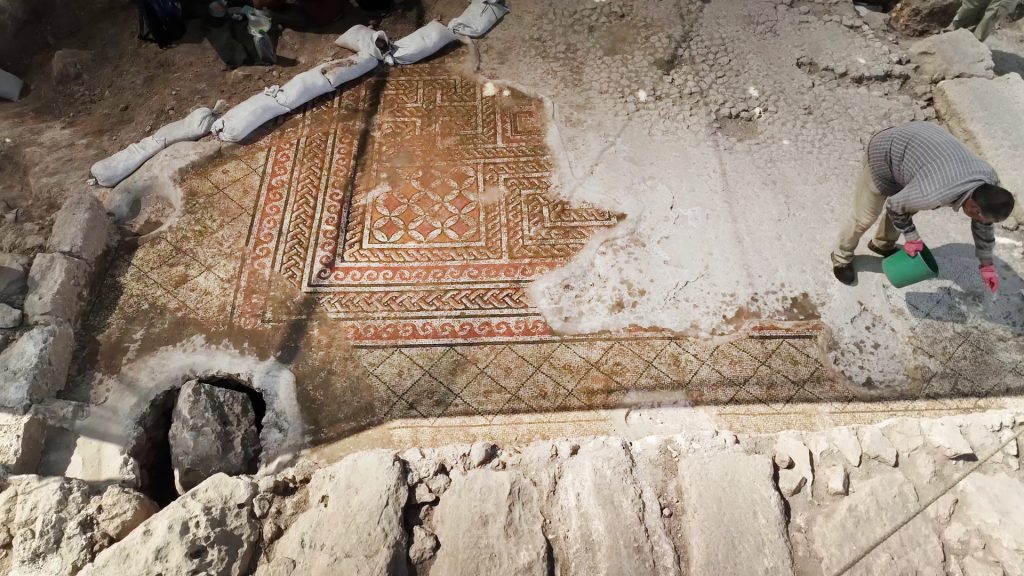
In one of the buildings, a spectacular mosaic floor has been preserved, decorated with a dense geometric pattern and plant images. Along its central medallion, acanthus flowers were combined with rare decorations of fruits and vegetables – including grapes, dates, watermelon, artichokes and even asparagus.
At the entrance to this room, a partially preserved Greek inscription was also found, congratulating the owner of the building, whose first name is typical of the Samaritan community, with "Mazal Tov.".
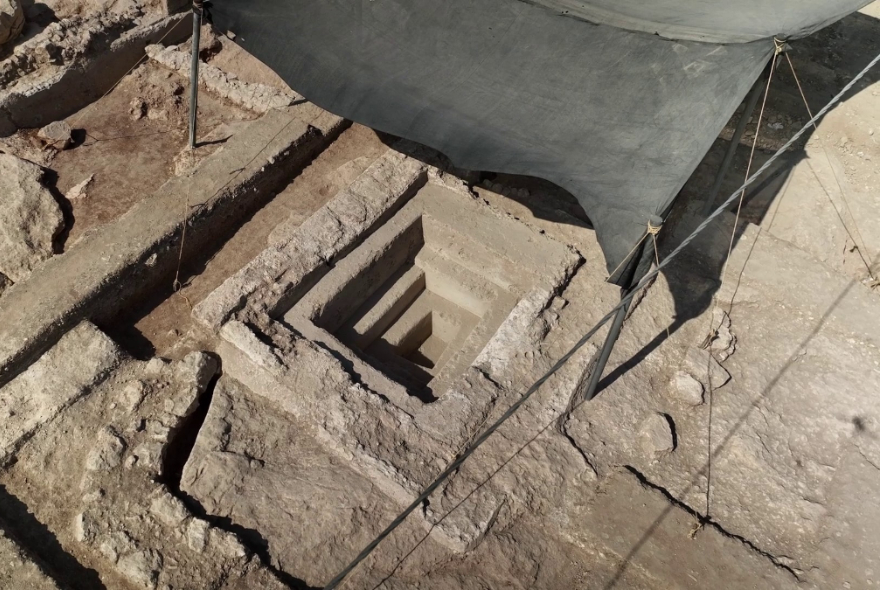
In the northern part of the estate, an oil press was built for producing oil, a spacious storage building, and a public mikvah, in which the workers immersed themselves before turning to the work of producing the oil, with the aim of producing pure oil.
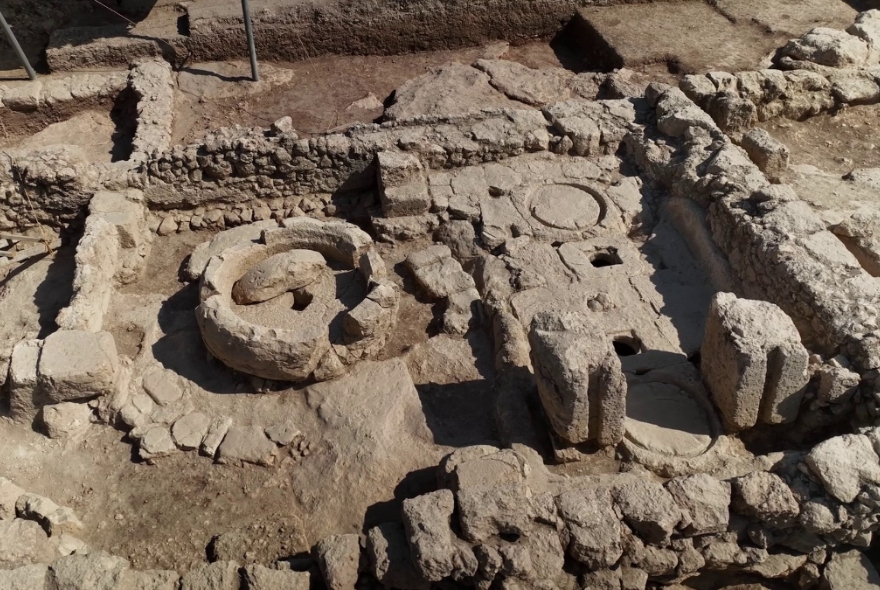
The oil press building was carefully planned and consisted of two wings: the northern wing contained the production areas, and auxiliary rooms were built in the southern wing. In the production wing, two screw presses and the large round sea stone, on which olives were crushed, were preserved in situ.
""This type of oil press is more typical of the Jerusalem and Judean lowlands area, and less common in Samaria," says Nagorsky.
Over the years, the estate underwent dramatic changes: "Wealth and luxury were replaced by oil production and agriculture. The mosaic floors were damaged during the construction of new walls, and magnificent capitals and columns were re-incorporated into the new walls and structures.".
Nagorsky believes that the changes are related to the Samaritan revolts under Byzantine rule - a series of uprisings that occurred in the 5th and 6th centuries AD against the Byzantine emperors, who imposed restrictive laws on members of other religions.
""Interestingly, unlike some of the other Samaritan sites that were destroyed in these uprisings, the estate in Kafr Qasem actually continued to exist, and even preserved its Samaritan identity - as evidenced by the Samaritan clay candles uncovered in our excavation," she says.
""This is a fascinating site, which presents the days of prosperity and decline of the Samaritan community," says Nagorsky. "Its long existence and abundance of finds will allow us to reconstruct its history over hundreds of years and will enrich our knowledge of this population in ancient times.".
 Join the Haredim 10 Facebook page >>
 Join the X page of Haredim 10 >>
 Want more news, videos and stories? Join the Haredim 10 WhatsApp channel >>