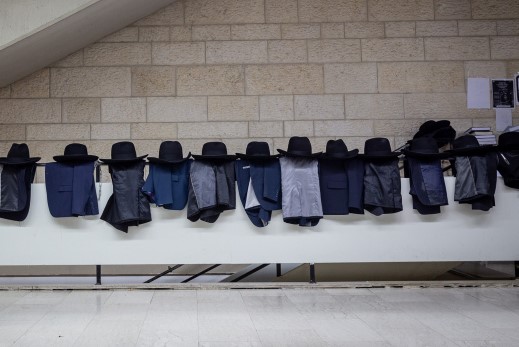
The High Court of Justice today (Monday) heard petitions filed against the non-conscription of Haredi men and against budgetary support for Haredi yeshivas.
First thing at the polls: What will you do if there is an alarm when you vote?
The panel of judges consisted of Acting Supreme Court President Uzi Fogelman and Justices Yitzhak Amit and Noam Solberg.
 Want more news, videos and stories? Join the Haredim 10 WhatsApp channel >>
According to the petitioners, the legal arrangement that exempted the cadets from conscription expired last summer, and the government's decision not to enforce it will expire at the end of next month.
According to a report by Tamar Almog in Kan News, after the hearing, the court issued a conditional order, according to which the government must explain why it will not act to recruit Haredim and reverse its decision to refrain from doing so.
An interim order was also decided, according to which, from today, it will not be possible to reduce the period of service or any other relevant period regarding the recruitment of yeshiva students.
In addition, an interim order was issued stating that the government must explain why, in light of the expiration of the deferral of service arrangement, it will not cease to budget for yeshivots whose students do not enlist, in the absence of a Haredi draft exemption clause in the law.
The head of High Court affairs at the Attorney General's Office, Avi Milikovsky, said during the hearing that the state believes it is still complying with the law.
""In our opinion and that of the Legal Advisor to the Government, at the current point in time, the recruitment authorities are still acting within their authority under Section 20 of the Security Service Law. The situation will be different starting July 1, 2024 - that is when the period of the reduced authority will begin.".
Judge Uzi Fogelman said in the hearing that the situation is not a review of the legality of a law - "but rather a situation in which there is a claim of real weight, that it is impossible to make an administrative decision on this issue, and any arrangement must be in primary legislation.".
According to him, "They apparently didn't succeed in legislation, so they went for a decision (a government decision). Every first-year law student knows that an exemption should be in the arrangement (in primary legislation) and it wasn't done.".
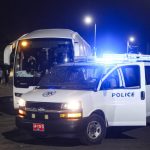
Due to the High Court hearing on the antiquities, protests by the Jerusalem faction took place at several intersections in the capital starting in the afternoon.
Jerusalem District Police and Border Guard soldiers worked to restore order, following protests that included disorderly conduct while blocking roads and the light rail route, and in several cases, clashes were recorded between demonstrators and police officers.
During these clashes, a police officer was injured as a result of violence by a protester and required treatment at the hospital, where he was diagnosed with a broken hand. During these protests, the police arrested a rioter who attacked police officers and he was taken for questioning at the Lev HaBira police station.