In recent weeks, the issue of Jewish identity has been on the agenda. As expected, some immediately diverted the discussion into populist and irrelevant directions. They were quick to present it as if they were claiming that there are 'good Jews' and 'less good Jews.'.
There were those who rushed to jump on the bandwagon and further confuse the situation by raising slogans that Jewish identity means serving in the IDF and paying taxes. In today's shallow and superficial world, even such baseless statements are accepted.
And what is the connection between civic duties and Jewish identity? And does a Bedouin or Druze who serves in the IDF and pays taxes become a Jew?
 Want more news, videos and stories? Join the Haredim 10 WhatsApp channel >>
There is no 'Jew for me''
It is important to remember that all the discourse along the lines of 'this is Jewish to me' and 'this is not Jewish to me' is simply a joke. Jewish identity is not determined by the taste of this or that person. No one has been given the authority to serve as a selector at the gate and decide who is Jewish 'for me'. Jewish identity is an inner essence that is not conditioned by a person's actions and views.
Our sages have already established that "Israel, even though it has sinned, is Israel." A Jew cannot cease to be a Jew, whatever his actions. In the same way, someone who is not a Jew does not become a Jew by helping the Jewish people. He can be a great person, who does much for the Jewish people, and therefore be called 'Righteous Among the Nations.' This should not be confused with Jewish identity.
This blurring of concepts illustrates the vital need to deepen Jewish identity. The younger generation is constantly absorbing messages about 'equality' and the breaking down of barriers between peoples. It is exposed to propaganda that links the perception of the uniqueness of the Jewish people with racist perceptions. There are elements working in various ways to suppress the word 'Jews' and replace it with 'human beings', because nowadays it is not 'politically correct' to talk about Jews.
Is it any wonder that many of the younger generation do not understand the meaning of Jewish identity? Marriage with non-Jews does not seem like a terrible thing to them. The word 'assimilation' does not arouse concern in their hearts. After all, 'we are all human beings,' and it does not matter whether we are Jewish or non-Jewish.
History proves
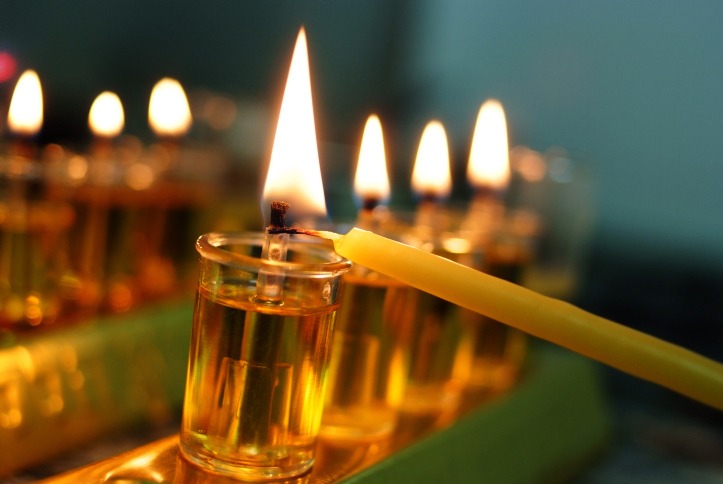
This is precisely the story of Hanukkah – the struggle for Jewish identity against the influences of general world culture. Even then, there were Jews who believed that it was possible and desirable to absorb foreign influences and integrate into the Hellenistic space. It quickly became clear that this opened the way for a path of departure from the people of Israel and the complete loss of Jewish identity.
And even today, the boundaries are blurring. Jews don't understand what the problem is with celebrating 'Novi Gud' or the Christian holidays. The child barely knows what Passover and Rosh Hashanah are, and they are already being taught about 'Halloween' and other foreign cultures. Thus, he loses his identity and no longer knows who he is and where his home, family and people are.
Thousands of years of Jewish history prove that the loss of identity leads directly to assimilation and assimilation among peoples. We are Jews because our ancestors rejected this confusion and blurring, clung to their Judaism, and passed it on from father to son, from generation to generation. We must strengthen and cultivate this identity, so that we may continue to be a Jewish people.