Kobi Sela, 52, is one of the greatest experts in Hasidic-Jewish music.
He has been a radio presenter since the age of nine as a small reporter on Channel A. He later presented and produced programs on Galei Tzahal and Channel 7, including the program 'Shirim B'Ma'alot' - Channel 7's Hasidic Parade. In addition to writing columns and presenting current affairs programs, he wrote about Hasidic music in the newspaper 'B'Sheva'.
In 2010, Sela joined the 'Kol Berama' team, as the presenter of the Hasidic-Mizrahi parade 'Hatabla'. A year later, in 2011, Sela served as part of the professional committee on the 'Music School' program on Channel 2.
 Want more news, videos and stories? Join the Haredim 10 WhatsApp channel >>
He currently manages a PR and production agency he owns - 'Cubis', which specializes in PR and communications for the ultra-Orthodox and religious sectors, and operates influencers.
Alongside the food show "Friends on the Plate" and the interview show "Mila Besela" on Channel 7, he hosts the program "Kobis Mukir Shabbat" on the radio station "Kol Hai" which airs on Fridays, edits the music section on Channel 7, and hosts the Hasidic parade "Shirim B'Ma'alot".
Who is the 'next big thing' in the world of Haredi music?
The musical arranger, Yohanan Bleich.
Why him?
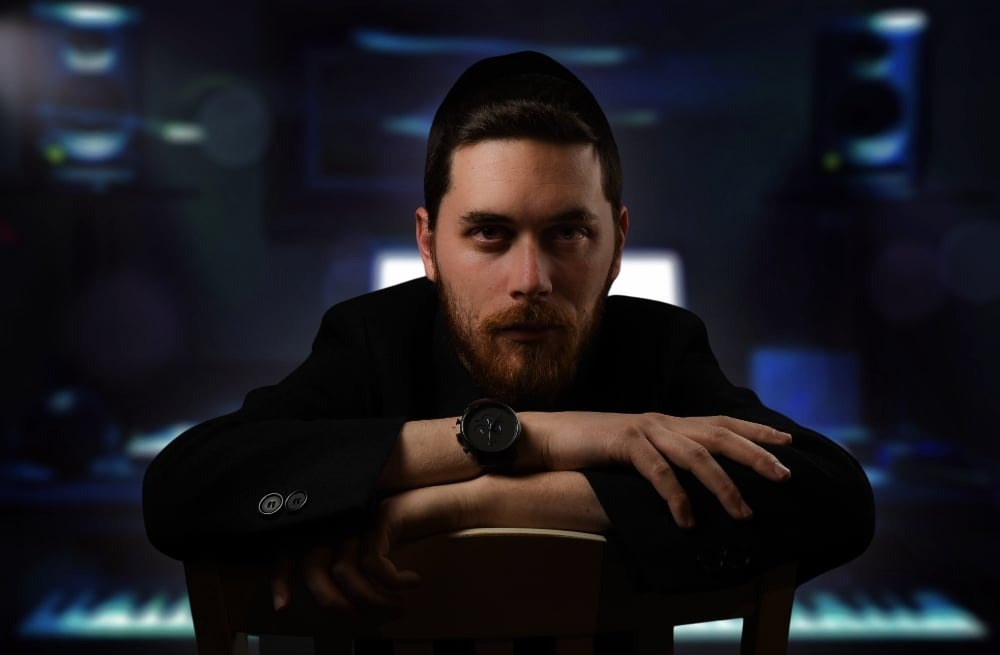
Yohanan is a Hasidic guy who owns a music studio. Despite his young age, he is a brilliant musical arranger, with an insane knowledge of electronic music from around the world.
More and more observant artists are coming to him to write and produce musical arrangements for them, and he is my partner in creating the 'Leap of Faith' project, an ambitious project that has been meeting its goals for seven months now.
•
Yohanan Bleich, only 26 years old, lives in the Haredi city of Beitar Illit, is married and has two children.
He was born and raised in the Karlin-Stolin Hasidism in the city of Modi'in Illit. His parents made aliyah from the United States after their marriage. He studied at the Karlin Talmud Torah in the city, and in his youth at the Lithuanian Yeshiva and the Karlin Yeshiva.
""In Talmud Toda, I was in the first class of Karlin in Modi'in Illit. We were the first minyan of Hasidim in the city. Modi'in Illit was supposed to be a Lithuanian-only city, but in the end Karlin joined. My father was one of the first ten.
""At the stage of the yeshiva, there weren't enough students to open a Karlin yeshiva. Today there is, then there wasn't. I studied in Lithuanian yeshiva for a while, and then I studied in Karlin. I know all the worlds.".
When did you enter the musical world?
""It started as a hobby, I've been playing since I was little. My father is very musical, he composed many songs, even in the Carlin Hasidism there are tunes that he composed. Recently I adapted some of his tunes so that we could publish them.
""I grew up as a very musical child. At a very young age they bought me a really small organ, they saw that I could play it, and slowly they progressed with better and better. They sent me to organ lessons.
""After I got married, I purchased the most expensive organ I had, for 20,000 shekels, which I sold after a while. I did quite a few things in music - I played, I composed songs. I didn't know what I was going to do exactly, but I knew I wanted to stay in the music field forever.".
""After a while, I realized that starting a business was complicated. I wanted to be a keyboardist, but you have to build a reputation and a list of clients - not an easy thing. I sold the organ, and with that money I bought equipment for producing and processing music.".
There's trial and error, he says. "Discovering things that work for you is just as important as finding things that don't. It's part of the journey...""
Kobi Sela says you have an extraordinary knowledge of electronic music. What, exactly, is electronic music, and what is the difference between it and regular music?
""I didn't start with electronic music. In fact, I used to hate this music, I thought it was something shallow and uninvested... It feels like something not serious. That's how you think. But if the public is attracted to electronic music, then there are two options: say it's shallow and don't bother with it, or understand why we're attracted to it, what it is about it that attracts people.
""The difference between them? Electronic music is a whole system of other sounds. In regular music, if I want to make an arrangement for a song - there are types of guitars, there are drums, a bass guitar. That's what we have. They're all based on these instruments, and it's quite limited.".
""Electronic music is a treasure. I call it 'the land of unlimited musical possibilities.' For example, drums. There are things that you can't imagine in such quantity, quantities upon quantities, that you can be unique and bring things that have never been heard before.
""I can create a sound from scratch, and do something that hasn't been done. It's really amazing. You can take a variety of songs in regular music, and it will have the same sound. How different can you do... In electronic music, I change the standard. There's a lot of possibility and you're not limited. It has an intoxicating feeling, where you say every day: 'Wow, what do I have to do today.'.
""It's a completely different head. In regular music there are rules. Electronic music broke all the rules. She said, who said? Who said the bass drum was supposed to be like this?""
However, he doesn't limit himself to just electronic music. "I also dabble in regular instruments," he emphasizes.
Where does the knowledge come from?
""The extensive knowledge is from YouTube. Since I know English as a native language, I learned. It was easy to find sources of information from major producers, who present instructional videos, which is what I also started doing. Today, almost everything is online, which wasn't the case in the past. Unlike in the past, today people also share their work. In the past, they would release a song and the rest was 'secrets of the trade.'.
“"People today hear a song for the first few seconds. If they like it - they hear the whole song. If they don't - they pass on the song. That's why the opening is very important. That's what taught me, that from the first moment it should attract the ear, otherwise you miss the listener.".
[gallery]
Is there a demand for this music?
""Sure. I know the global market. In the Haredi sector, the processes happen more slowly, but it will come in eventually. I'm less stressed, it's a trend. It will happen in the Haredi sector.".
""The style of the song depends a lot on the music. Not every song is suitable for electronic music. If a mainstream Lithuanian singer who sings at weddings comes to me, and I do an arrangement for him - I won't make him crazy, but I will bring in flavors that they haven't heard. I will adapt myself, but I will also move it forward.".
Tell us about the 'Leap Forward' project.
""I have clients that I produce for. Sometimes I want things for myself, so I do all sorts of things as a hobby.
""I met Kobi Sela more than a year ago, who is a well-known producer. I don't remember why we met. He played me songs he did on the radio years ago, remixed versions of songs. I asked him what he said - that we take old songs and put together new versions of them. To renew them and bring the song in the 'vibe' of 2022.
""At first it was for ourselves, we thought the singers wouldn't be happy with what we were doing. At one point, a friend of Kobe's said: Why are you doing this, do it professionally? And so we did. Suddenly we saw how many people love these songs.
""We took songs that were hits years ago - and renewed them with electronic music. We are already in the seventh month of the project. Every month a new song.
How does it feel that Sela chose you as the 'next big thing' in the music world?
""I thank him for choosing me. He is an amazing person, young at heart, not fixed, knows many styles of music. He is also a very, very talented DJ. When we did the 'Leap Forward' project, he said: 'Come on, let's do the project,' as if it was the first project in his life he had done, with a lot of passion. Thank him very much for choosing me.".