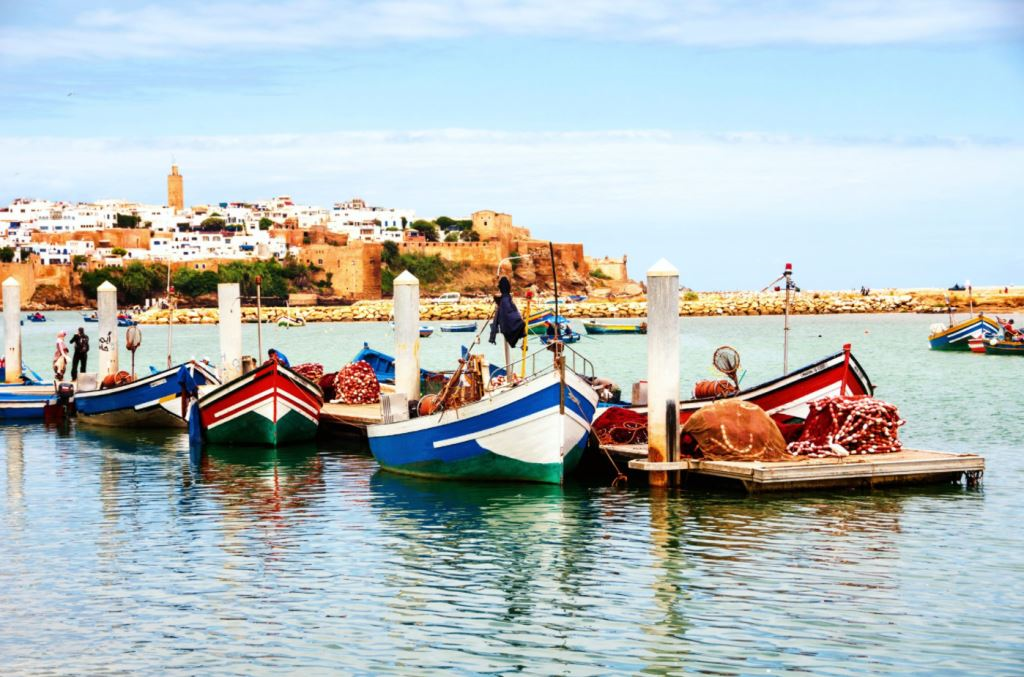
Since the establishment of the state, about a quarter of a million Jews have immigrated to Israel from Morocco. The vast majority did so in the first two decades of Israel's existence, so that immigrants from the large Arab country have been living here for decades.
At the same time, the connection to tradition, roots, and the unique Moroccan way of life still exists, both among the immigrants and their children and grandchildren.
The renewed closeness between Israel and Morocco allows anyone who wants to travel to the beautiful country with a fascinating history to do so - the following recommendations will help you plan a particularly exciting trip.
 Want more news, videos and stories? Join the Haredim 10 WhatsApp channel >>
Morocco's largest city has had a vibrant and influential Jewish community since the 18th century. During World War II, there were already over 100,000 Jews in Casablanca. The life of the community is commemorated in a museum in the city's Oasis neighborhood. Although the museum is not large, a visit to it is very moving even for someone who was not born in Morocco. The Jews who still live in Casablanca are concentrated in the southeastern part of the "Medina" quarter, in a neighborhood called El Malah. The ancient Jewish cemetery is also located in this area, which has unfortunately been abandoned and neglected.
Another place worth visiting in Casablanca is the beautiful promenade, which is no less than 13 km long! The promenade was renovated at the beginning of the 21st century, and on the other hand, there are also remains of ancient fortifications and impressive walls along it. At the end of the promenade is the tomb of Sidi Beliot, the patron saint of the city and a beloved figure among members of Casablanca's Jewish community.
Other attractions in the city: Arab League Park - a perfect place for picnics, the Royal Palace (although you cannot enter it) and Mohammed V Square.
Marrakesh also has an area called El Malah, where Jews live (a few hundred people who also operate two synagogues). The city's most prominent attraction, which has rightly been nicknamed the Paris of Morocco, is Jemaa el-Fnaa - a square that during the day leads to the bustling market and in the evening becomes a fascinating place where jugglers, actors, vendors, storytellers and, naturally, lots of tourists gather.
When visiting Marrakech, it is also worth visiting the Manara Gardens, Majorelle Gardens, and the city's palaces: El Badi and El Bahia (located near the El Malah neighborhood) and Menbi, which is a short walk from Jemaa el-Fnaa.
In addition, Marrakech is a starting point for trips to the Atlas Mountains, which are also not worth missing.
The most beautiful landscapes of Morocco are scattered along the Atlas Mountains, where you can see, among other things, thrilling waterfalls, snow-capped mountain peaks, green valleys winding between majestic mountains, and more. The most visited sites in the area are the Todra Valley, known for its steep, red-walled canyon, the Dra River Valley, and the Dades River Valley.
The Sahara Desert offers endless sand dunes, some of the most beautiful sunsets in the world, as well as spectacular sunrises, the warm hospitality of local tribes, and exciting jeep tours.
Fez is another city that once had a thriving Jewish community, especially since the late 15th century, after many Jews who had been expelled from Spain and Portugal arrived. Prior to this, Fez was ruled for about 5 years by Rabbi Maimon bar Yosef the Dayan and his son, the Maimonides.
Today, the Jewish Quarter is part of Fez El Jadid, and those who come there can visit the Jewish cemetery (from which there is also a good view of the city) and the active synagogues there.
It is also worth taking a trip to the ancient city called Fas el Bali, and also to nearby Meknes, which also has several interesting heritage sites (the Royal Palace, Bab el Mansour, El Hadim Square and the Mellah).
Along the Moroccan coast, the climate is reminiscent of Israel. In Casablanca, for example, the maximum temperatures are 24-25 degrees, and despite the high humidity (80%), it is possible to travel. Between November and January there are relatively many rainy days. In the Atlas Mountains there is also snow in winter, and in the nearby desert area, summer can be hot with temperatures of 40 degrees during the day.
Accordingly, the best times for an exciting trip to Morocco are in spring (April-June) and autumn (September-October), although it is also possible in summer. At the end of 2020, an agreement was signed between Israel and Morocco that allows direct flights, but as of May 2021, this option has not yet been implemented.
Passportnews, the tourism and aviation news website Updates on important developments in these areas and is worth following to know when it will be possible to reach Morocco in just 5 hours.