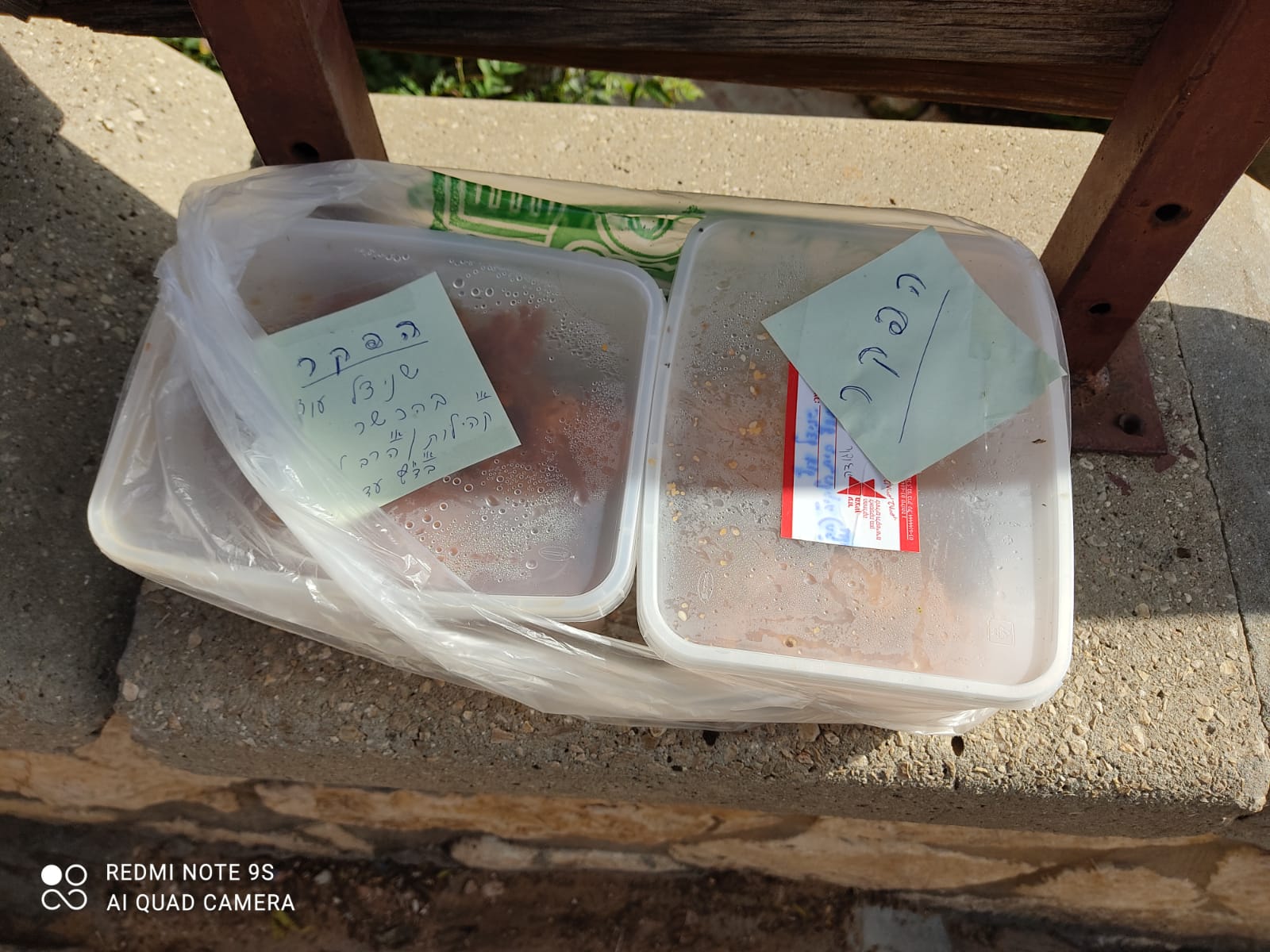
I took this lovely photo near my home in Modi'in Ilit. Rare or routine, strange or natural - depending on the angle of the observer, and yet a number of reflections or basic assumptions accompanied this short performance:
They said it was a mild flu: This is how we will stop the lies of anti-vaccine activists
1. The schnitzel vendors are aware that they have an expensive product, considered in the context of the place, and therefore they are careful not to throw it away. They offer it to others who can enjoy it.
 Want more news, videos and stories? Join the Haredim 10 WhatsApp channel >>
2. Others, meaning the city's residents, will crave schnitzel. They also recognize the fact that it is an equivalent product.
3. The schnitzel offerers know that the other person will not accept their offer if they fear that they belong to no one, and hence, God forbid, a theft offense is involved. This is why they take the trouble to emphasize that the product is 'the one without a name'.
4. The box states that the chicken meat bears the seal of kashrut – Badatz, Haredi community, communities, or Rabbi Rubin. The three leading koshers. Schnitzel offerers are afraid of stumbling others into eating food whose kosherness is not to their liking.
5. They also understand that without mentioning the names of the three considered kashrut bodies, no one will touch the schnitzel.
6 If no one touches the schnitzel, it will be thrown away.
So what did we have? An unusual offering on a city street for a quintessentially home-made product: boxed schnitzel. No one thought it was strange – which it would have been if the original owners of the dish hadn't adhered to the aforementioned set of rules.
And I should mention that minutes after the photo was taken, a local woman was observed leaning over the find and rejoicing in her share.
The writer and the narrator
The writer and proofreader from Brachfeld [=who lives in Modi'in Illit] silently accepted my requests and promised that they would be reviewed within a day. When the time came, I showed up at the dear man's house and, like hundreds before me, I posed the question that every husband in his people must ask:
Well, how is the writing?
In other words, what do you think of the beauty of the Assyrian script of the Sofer Satam – from whom Grandfather, may God bless him, purchased the tefillin?
Nice, the man replied.
I was speechless and also enjoyed it. For the first time, the word 'pleasant' was used to describe the beauty and form of a writer. What is the difference between an informative response and a description of a physical sensation? The language of writers.
The proofreader also tied the 'Yod' of the tefillin for me using a tendon.
How much should I pay? I asked, five shekels, the man replied.
Five shekels? How can you even pay for any work with five shekels? How do you even calculate that? Am I able to pay five shekels for a work of art – even if it takes a few minutes? I felt embarrassed, but the man insisted that this was the payment.
It didn't get any easier.
I paid and said to myself: Will the payment requirement be the same in Bnei Brak and Jerusalem?