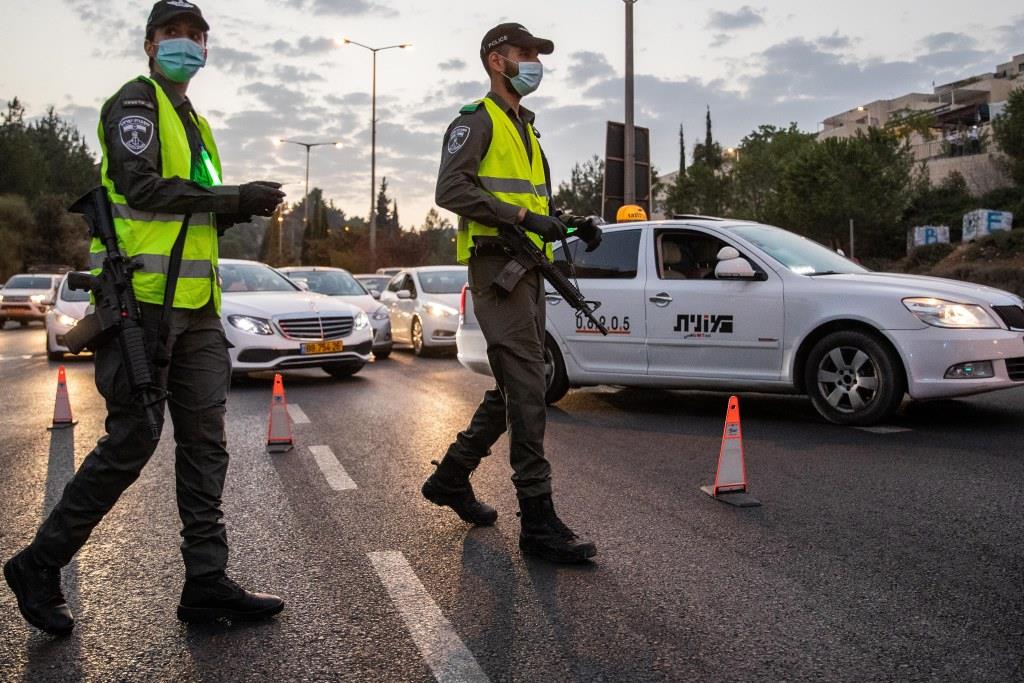
The Corona Cabinet will convene tomorrow (Thursday) for a discussion in which the decision will be made - how will the country be run during the Tishrei holidays?
The Ministry of Health demanded that on Rosh Hashanah Eve, intercity highways be closed, holiday meals be limited to 10 people, and there is still debate about whether leaving the house will be limited to a distance of up to 500 meters.
 Want more news, videos and stories? Join the Haredim 10 WhatsApp channel >>
Kan News reported that several alternatives will be presented to the cabinet ministers, with the debate being between an alternative of 'tightened restraint' that includes a curfew only during the holidays, and an alternative of 'closure' that includes a curfew for the entire holiday period.
Channel 12 reported that three main outlines are on the ministers' agenda:
One - to define the entire country as an orange zone with all the restrictions that this implies.
The second - a breathing closure without operating leisure services and most commercial services, while leaving workplaces open.
The third - a complete closure, as was the case during Passover.

It is estimated that the rules will be stricter on the holidays themselves and relaxed on weekdays. The holidays will be held, with the exception of prayers, in the nuclear family format as was the case during Passover, and movement between cities will be prohibited.
This evening, a preliminary telephone meeting was held with the participation of Prime Minister Benjamin Netanyahu, Defense Minister Benny Gantz, Health Minister Yuli Edelstein, and Professor Roni Gamzo.
According to estimates, the cabinet will ultimately vote in favor of one of two options: the tighter restrictions supported by the project manager Gamzu or a general lockdown, supported by Health Minister Edelstein.
However, Gamzu did not reveal his final recommendation at the meeting.
At the same time, a special outline will be proposed to the Corona Cabinet that will allow - at least on Rosh Hashanah and Yom Kippur - prayers with maximum attendance.
On the table is the possibility of allowing up to 50 worshippers to gather in an enclosed area or limiting each minyan to 25 participants. Another idea is to activate all authorities that will open municipal buildings such as schools, and divide the minyanim into up to ten worshippers.