The Haredi education system in Israel has repeatedly been on the public and media agenda. The Haredi community often notes the virtues of Haredi education, the wise students who grow up in the yeshiva world, the educational values that are passed on to the younger generation, and the academic achievements of Haredi girls.
Israeli society in general complains about the lack of general studies in the education of ultra-Orthodox boys, the low rates of matriculation exams for ultra-Orthodox girls, and the high dropout rates from the ultra-Orthodox education system.
It is clear to any reasonable person that it will not be possible to force the Haredi community to educate its sons and daughters in a way that it does not desire, but on the other hand, it is also clear that within the Haredi community itself there are many good people who wish to give their sons an education that is different to one degree or another from what has been customary up until now.
In light of this, there is no doubt that the most correct and effective way for the benefit of all is to create various educational options for ultra-Orthodox parents seeking a suitable educational institution for their children.
To this end, there is no need to harm existing educational institutions, but rather to find the necessary solutions for those who seek to offer new and innovative educational frameworks to ultra-Orthodox students and encounter various difficulties along the way.

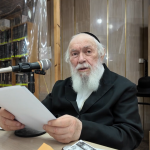
From my experience in recent years in establishing and managing the 'Chachmei Lev' Yeshiva - a Haredi high school yeshiva in Jerusalem, I am convinced today that this model has great potential to produce many graduates with a distinct Haredi identity, with extensive Torah knowledge, and with the general knowledge required to continue their path in all areas of life.
However, the main problem preventing this is the economic cost of this educational model, which in the current situation is only possible for the wealthy.
The combination of high-level yeshivah religious studies with general studies leading up to matriculation, when it is also necessary to make up for gaps from previous years, requires a long and intensive school day, which also requires full meals and, in many cases, full boarding conditions. Employing professional teachers in a wide variety of fields of knowledge, with the need to divide each class into different levels, makes the model in question even more expensive.
The "Haredi High School Yeshiva" model is the only one that will enable the growth of a new generation of normative Haredim who are able to integrate into the world of work at a young age and in quality fields of occupation. Any other model that appeals to Haredi youth who drop out and is satisfied with vocational and technological education will not bring about the necessary change.
However, the current budgetary model in Israel does not truly allow for the establishment of such institutions for ultra-Orthodox families who are not financially well-off.
Providing equal opportunities in yeshiva-secondary education for Haredi boys from families with low socioeconomic backgrounds is the duty of the hour.
• Rabbi Bezalel Cohen is the head of the Chachmei Lev Yeshiva
 Join the Haredim 10 Facebook page >>
 Join the X page of Haredim 10 >>
 Want more news, videos and stories? Join the Haredim 10 WhatsApp channel >>