Operation 'Am Kalavi': Complete data on drone and missile interceptions revealed • Watch
Haredim 10
July 2, 2025
Photo:
Ministry of Defense Spokesperson
The Director of Research and Development of Weapons and Technological Infrastructure at the Ministry of Defense - Mafat, concluded today (Tuesday) the 'Am Kalavi' operation, in a briefing led by the head of Mafat, Brigadier General (res.) Dr. Danny Gold.
According to the data, the multi-layered defense system developed under the leadership of Mafat prevented damage to property estimated at over 50 billion shekels - and protected many human lives.
Mafat, in collaboration with the IDF branches, the Ministry of Defense bodies and the defense industries, led the research, development, technological applications and building of technological power for the IDF in recent decades, and in particular in the accelerated race for reinforcement carried out in preparation for Operation 'Am Kalavi'.
Some of the weapons, first used in 'Am Kalavi', were developed over decades for precisely this purpose.
MAFAT has recently led a large-scale development effort in five main areas: air defense, drones, space, armaments and defense for fighter jets, AI, and digital.
Data on defense systems during Operation 'Am Kalavi':
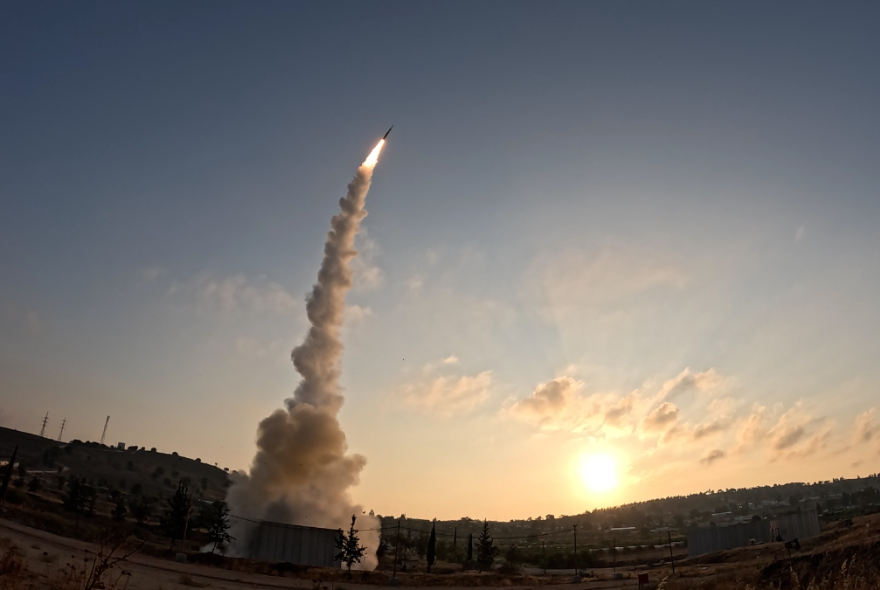
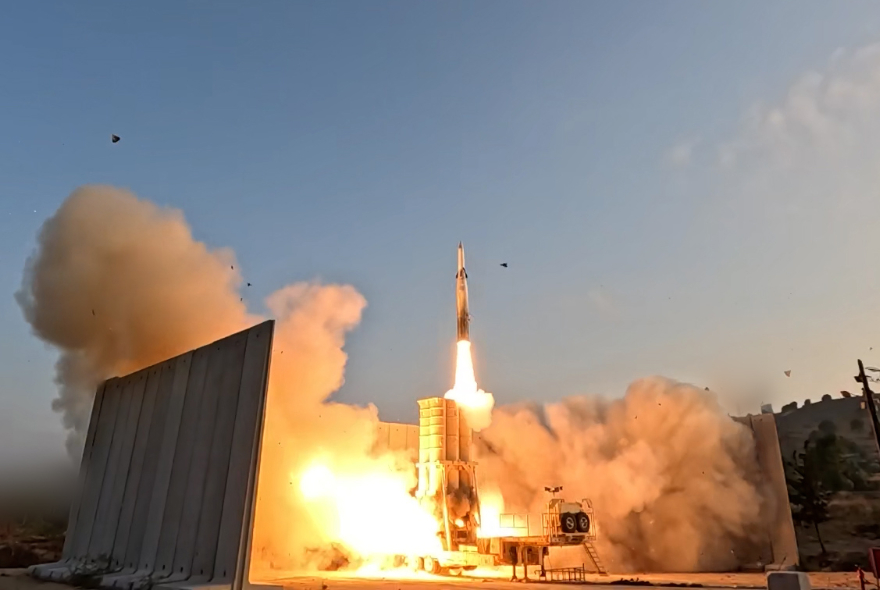
86% of the ballistic missiles launched from Iran into Israeli territory were successfully intercepted. A week before the operation, improved versions were integrated into the Arrow system
The potential for damage prevented thanks to air defense systems is 7 times the actual damage caused.
Version updates to the Iron Dome and David's Sling systems and a groundbreaking test of Iron Dome against swarms of UAVs carried out in March of this year, along with an unprecedented air defense effort by the IDF using additional means, resulted in over 99% intercepting Iranian UAVs.
The drone array operated continuously for the first time in a third cycle, carrying out thousands of flight hours and over 500 attacks and interceptions in Iran.
The drones reduced the risk to fighter pilots, hunted down launchers and missiles, and saved many lives while preventing much damage to the State of Israel.
The drones flew thousands of hours in Operation 'With the Dog'. Together with Operation 'Iron Swords', the drones flew 60% of the Air Force's flight hours and 50% of the IDF's interceptions.
Tens of millions of square kilometers were photographed in very high quality, day and night. The satellites also provided essential, highly available communications to support the attack operations.
During the operation, hundreds of thousands of square kilometers were photographed and hundreds of targets were provided to the IDF per day in secret and without risk to our forces. The collection was carried out with high repetition during the day and night, allowing for rapid closure on targets.
Over 12,000 satellite images were taken over Iranian territory, the satellites accompanied the mission of attacking and collecting thousands of targets.
In the opening strike and in the days leading up to achieving air superiority over Tehran, and even afterwards, the Air Force made extensive use of medium- and long-range weapons, weapons for counterattack (STAND OFF). These weapons were developed over years under the leadership of the Air Defense Forces and the defense industries and were a decisive factor in achieving surprise and achieving air superiority in Iranian skies.
The ability to accurately strike targets, from a distance and despite an electronic warfare atmosphere from the enemy, is a unique Israeli capability that has been developed over years.
The fighter jets flew in Iranian skies with self-defense systems against enemy missiles developed in Israel.

 Join the Haredim 10 Facebook page >>
 Join the X page of Haredim 10 >>
 Want more news, videos and stories? Join the Haredim 10 WhatsApp channel >>