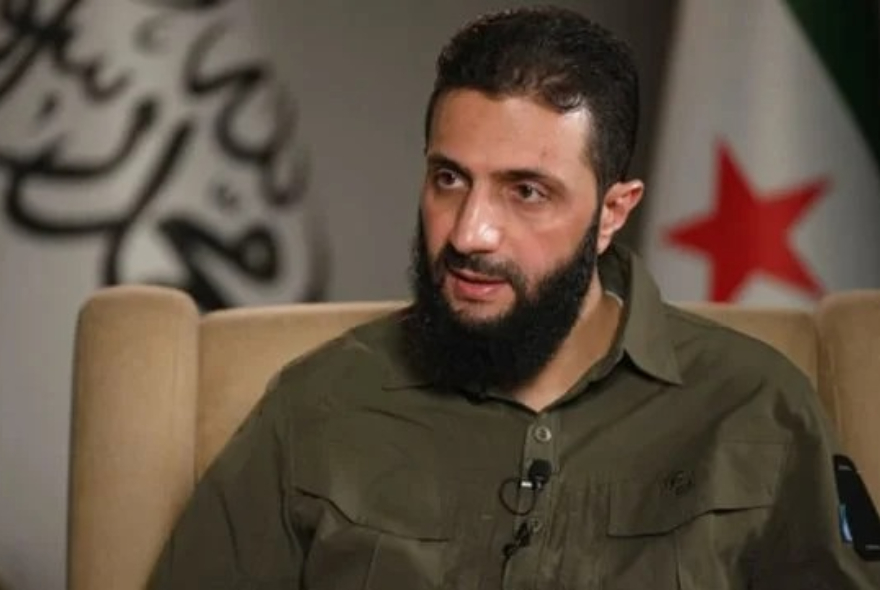
Are Israel and Syria on the way to signing an agreement? A Syrian source involved in the direct dialogue taking place between Syria and Israel told Kan News today (Sunday) that "the connection between Israel and Syria could be very significant.".
Was your property damaged in an act of hostilities or war? Here's how to easily file an online claim
According to the same source, the Syrians oppose Iran and the terrorist organizations Hezbollah, Islamic Jihad and Hamas - and the main demand that is being raised in the talks from Syria is the Israeli withdrawal from the south of the country. "The issue of the Golan Heights is not up for discussion at the moment. It is still early, but the Americans are a key factor here," the Syrian source said.
Two visits to the United States are expected soon: the closer one by Prime Minister Netanyahu, during which relations with Syria will also be a focus. And the second is the historic visit that Syrian President al-Shara is planning to New York in September to participate in the UN General Assembly.
A Syrian source told Kan News that Damascus is not ruling out the possibility of a meeting between Netanyahu and al-Sharaa on the sidelines of the UN General Assembly in New York. In addition, the Syrian side is preparing for a first-of-its-kind visit to Damascus by Saudi Crown Prince Mohammed bin Salman in the near future.
Earlier today, President Trump was interviewed by Fox News and addressed the possibility of additional countries joining the Abraham Accords. The president did not rule out Syria joining. "Iran was the main problem, it blocked another round of the Abraham Accords. I don't know if Syria will join, but I lifted the sanctions that were on it.".
Lebanese report: These are the Syrian demands for a peace agreement
Thomas Barak, US President Donald Trump's envoy to Syria, was asked today whether there was a chance of an agreement between Israel and Syria - and replied: "Yes, I think so. An agreement has to be reached at a certain point. Israel was the enemy of the previous regime for a long time." Barak added that he believes there could be a similar agreement with Lebanon.
Two days ago, it was reported that Thomas Barak confirmed in a conversation with Al Jazeera that the new Syrian government is conducting "calm dialogue" with Israel on a number of issues, including the border issue, the IDF presence on the country's soil, and the government's ability to maintain a viable state.
Following this, earlier this week it was reported that senior Syrian officials said in closed-door talks that direct dialogue with Israel had been taking place on a daily basis in recent days. A Syrian source involved in the matter told Kan News that Syria does not rule out the possibility of reaching a peace agreement with Israel by the end of Trump's term.
Meanwhile, the Lebanese channel LBCI reported this evening, citing sources involved in the events in Syria, that the Syrian demands for peace with Israel are Israeli recognition of the Ahmed al-Shara' regime, withdrawal from the territories occupied by Israel since last December and from the buffer zone in the Golan Heights, a halt to Israeli attacks in Syria, security arrangements in southern Syria, an American guarantee for agreements - and American support for the Syrian government.
In return, the sources said, Syria would recognize Israeli sovereignty over the Golan Heights.
The American rabbi who met with Ahmed al-Sharaa in Damascus
Rabbi Avraham Cooper, an American rabbi who met with the new Syrian President, al-Shara, did not rule out the possibility of a future meeting between al-Shara and Netanyahu in Washington. According to Cooper, the road to that end has not yet been paved and depends largely on President Trump.
Just before Israel began Operation Dogfight in Iran, Rabbi Cooper managed to visit the Syrian capital, along with Rev. Johnny Moore, who is considered a close confidant of President Trump. Cooper and Moore had previously met in New York with Syrian Foreign Minister Asad al-Shaybani, and from there their path to Damascus was paved.
Rabbi Cooper, who previously served as chairman of the US government's Commission on International Religious Freedom, has a long history of traveling to Arab countries as part of his unofficial efforts to promote the Abraham Accords.
He defines the Syrian President, al-Shara'a, with whom he met for two hours in Damascus, as "an interesting leader with whom you can argue, and that's something unique.".
In an interview with 'Kan News', Rabbi Cooper spoke about his impression of al-Shara: "It's true that he is an Islamist, but al-Shara talks about a vision for his state that will include a united Syria with one army and equal rights. If he can do that, it will be a game-changer.".
Regarding relations with Israel, Cooper - based on his meeting with al-Shara - outlines two possible paths to warming relations. The first option is non-escalation and non-conflict - and a diplomatic meeting under Trump's auspices.
""I think the only way that would be a quick way is if someone named Donald Trump were to call two people, the Israeli prime minister and the Syrian president, to come to Washington and sit for a few hours. That could change the picture.".
""If Trump signals that he's going to stay involved and says, 'No, I'm going to help you rebuild your country,' then anything is possible. Without that, it will go slowly, step by step.".
Rabbi Cooper comes from the humanitarian field and reveals that he suggested to Non-Shara to start from the bottom up, meaning collaborations with Israel in the areas of identifying missing persons, water and agriculture that would help his people. He says that he also thanked him for helping to transfer Eli Cohen's archive to his family and asked him to help return his remains.
Cooper said that al-Shara's message is that he must first resolve the conflict with Israel. "We intend to continue to promote this. He did say that he is interested in peace." So on the one hand, it depends on Trump, but on the other hand, it also depends on Syrian President al-Shara. Until that happens, Rabbi Cooper also says that in his meeting with Syrian Foreign Minister al-Shaybani, they suggested that he restore synagogues throughout Syria - giving as an example the many visits of Jews to the United Arab Emirates. "Do you know how many Jews will want to come to Syria when the time is right?".
 Join the Haredim 10 Facebook page >>
 Join the X page of Haredim 10 >>
 Want more news, videos and stories? Join the Haredim 10 WhatsApp channel >>