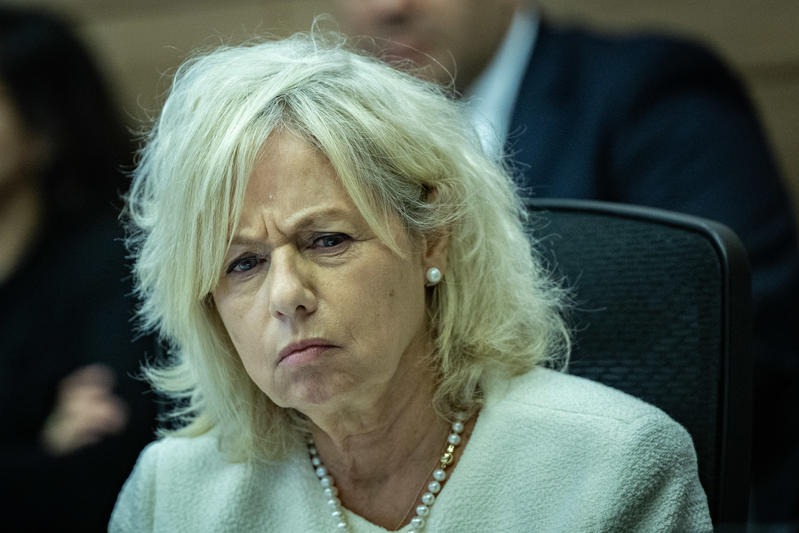
Legal Advisor to the Prime Minister Gali Baharav Mayara and State Attorney Amit Isman issued a statement today (Thursday) following the investigation of journalist Zvika Klein and the invitation of three additional journalists to testify in the 'Kettergate' affair.
The announcement noted that the law enforcement system is committed to freedom of the press and that enforcement policy has not changed, while maintaining a policy of minimizing the collection of testimony from journalists as much as possible.
""The investigation into the suspicions regarding the promotion of Qatar's interests by the Prime Minister's advisors requires collecting open testimony from journalists. Without collecting testimony from journalists, it will not be possible to clarify the relevant facts," it was written.
Regarding the reason for the interrogation of journalist Zvika Klein, editor-in-chief of the Jerusalem Post newspaper, it was explained that he was originally summoned to give open testimony and not as a suspect.
""As part of his testimony, a significant suspicion emerged that the journalist, along with the prime minister's advisors, was part of the mechanism for receiving favors from Qatar in exchange for advancing its interests.".
Following this, "it was decided to proceed to an investigation with a warning that focused on the issue of receiving benefits from Qatar.".
Journalist Aviad Glickman from News 13 reported that the police released Zvika Klein from house arrest this morning. As of now, all restrictions have been lifted from him.
Three journalists are expected to give open testimony to the police today as part of the affair. The journalists are Shirit Avitan Cohen, Suleiman Masvade, and Nir Davuri.
The purpose of the testimony is to examine whether the journalists were asked by consultants Jonathan Urich, Eli Feldstein, and Israel Einhorn to disseminate messages to the public in favor of Qatar.
 Join the Haredim 10 Facebook page >>
 Join the X page of Haredim 10 >>
 Want more news, videos and stories? Join the Haredim 10 WhatsApp channel >>