The National Insurance Institute's poverty and inequality report was published today (Wednesday) in the shadow of two severe crises that have affected the Israeli economy in recent years - the Corona crisis and the events of October 7 and the 'Iron Swords' War. According to the report, inequality and the dimensions of poverty are high and worrying, even before the outbreak of the war. According to the report, in 2023, 1.98 million people lived below the poverty line in Israel, including 872.4 thousand children and 158.5 thousand senior citizens. In other words: 20.7% of Israeli citizens live in poverty, as do 27.9% of children, and 12.8% of senior citizens. The poverty line for 2023 stands at approximately 3,324 shekels and anyone whose income is below this amount is, according to OECD country indicators, in a state of poverty. According to the report, the poverty line for a couple in the State of Israel stands at at 6,648 shekels and the poverty line for a couple with 3 children is 12,465 shekels. Between 2022 and 2023, it was found that the poverty incidence - the percentage of the population whose income is below the poverty line - among individuals remained almost unchanged and with a slight decrease from 20.8% to 20.7% and among families from 20.3% to 20.1%. In almost all population groups, according to the National Insurance Institute's Poverty and Inequality Report - there was a decrease in the incidence of poverty or it remained stable. However, the incidence of poverty among children is particularly high and despite the decrease in 2023 it still stands at 27.9%.
Poverty is greater in the Arab and Haredi sectors
An examination by sector shows that the incidence of poverty is high among Haredim and Arabs, and in 2023 the incidence of poverty in these two populations decreased compared to 2022. The rate of poor individuals among Arabs and Haredim in the total poor reached 64.9% in 2023 – 42.4% Arabs and 22.5% Haredim – double their weight in the population. The incidence of poverty among non-Haredim Jews was 14%. The data presented clearly show that without government intervention, through allowances and grants, the incidence of poverty among individuals would have increased from 30.6% in 2022 to 31.1% in 2023, and for families from 33.9% to 34.2%. The greatest impact of National Insurance benefits on poverty reduction is in old-age and survivors' benefits, disability benefits, and unemployment benefits, which have the greatest direct contribution to their economic situation. Income support benefits, for which the National Insurance Institute has requested to update legislation and examine increasing the amount of the benefit, as well as alimony benefits, have the least impact on poverty reduction among those eligible for them. Direct benefit payments and grants are of great importance in poverty reduction, but compared to developed countries, their contribution is very low. According to the report, while the incidence of poverty of persons according to disposable income among OECD countries stands at 11.6%, the State of Israel stands at 19.5%, followed only by Costa Rica. Public welfare spending in international comparison shows that while the aid of the 'state' among the OECD stands at 22.4%, the State of Israel invests only about 16.6% in its public welfare spending and only Korea and Ireland are below it. In 2023, the rate of households unable to cover all monthly expenses was 26.5%, while in 2022 the figure was 30.5%. 9.7% of households in Israel gave up medical treatment due to financial difficulties and 6.2% gave up prescription drugs. There was also a slight decrease in the rate of households that give up a hot meal at least once every two days, when in 2022 the figure was 6.1% and in 2023 – 5.0%.
Residents of the North, South, and Jerusalem – Poorer
The findings of poverty in geographical distribution show that the dimensions of poverty in the Jerusalem, North and South districts are higher than average. The poverty incidence of families in these areas reached 36.2% in Jerusalem, 22.5% in the North and 22.6% in the South. In contrast, the Tel Aviv and Central districts are in a better situation and poverty rates are lower than average. According to the report's findings, Modi'in-Ilit is the poorest settlement, followed in descending order by: Jerusalem, Beit Shemesh, Bnei Brak, Lod, Netanya, Ashdod, Beersheba, Jaffa, and Bat Yam. The coronavirus crisis and the war affected the poverty situation in the entire population. An examination of the entire population during both crises and the government support provided shows that the contribution of the aid was considerable. However, its impact was not uniform, especially in the cases and support for the self-employed, who, although they helped in both crises to improve their damaged economic situation, were not enough to prevent the increase in poverty among them, unlike the rest of the population. This fact emphasizes the need to design tailored policy tools that will assist the self-employed in times of crisis. The poverty rate among the self-employed was also affected, among other things, by the closure of some businesses in the trade and restaurant sectors following the war. It was found that the highest poverty level is found in the following sectors: hospitality and food services, management services and support, health and welfare services as well as in the arts and entertainment, education and agriculture industries.
A family of one needs 4,155 shekels
The data shows that the poverty rate among working families helps to lift people out of poverty, while the poverty rate among families headed by an employed or self-employed person is lower than average. The poverty lines by family size for 2023 show that a single-person family needs NIS 4,155 per month to be above the poverty line, a family of a couple with a child or a single parent with two children needs an income of NIS 8,808 per month, and a family of a couple with two children will need NIS 10,637 to be above the poverty line. It should be noted that the two groups that have seen the greatest increase are families headed by a self-employed person and families headed by a senior citizen. However, employment does not necessarily lift families out of poverty, especially when the level of income is low. In addition, the incidence of poverty among young families with a head under the age of 29, many of whom are at the beginning of their professional careers, is high, and they constitute 13.81% of all families and 28.71% of poor families, and the government's contribution to reducing poverty in these families is relatively low. In addition, families with a head of family aged 30-44 were greatly affected by the war because naturally these are the families that 'participated' in the war, so that quite a few discharged soldiers were drafted into the reserves and did not enter the labor market. Among persons and children, the State of Israel ranks second in the incidence of poverty after Costa Rica, with the incidence of poverty among children in Israel standing at 27.91% of this population. According to the report, it can be clearly seen that poverty by number of children increases as there are more children in the family, so that poverty among families with five or more children stands at approximately 50%, families with 3 children stand at approximately 20%, and families without children stand at approximately 19%. The incidence of poverty among children is particularly high, even in international comparison, and children - who make up 32.5% of the population - constitute 44% of the poor. High poverty among children harms not only the current standard of living but also the process of forming human capital, which is important for their future earning capacity. The incidence of poverty among senior citizens is lower than average, due to the various benefits provided to this population, such as: nursing care benefits, senior citizen benefits, and income supplement benefits intended for those with low incomes. However, the incidence of poverty among senior citizens living alone is higher than those living with a family and is 19.8% compared to 8.4% respectively. Also, the grants in general and those given to those aged 67 and over who were put on unpaid leave or laid off following the war also reduced poverty among senior citizens by 0.5%.
Decrease in the rate of feeling poor among the Haredi
In 2023, the rate of people who feel poor in the general population decreased significantly by approximately 26%. The decrease encompassed all sectors: Arabs, non-Haredi Jews and Haredi. Among the Jewish population, a decrease of approximately 39% was recorded, and a notable decrease of approximately 53% in the rate of those who feel poor among the Haredi, so that their rate reached 5.8% - much lower than their objective poverty rate. Among the Arab population, the rate of those who feel poor also decreased significantly by approximately 29%. However, the rate among them is 6.5 times higher than the rate of Jews who felt this way. A ratio that increased compared to the previous two years.
Chabad Israel: We also have an optimistic bright spot
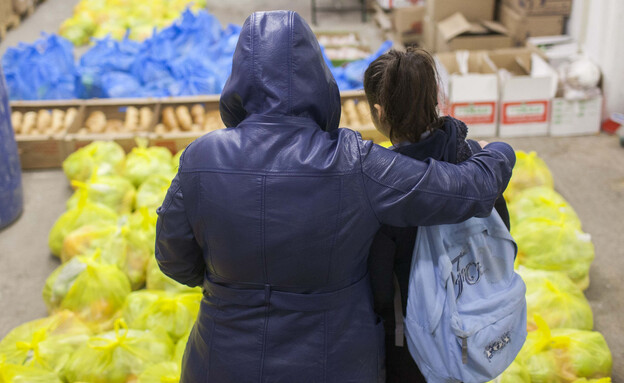
Mandy Blau of the Chabad-Israeli National Food Security Initiative, operator of the National Food Security Initiative, said in response to the report's data: "Every line in the severe poverty report is heartbreaking, especially the shocking figure of 5 percent of Israeli citizens who forgo a hot meal due to their economic situation. "Along with this, we also have an optimistic bright spot from the fact that the Food Security Initiative - the most effective tool to combat the phenomenon of food insecurity - will be doubled as early as 2025, which will have a real impact on the lives of tens of thousands of people in Israel and contribute to a decrease in the difficult data. "We, together with our partner, the Friendship Foundation, thank the state for investing in the National Food Security Initiative, which helps provide economic well-being to tens of thousands of families in Israel.".

 Join the Haredim 10 Facebook page >>
 Join the X page of Haredim 10 >>
 Want more news, videos and stories? Join the Haredim 10 WhatsApp channel >>