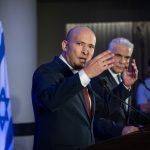
The candidate: Rabbi Shlomo Moshe Amar
identity card: Rabbi Shlomo Moshe Amar, 66 years old, was born in 1948 in the city of Casablanca, Morocco. He studied at the Otzar HaTorah school and the Chabad yeshiva in the city. In 1962 he immigrated to Israel and lived with his parents in Pardes Hanna.
Upon reaching the age of 15, he decided to study at Yeshiva Tiferet Zion in Bnei Brak and then at Yeshiva She'erit Yosef with Rabbi Nissim Toledano zt"l. When he was 19, he moved to Yeshiva Shlomi and two years later he took the place of the Hamra Datra Rabbi Masoud Rivuch. During these years, Rabbi Amar began studying with Rabbi Yaakov Nissan Rosenthal - Av Beit Din of Haifa, who was his distinguished rabbi.
Past rolesIn 1970, Rabbi Amar was appointed rabbi and director of the kashrut department at the Nahariya Religious Council, and three years later he was appointed rabbi of Moshav Magdim on the Carmel Coast. In 1982, he was appointed dayan in Safed, and served as dayan in the cities of Tiberias, Beersheba, Haifa, and Ashkelon.
He then moved on to serve as the Rabbi of the Beit Din in Petah Tikva, and during these years he also served as a judge at Badatz Beit Yosef, and advised on the establishment of the Badatz's kashrut system. In 2002, he was appointed Chief Rabbi of Tel Aviv. In 2003, he was elected by a clear majority to the position of Rishon LeZion and Chief Rabbi of Israel.
Political orientation: Rabbi Amar is considered a figure in the Haredi-Sephardi camp, and is identified with the camp of the former chairman, MK Eli Yishai. He studied in Haredi seminaries, and his most prominent teacher was Rabbi Yaakov Rosenthal of Haifa. In the last twenty years, he was very close to Gera Yosef, whom he considered very highly and placed his trust in. After he ran his candidate, Gera Bo'aron, against Gera Yosef in the elections for Chief Rabbinate, a rift arose between him and the Gera.
Marital statusRabbi Amar is married to Mazel, and they have 12 children.

The candidate: Rabbi Aryeh Stern
identity card: Rabbi Aryeh Stern, 69, was born in 1944 in Tel Aviv. He completed his law studies at the Yeshiva of the New Yishuv and later at the Yeshiva of the Central Rabbi. Upon his marriage, Rabbi Stern studied at the Kollel 'Shevet Mi'Yehuda' for the training of dayanim under the leadership of Rabbi Ephraim Bordiansky.
Past roles: In 1970, the Rosh Yeshiva of the Mercaz Ha-Rav, Rabbi Zvi Yehuda Kook, asked Rabbi Stern to establish the Halacha Berura Institute together with Rabbi Yochanan Fried. The Halacha Berura Institute continues Rabbi Kook's vision of clarifying Halacha from its sources in the Talmud and its commentaries and publishes a new edition of the Talmud, uniquely connecting the study of Halacha with the study of Gemara [from the publisher's website].
Rabbi Stern was involved in the restoration of the Rabbi Kook House in Jerusalem, and served as the rabbi at Yeshiva Hadarom in Rehovot, and at the yeshiva Merkaz HaRav, Kiryat Shmona, Yeshiva HaKotel, Orot Shaul, Ashe HaTorah, and Or Etzion. Rabbi Stern has also headed a community in the Katamon neighborhood of Jerusalem for the past few decades.
Political orientation: Rabbi Stern has a distinct religious-national orientation. He is a student of Rabbi Kook, and the agreed-upon figurehead of religious Zionism, chosen from a long list of national religious contenders. In an interview with him, he said: "The idea of a religious-Zionist rabbinate is of utmost importance. It is not an ornament, it is something essential.".
Marital statusRabbi Stern has seven children, one of whom, Shira, was killed in a car accident about 7 years ago when she was 21 years old.

The candidate: Rabbi Chaim Amsalem
identity card: Rabbi Chaim Amsalem, 55, was born in 1959 in the city of Oran, Algeria. When he was six months old, his family moved to France and in 1970 they immigrated to Israel. Rabbi Amsalem studied at the Kis Rachamim Yeshiva and is a distinguished student of Rabbi Meir Mazuz. He also served as a rabbinical advisor in the yeshiva. In 1990, he was ordained as a rabbinical advocate, and in 1993, he was ordained as a city rabbi.
Past roles: Served for about 7 years as the rabbi of the settlement of Shreshteh, and then as a neighborhood rabbi in the city of Netivot and as head of the Baba Sali institutions. Later, he headed the 'Shirei David' kollel that he established in Har Nof in the name of his father. Between the years 2003-2005, he served as the rabbi of the Sephardic Jewish community 'Heichal Hans' in the city of Geneva, Switzerland.
In 2006, Rabbi Amsalem was elected to the Knesset on behalf of the Shas faction as a representative of Rabbi Mazuz, and served as a Knesset member until 2013. During these years, he received the Knight of the Order of the Quality of Government for his work. In 2010, following a rift with the Shas party, he founded the Am Shalem movement, which he heads, and ran in the last elections and failed. In 2014, Rabbi Amsalem announced that he would run as part of the Likud movement in the next elections.
Political orientation: Rabbi Amsalem was previously considered to have a Sephardic Haredi orientation. Over the years, Rabbi Amsalem expressed independent opinions that were not in line with the Haredi perception. Banned by the Shas community. Rabbi Amsalem accused the Sephardic Haredim of submitting to the dictates of the Lithuanian Haredim. However, in his book 'In the Name of Reason' he defines himself as belonging to the Haredi community, but he defines it as 'a different Haredi, authentic Sephardi.'.
Marital statusRabbi Amsalem is married to Hannah and they have eight children.

The candidate: Rabbi Moshe Chaim Lau
identity card: Rabbi Moshe Chaim Lau, 53, was born in 1961 to his father, former Chief Rabbi of Israel and current Chief Rabbi of Tel Aviv, Yisrael Meir Lau, and his mother, Chaya Yota, daughter of the Chief Rabbi of Tel Aviv, Rabbi Yitzhak Frankel. His brother is Rabbi David Lau, the Chief Rabbi of Israel. Rabbi Lau studied at the Kol Torah Yeshiva, and then at the Hebron Yeshiva. After his marriage, he studied at the Ohel Moshe Kollel HaVrechim, and received ordination to the city rabbinate from the Chief Rabbis of Israel, Rabbi Mordechai Eliyahu and Rabbi Avraham Shapira.
Past roles: As a young man in the Hebron Yeshiva, he served as the rabbi of the Tiferet Zvi Synagogue in Tel Aviv, and in the early 1990s he was the director of spiritual absorption and responsible for Jewish clarification on behalf of the Religious Council in Netanya. Rabbi Lau is a neighborhood rabbi in the city of Netanya, head of the kollel and rem at the Netivot Yitzhak Yeshiva in Tel Aviv, and is a member of the Press Council's plenum. About a month and a half ago, he ran for the position of Chief Rabbi of Netanya and lost by a narrow margin to Rabbi Kalman Bar.
Political orientation: Rabbi Moshe Chaim Lau is considered a Gur Hasid. He studied in Haredi yeshivot, and the Haredi parties Shas and Degel Hatorah are supporting him in the race for the rabbinate of Jerusalem.
Marital status: Rabbi Lau is married to Zipporah.

The candidate: Rabbi Shmuel Eliyahu
identity cardRabbi Shmuel Eliyahu, 58 years old, was born in 1956 in Jerusalem to Rabbi Mordechai Eliyahu, the Rishon LeZion and Chief Rabbi of Israel, and his mother, Tzvia. He studied at the Jerusalem Yeshiva for Young People and then at the Merkaz HaRav Yeshiva under Rabbi Kook. He studied rabbinical and jurisprudential studies at the Ariel Institute in Jerusalem.
Past roles: At the age of 29, Rabbi Eliyahu was appointed Rabbi of the Shlomi settlement. At the age of 32, he was elected Chief Rabbi of the city of Safed. Later, Rabbi Eliyahu was elected a member of the Council of the Chief Rabbinate of Israel. Since his first election to the Council of the Rabbinate, Rabbi Eliyahu has been elected 3 times in a row and is one of the oldest members of the council. He served as the head of a heritage foundation that established Torah centers – a role entrusted to him by his father.
Rabbi Shmuel Eliyahu previously ran for the position of Chief Rabbi and Rishon LeZion against Rabbi Yitzhak Yosef and lost.
Political orientationRabbi Eliyahu is considered a figure of religious Zionism. At the same time, he is part of the "Haredi" movement. His candidacy is supported by some religious Zionists, but also, surprisingly, by the Degel HaTorah and Agudath Yisrael movements.
Marital status: Rabbi Eliyahu is married to Toba.
• In preparing the article, we used Wikipedia as a source.
 Join the Haredim 10 Facebook page >>
 Join the X page of Haredim 10 >>
 Want more news, videos and stories? Join the Haredim 10 WhatsApp channel >>