The past year has proven time and again that the evacuation chain from the battlefield is critical not only to the wounded's chance of survival, but also dramatically affects their recovery process. To understand exactly how medical warfare theory was refined throughout the campaign, two IDF Special Operations Command (SOC) officers led us step by step - to the beating heart of the action.
Accuracy in medical procedures
A year of complex treatments in the field requires professional knowledge and great precision when it comes to performing medical procedures anywhere. "The conditions on the battlefield are not ideal, and there are procedures that can endanger the wounded, for example, opening an airway," says Lieutenant Or, 890th Airborne Division Paratroopers' Battalion, "We try to avoid them, and ensure evacuation as quickly as possible." To illustrate this, the 890th Airborne Division Paratroopers' Battalion describes the following incident: "During one of the maneuvers in Rafah, we encountered an explosive device. One of the wounded suffered a head injury, and it was important to maintain an airway to prevent blockage." At these moments, he and the paramedics call for immediate evacuation, while at the same time continuing to operate in the field. "Depending on the conditions and the threat around, we realized that in this situation it was better to evacuate him to the hospital as soon as possible for treatment.".
Close medical team
Following the lessons of Operation Protective Edge, the IDF decided to attach senior doctors to each combat company. Right at the beginning of the fighting, each battalion was reinforced with an additional paramedic or doctor who joined the medical squad. "Now there are three medics who move as part of the company, and a senior medical officer. This provides an additional safety net for the fighters, who go into battle and know that they have an experienced professional by their side if necessary," states Captain Maayan, former 82nd Battalion's corporal. That squad, of course, also affects the speed of response and the nature of the treatment. "During one of the activities, an engineering company sergeant was hit by anti-tank gunfire, and he extricated himself along with the D9 operator. The medical squad that was close to them at the point of impact provided him immediate treatment. "In the evacuation phase, he received plasma, we immobilized his leg and evacuated him to the landing site." When Captain Maayan describes the incident, it seems like the puzzle was put together properly: "All the pieces of the chain connected to each other, we took the injured person from the moment of impact with great safety to the landing site, and everything flowed quickly and precisely.".
Battalion evacuation brick
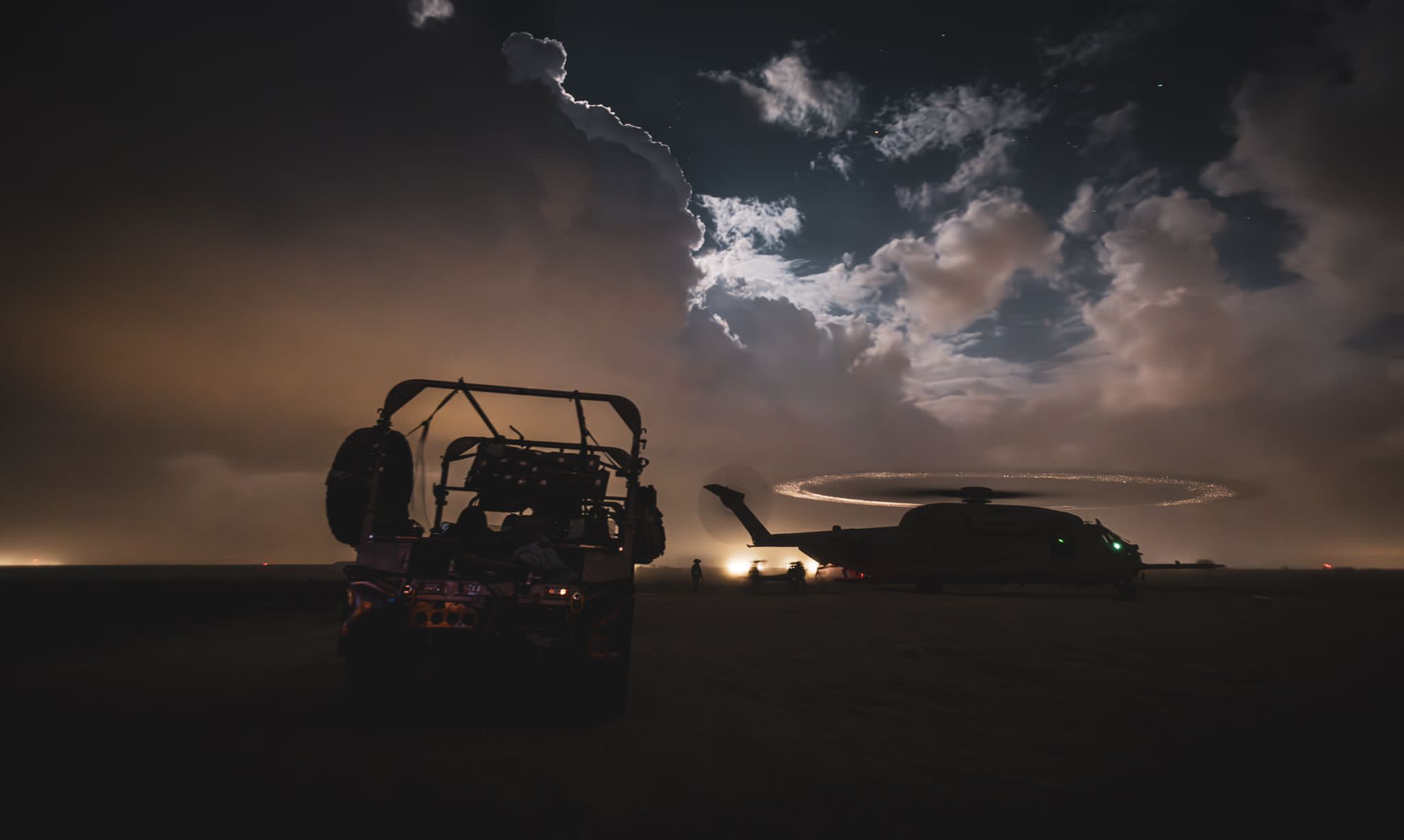
The fighters are accompanied not only by the medical companies. You will also find the battalion light - an armored military vehicle carrying medical equipment, which is able to move with the battalion according to its missions and accompany it anywhere and under fire. "Its advantage is reflected in the rapid exchange of wounded. Since they are always nearby - the time between picking up the wounded and transporting them for evacuation back to the country and to the hospital is much faster," describes Lieutenant Or, a medical officer in Brigade 890. One example that illustrates the importance of the light is a high-casualty incident a few months ago. "Six wounded people who were hit by an RPG arrived at the hospital in less than an hour. Thanks to the organic quality and the protection it provides, we were able to create an accurate picture of each wounded person," he says. "It has become a matchmaker in terms of speed and efficiency." "Another advantage is the accessibility of medical equipment," notes the commander, "the possibility of bringing medical capabilities to the area itself, such as whole blood, full oxygen, and a ventilator that warms fluids." As part of the maneuver in Gaza, the vehicles were integrated into armored vehicles that allow treatment in a safe space. In the north, on the other hand, in light of the route, they chose Humvees - light vehicles that can move quickly in mountainous terrain. "After a year of intensive and in-depth activity, we feel more confident in light of the experience we have gained," concludes Lieutenant Or. "Our ability to draw lessons and knowledge from past operations, from small parts like the tip of a syringe, to major changes like supplying whole blood to the battalion level, improves us in the most important mission - saving lives.".

 Join the Haredim 10 Facebook page >>
 Join the X page of Haredim 10 >>
 Want more news, videos and stories? Join the Haredim 10 WhatsApp channel >>