1.
On Wednesday this week, the 8th of Elul, I closed the round of commemorations for the Gush Katif events that I conduct, in my heart, every year.
A few weeks ago I wrote here how every summer, in preparation for the days between the Egyptians, I take down from the high shelf 'Shahar Katum, the Album of the Struggle', which was published about a year after the disengagement. It contains hundreds of photos, newspaper clippings, personal stories, advertisements and even poems, which tell the story of the struggle against the disengagement. It is essentially a detailed diary, which documents month after month - and towards the bitter end, day after day and even hour after hour - the demonstrations, marches, prayers and tears.
 Want more news, videos and stories? Join the Haredim 10 WhatsApp channel >>
What I didn't know when I wrote that column was that Sharfi Ben Bashet, one of the leaders of the headquarters of the struggle against deportation, the man who initiated the publication of this very well-invested album and was even its editor-in-chief, paid the heaviest personal price during the war, for the injustices and stupidities he tried to warn against: His son, Brigadier General Yitzhak (Baneva) Ben Bashet, commander of the Golani Brigade, married and father of four, fell while rushing to rescue the wounded in the bombed-out building in Sajaiya.
""Yitzhak fought at the head of the forces and fell as a hero of Israel," said the statement of mourning issued by the Neve Tzuf community where he grew up. "He was one of the heroes of this land, one of the finest fruits of Benjamin and Neve Tzuf. He fell in defense of the people and the land that he loved so much, as he was educated in his home steeped in the love of Israel and the Land of Israel and the Torah of Israel.".
2.
And why did I end the Gush Katif memorial tour on the 8th of Elul?
Because on this date, immediately after the IDF withdrew from the area, hundreds of Gaza rioters looted, burned, uprooted and desecrated the synagogues of Gush Katif. That morning, the main headline on the Ynet website was: "Sooner than expected: Palestinians set fire to the synagogues.".
I don't know what is meant by the words "sooner than expected." After all, from the perspective of the Gazans, they did it much later, much later than expected. They have always wanted to burn the synagogues of the Jews, but it just wasn't possible. The second the State of Israel left Gush Katif, and they had the opportunity, they fulfilled their dream. Then, after several years of organizing and equipping, on October 7, they fulfilled the bigger dream - burning the Jews themselves.
What did lawyer Gilad Corinaldi, who at the time led the legal struggle against the demolition of synagogues by the state (and even wrote a fascinating book about it, 'The Lockdown Trial'), say in an interview with that website at the beginning of the war?
""There is a line connecting the burning of the spiritual treasures of the Jewish people to the burning of their own bodies. In a place where a Palestinian-Hamas mob rages around a bonfire in which the few shrines, the soul of the Jewish people, go up in flames, the mob will rage around the burning of houses, settlements, communities - including babies, women and Holocaust survivors. Among the sparks that rose from the stones of the holy places in the month of Elul 5765, one could recognize the animal madness of the mob almost two decades later, on Simchat Torah 5764.".
By the way, on that difficult morning, 19 years ago this week, the released terrorist Jibril Rajoub, known as the "National Security Advisor to the Palestinian Authority" (the same authority that is now being proposed to be given the task of protecting Gaza from terrorism), did not even see a point in apologizing for the burning of the holy places in Gush Katif. "The Authority will remove all the structures that Israel leaves in the settlements," he said, "because they bear the memory of terrible Israeli aggression against our people. Some of those structures are dangerous structures, in addition to the fact that they are living testimony to the oppression and cruelty of the occupation for 38 years.".
And the same news item also contains the response of former Gaza Coast Council spokesman Eran Sternberg. Listen carefully: "The burning synagogues in Gush Katif and the celebrations of supporters of disengagement from Hamas are a fitting backdrop for the IDF's surrender and the shameful escape under fire, which in slang is called 'leaving on an upright footing.' The serious consequences will be expressed in the future, when Israel discovers that it did not actually leave the Gaza Strip, but that the Strip was tightly wrapped around its neck.".
He prophesied and knew what he prophesied.
3.
So this week, the day after the eighth of Elul, the date on which the evacuation operation ended, as it did, I returned the book to its place on the high shelf (the only place there is room for large albums) and wondered, a bit like the moments when I return the prayer cycles of the High Holy Days to the shelf, where this book will meet me next year. Where will it meet us, the State of Israel? Where will it meet Gush Katif? What will be there next summer, exactly twenty years after the expulsion?
On the one hand, we are so close to returning to it. In fact, we have already returned to it. After all, right now there are many makeshift synagogues in Gush Katif where IDF soldiers pray. All we need to do is bring civilians there as well. On the other hand, we still have a long way to go in public opinion. And the truth is that it has become a little discouraging lately: if in the first days after the horrors of Simchat Torah it was clear to so many Israelis that there was no other solution to Arab terror - the media quickly returned to doing what it has excelled at for at least thirty years, since the days of the Oslo peace: fooling the public.
Hamas executed six hostages in cold blood? Is the soul agitated? Is the blood boiling? Come on, you tried all the feelings of revenge from Sinwar and Hamas to Netanyahu. The revenge of the blood of your servants that was shed will be known in Bibi before our eyes.
And you hear the voices, and see the sights and the blockades, and you go crazy: What, don't you understand that your calls for a deal at all costs only distance the chance of the abductees' return and only bring closer the chance of more abductions? What is Sinwar supposed to understand from your behavior after the murder of the six abductees last week, and from your reactions to the IDF spokesman's tunnel video this week?
And how are you so shocked (and rightly so, of course) by the blood stains in the tunnel in Gaza and so indifferent to the blood stains at the station in Givat Assaf? How do you not understand that the Arabs are the same Arabs and the blood is the same blood?
4.
Just before I said goodbye to the sad and frustrating book about the failed struggle, I read its introduction, and I found it so relevant today. Perhaps even more so than when it was written. It's interesting that I didn't notice it all these years. Maybe because I rushed into the book without lingering at the beginning.
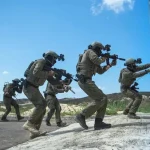
Thus writes Rafi Ben Bashat: "There was a war of ideas between the army and police headquarters and our small headquarters. Tens of thousands of soldiers and police officers, drones, helicopters, jeeps and armored personnel carriers, mobile vehicles and motorcycles, binoculars and thermal cameras, sophisticated communication systems and listening systems were recruited for the displacement operation. All of these stood against an 'army of believers on the road' with backpacks on their backs, 'armed' with baby strollers and babies in carriers, singing, praying and believing that even if we don't win the battle - we will win the war.".
5.
Amazing. There's a real specification here of everything that was missing to prevent what happened on Simchat Torah. Forget the concept for a moment. If only there had been helicopters, jeeps, armored personnel carriers, etc. in the exact same area, the situation would have been completely different. But what can we do when the defense establishment has identified the wrong enemy in recent years? Well, that does have to do with the concept.
And then, as now, they tried to silence us. Our opinion was not legitimate: "In the name and for the sake of all those who fought and identified, those tens of thousands of people, women, youth and children who took part in a struggle that did not receive proper media coverage or proper documentation, in the name and for the sake of all those who did everything they could, with all their heart and soul, this book is being published.".
6.
But pay attention to the following paragraph, which Ben-Basht wrote in the introduction (together with his editorial partner, Yitzhak S. Rekanti) 18 years ago, which goes to the heart of the matter: "The struggle for the Gush was not just a struggle for the settlements, for the people who were expelled, for the greenhouses that were destroyed, for a tremendous enterprise of over thirty years that was brought to an end in a few days. The struggle was – and still is – for the image of the state, for the path, for the depth of the roots: Will it be a state of the Jews that will preserve the values of Judaism or a state like any other state on the globe?".
That's what the struggle in Gush Katif was about. That's what the struggle is about now. It's not just a political struggle. It's not just a security struggle. It's also a political and security struggle, of course, but it all starts in the depths of our roots. In our Jewish identity. That's the story. And if we know how to deal with the root, in the depths, if we know how to return to our sources - if we know how to return our brothers to the sources - we will be able to see with our own eyes the fulfillment of the prophecies of comfort that we call the Sabbath in the synagogues (some of which we have already seen fulfilled in the last generation): "For a small moment I forsook you - but with great mercies I will gather you. In a flood of wrath I hid my face from you for a moment - and with everlasting kindness I will have mercy on you. For the mountains will be removed and the hills will be made low - but my mercy will not be cut off from you," Isaiah prophesies to us.
And if, God forbid, it doesn't, what will happen then? Well, for that you don't need to turn on Isaiah, just turn on the radio.