Finance Minister Bezalel Smotrich and the Dairy Council have reached an understanding, subject to the agreements of the boards of directors of the relevant bodies, to reduce by about half the increase in the milk tariff for 2023.
Another week to celebrate: Everything you need to know before traveling to Meron
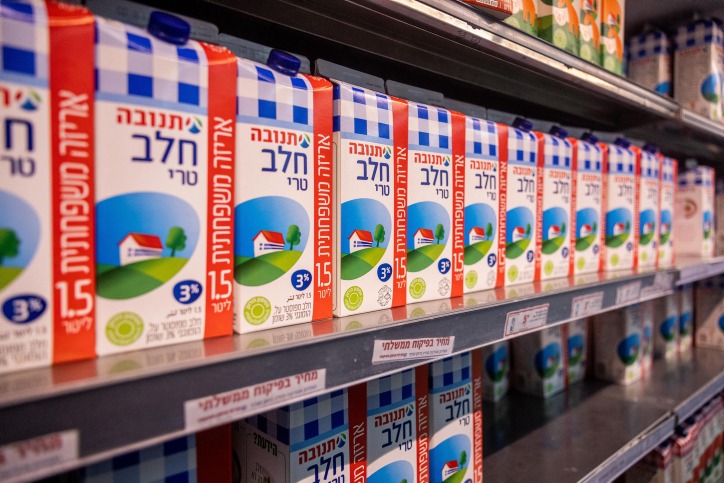
As part of the agreement, it was also agreed that the tariff increase planned for November 2023, which originated from the agreement of the previous Finance Minister Avigdor Lieberman - worth 1.5%, will be canceled. Supervised dairy products increased in price today (Monday) by 9.28%, instead of 17.5% and 3.1% in May 2024. After the price increase - these will be the new prices: The price of a 3% milk carton, which has cost 6.25 shekels to date - will now increase to 6.75 shekels. Sweet cream 38% fat, which cost 6.47 shekels - will increase to 7.01 shekels. The price of 5% fat white cheese, which was 4.98 shekels - will increase to 5.38 shekels. Sour cream 15% fat will increase in price from 2.4 shekels to 2.6 shekels. Minister Bezalel Smotrich said: "We managed to stop the increase in milk prices by almost half. It was not easy, mainly due to the irresponsible behavior of Lapid and Lieberman. The dairies had demands, but after long negotiations - we stopped the price increase that was supposed to be double. "We would like to thank the dairies that, despite the previous agreement signed by Lieberman, which entailed the entitlement to a price increase, they agreed to the request of Finance Minister Bezalel Smotrich to spread the price increase and make things easier for the public." He added: "After the urgent response that we were forced to give in a short time, we are entering a process of in-depth correction in the dairy sector. "I instructed the professionals at the Ministry of Finance to examine the entire production chain, starting with centralization in the import segment of grains and feed for cows, through the target price, and ending with dairies, cross-ownership and the controlled price. All of this is aimed at freeing the economy from excessive centralization and anachronistic planning and moving towards an open and competitive market, alongside preserving agriculture and Zionism in the Jewish settlements.".

 Join the Haredim 10 Facebook page >>
 Join the X page of Haredim 10 >>
 Want more news, videos and stories? Join the Haredim 10 WhatsApp channel >>