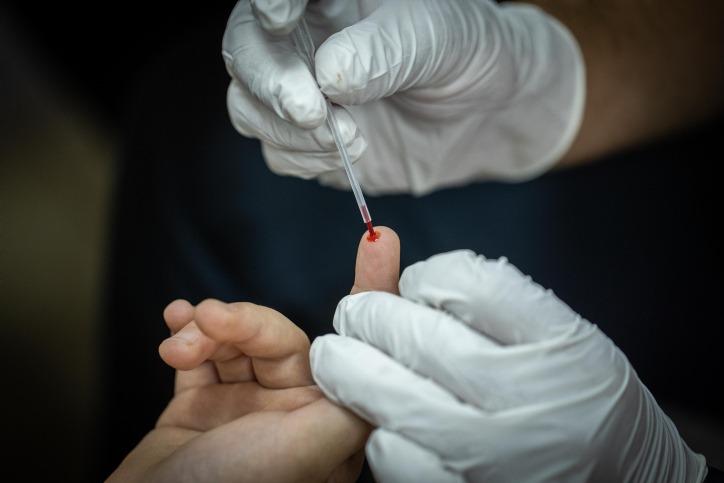
N. P., a resident of the Haredi city of Beitar Illit, requested serological tests for his four children. Because he thought that the MDA organization would demand payment for the service, he turned to the competing organization, Ihud Hatzalah, which often showcases the volunteer spirit of its activists. But to his surprise, it turned out that the service would cost him money - and a lot. How much? A quick calculation revealed that it was 1,100 shekels just for the test to be performed at home by the organization's volunteer, not including the costs of the test in the laboratory. He, of course, gave up on the pleasure. Still, there is a limit. When he told Haredim 10 about it, we thought he was joking. So he sent the price list for the costs of "Volunteer Headquarters and Operations - Corona Project: Corona and Serological Tests at Ihud Hatzalah." Here it is: At four centers (without the need for a queue) of the organization: • Serological: 249 shekels, results within 36 hours • Corona: 269 shekels, results within 24 hours Home tests: ▪ Serological: 600 NIS (additional person 500 NIS) ▪ Corona: 469 NIS (additional person 369 NIS) Urgent tests • Serological: 1049 NIS, results within 24 hours • Corona: 1069 NIS, results within 15 hours We contacted a senior official at 'United Hatzalah'.
Serological and Corona tests, do you do them voluntarily or does it cost money?
""Medical care is provided voluntarily and free of charge, tests are free and are a service to the public.".
I see that the cost of a test is 250 NIS. Why is a home test 600 NIS?
""Because there is someone who comes to your house and gets paid for it.".
And why does each additional person living in the same house cost another 250 NIS, not including the cost of the test? After all, your volunteer is already in the house - we wondered. Where is the volunteering here? Why is it even defined under the heading 'volunteer headquarters'? How are you different from MDA?
The source insisted: "The medical response is voluntary. The testing system is not.".
Let's think for a moment, we told him. If a citizen has 5 children, you charge 1350 NIS for arrival, not including the cost of the test! What costs do you have that you charge for 4 additional children in the same house another 1000 NIS? After all, the volunteer is already in the house...
The source tried to explain: "The ultimate goal of 'United Hatzalah' is to provide primary medical care by thousands of volunteers throughout the country - this service is provided to approximately 2,000 emergency calls every day and is completely voluntary, without charging any fee. "In addition, the organization provides a service to the public of corona and serological tests, which are carried out for a fee, it also costs us in laboratories, etc. For additional children, there is a cost of coming to the home, and beyond that, for each additional person the price is the price of a regular test, which is another 250 per person, which sounds perfectly reasonable to me.".
Why do you charge such amounts for home visits? Again, the cost of the labs is not included in these amounts. In addition to the cost of the regular test - which is 250 NIS, you charge another 250 NIS per child for the service at home.
We have added to the difficulties:
Why does the cost of a volunteer from Betar Elite who comes to a home in Betar Elite charge 350 NIS for coming for the benefit of one child, and in a home with four children he will charge 1,100 NIS. He comes by plane? What, in fact, is the difference between you and MDA?
We contacted the spokeswoman for Ihud Hatzalah - where they replied: "Ihud Hatzalah provides primary medical response to approximately 2,000 emergency cases every day, completely voluntarily and without payment, by over 6,000 volunteers throughout the country. "At the same time, the organization operates a coronavirus and serology testing system as a public service without any support from the state, and therefore a fee is charged for this service, most of which goes to the operating expenses of the testing system, which, as mentioned, is not funded by any body. "The remaining income from the testing system is used to finance life-saving activities and purchase life-saving equipment.".

 Join the Haredim 10 Facebook page >>
 Join the X page of Haredim 10 >>
 Want more news, videos and stories? Join the Haredim 10 WhatsApp channel >>