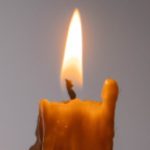
The Chief Rabbi of Israel, Rabbi Lau, called this morning (Sunday) following the 'Meron disaster' to re-regulate the situation on Mount Meron.
It's time to wake up: your dream has a home – and it's about to come true. How?
Free: How much money are you losing because you don't know what your rights are?
The coronavirus outbreak is on the decline, but a mask is still required in closed spaces. Remember?
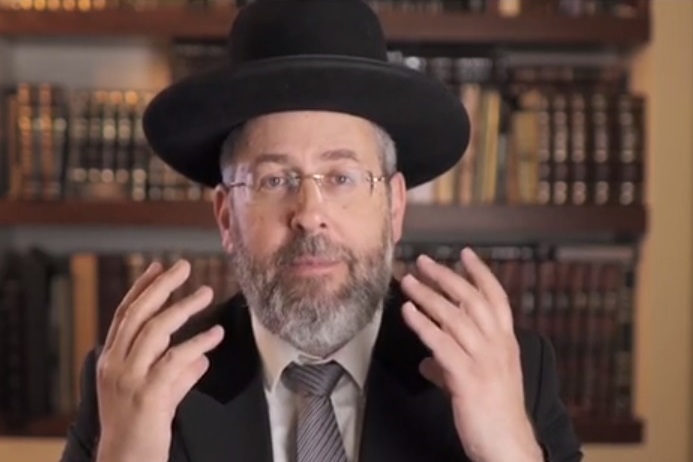
Rabbi Lau initially proposed spreading the celebration of Rabbi Shimon Bar Yochai in Meron over an entire week, and in addition, examining in depth what the correct way to manage the mountain would be and, if necessary, removing responsibility from the endowments that hold the mountain. In an interview with Mandy Grossman and Dov Eichler in Kan Moreshet, Rabbi Lau said: "It may be necessary to divide the event into an entire week. We know from the books that a soul comes to a place and its imprint remains for two or three days. We know that it is not only possible to come on the day of death, not only on the day of the celebration. "So dancing will not be possible before the day of the celebration, but lightings will be possible and prayer stands will be possible. Just make sure that the entire place is a more spacious place." According to him, "When you get to places like this, if you split it up over a week, then it's true, it will be difficult for people to give up Lag BaOmer, but when the thought and desire are to do it to benefit and save and preserve human lives - I want to believe and hope that people will take this responsibility." On the possibility of taking responsibility away from the dedicatories: "The concept of dedicators is a concept that ultimately the courts should be responsible for. That is, in a dedicatorie, you have to contact the court and get its consent, and if the court sees that the dedicatorie is not being conducted according to its rules and the dedicatorie is not preserving the thing as it should be - then the court has the full right and the full duty to do everything to make it beneficial.".
The Chief Rabbi added: "I mean. Ultimately, if all these bodies fail to find the right path and 45 victims accompany us because they did not find it, then we will try to see and make an effort so that when they finish investigating the incident, they will determine one clear address. It seems to me that the place that I can perhaps slightly liken to the grave of Rabbi Shimon Bar Yochai is also the site of the Western Wall, our holy place. I think that this place has a clear address, there is orderly management, and many people also come there. The area is smaller than the entire Great Mountain and yet you see the order that is maintained there.".
""If the dedications fail to maintain this, then they should take and transfer the responsibility to those who know how to do it. It's too early to say who, in principle the state should take responsibility." In an interview with Galei Tzahal, the Chief Rabbi said: "It was sad to hear the music stop within minutes, we slowly began to see a more and more difficult picture." According to him, "When you are at an event like this, you are aware of the crowding and the pressure, but you tell yourself, 'Last year there was no one here, this is an opportunity to rejoice.'" The Chief Rabbi added: "Mount Meron must come to an arrangement, the place must be treated differently. What is happening right now is not appropriate for the dignity of the place and human life. The state has a duty to take responsibility for it. It is time to also require religious events to issue a business license. I don't know if it is possible to require, for example, every funeral, I think not. But Meron? "Of course." On Jerusalem Radio 101fm, the GRI said: "We need a homeowner, that's what was missing on Thursday, we need to decide once and for all. Let the government sit down and decide that all responsibility for Meron, Mount Meron and the other holy places is in the hands of one body or another, we need to decide, because otherwise what happens is that everyone throws at the other.".

 Join the Haredim 10 Facebook page >>
 Join the X page of Haredim 10 >>
 Want more news, videos and stories? Join the Haredim 10 WhatsApp channel >>