Researchers from Ben-Gurion University examined the intensity of psychological symptoms among the secular, ultra-Orthodox, and Arab sectors in a state of ongoing stress from a health pandemic - and the findings indicate a distinct difference between the secular and Arab sectors and the ultra-Orthodox sector.
What is a “shared car price list”? How will the prices be displayed in the price list? All the details
Chat or phone: Why don't 'Maccabi' members have to run to the emergency room for everything?
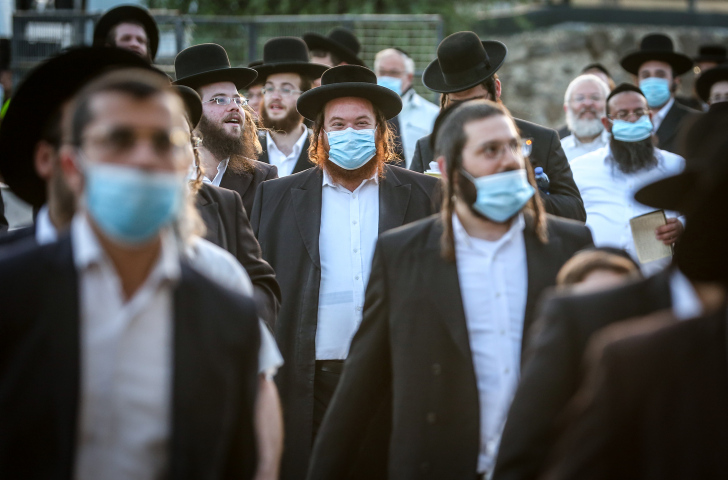
Prof. Erna Brown-Levinson - Head of the Department of Interdisciplinary Studies, Dr. Sarah Abu-Kaf - from the Conflict Management and Resolution Program, and Dr. Tehila Kalaji - from the Department of Public Administration and Policy, examined the intensity of psychological symptoms of anxiety, depression, and anger, as well as personal resilience resources of hope, a sense of coherence (the ability to see the world as meaningful), community resilience, and trust in elected officials (government and members of Knesset) among three sectors, during a state of ongoing stress of a health pandemic. On the eve of the entry into the second lockdown, reporting questionnaires were administered to 248 secular, 243 ultra-Orthodox, and 203 Arab citizens of the State of Israel. The findings suggest a closing of the gap between secular and Arab society in reporting depression and low mood. Secular society reported as high levels of mental distress as Arab society, but the starting point for Arab society was lower, hence the sharp change among the secular. Dr. Sarah Abu-Kaf, head of the conflict management and resolution program at the university: "These are worrying findings. We are not used to seeing such sharp indicators of mental distress among the secular sector. "Among Arab society before the Corona crisis, there were consistent findings indicating high levels of mental distress relative to secular Israeli society; during the Corona crisis, the gaps between the two societies appear to have narrowed." Another surprising statistic was recorded among the Haredi society: Despite high morbidity figures in the sector, it appears that the mental resilience mechanisms among the Haredi and the activation of coping resource mechanisms are higher than in other sectors. The data in the study indicated very high levels of anxiety and depression among the secular population and the Arab population in Israel, with the level of anger being the highest among the three populations, but among the secular and Arabs it was higher than among the Haredi.
The level of trust in the national leadership, government, and members of the Knesset is currently extremely low: the secular population demonstrated the lowest level of trust - complete lack of trust, followed by the Arab population, and the highest level of trust was reported by the Haredi population, although even in this population the level of trust was very low. Community resilience is measured as trust in local leadership and the functioning of the municipal authority, as well as mutual assistance, belonging, and pride in the place of residence. Community resilience was reported at the lowest level among the Arabs, and community resilience was measured at the highest level among the Haredi. Dr. Tehila Kalaji, a faculty member in the Department of Management and Public Policy at the university: "The study findings correspond with the characteristics of the Haredi society, which has support mechanisms for its members, especially during the current crisis. These characteristics have taken on great significance in relation to the mental health of community members. The demonstration of (relative) trust in the local authority and leadership requires the transfer of powers and resources in order to provide a comprehensive response to citizens. "Personal resilience resources, hope, and a sense of coherence were at a high level in the three study populations. However, there was a noticeable difference among the Haredi population, which reported higher levels of hope and a sense of coherence than those in secular and Arab society. The study indicates that there is a difference in the levels of anxiety, depression, and anger among the various study populations. These are higher among the secular and Arab sectors than among the Haredi. Personal resilience resources, hope, and a sense of coherence, can help in optimally coping with these symptoms, hence these resources should be strengthened among all sectors, especially among the secular and Arab sectors.

 Join the Haredim 10 Facebook page >>
 Join the X page of Haredim 10 >>
 Want more news, videos and stories? Join the Haredim 10 WhatsApp channel >>