The Corona Cabinet is expected to impose additional significant restrictions on "red" cities, where the rate of corona patients is high. This was reported this evening (Sunday) by Gili Cohen and Liel Kaiser on "Kan News".
In the end, you'll regret being a sucker: Maybe you deserve a lot of money from National Insurance.
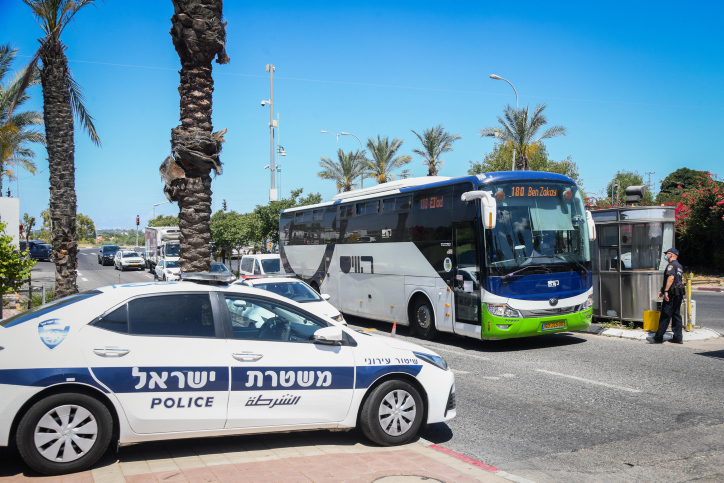
The cabinet will examine a ban on gatherings of up to ten people in a closed area, and up to 20 in an open area. In addition, the closure of stores in those cities will be examined. The cities on the agenda are Beitar Illit, Modi'in Illit, Elad, along with Arab settlements. According to the report, the goal is to allow residents to go to work. Haredim 10's reporter notes that during these days of "between times," tens of thousands of children and their parents are leaving Haredi cities for trips. More limited restrictions will also be examined in "orange" areas, which include neighborhoods in Jerusalem, Bnei Brak, and Petah Tikva. Another topic that will begin a series of discussions this week is easing the guidelines regarding places of worship, concerts, and playgrounds and parks. At the same time, the Ministry of Health and the Home Front Command have formulated a uniform standard for determining restrictions on gatherings and economic activity. According to the outline that was formulated, the details of which were published in 'Kan News', the ban on gatherings will be determined by the location of the event, in an open area or in a closed space, and by the condition of the coronavirus patients. According to the proposed outline, in a situation where the number of patients and the infection rate are low, events with the participation of 500 people in an open area and 250 in a closed structure will be allowed. In a situation where morbidity increases and the infection rate is stable, gatherings of 200 people outdoors and 100 indoors will be allowed. If there is an increase in morbidity and the infection rate, gatherings of up to 50 participants in an open area and 25 in a closed area will be allowed, and in a situation where morbidity and the infection rate are high - 20 participants outdoors and ten indoors.

 Join the Haredim 10 Facebook page >>
 Join the X page of Haredim 10 >>
 Want more news, videos and stories? Join the Haredim 10 WhatsApp channel >>