How did Jerusalem cope with the massive destruction inflicted on it by the Babylonian army in the 6th century BC? A double seal impression on a bulla and a clay seal that are most likely dated to the Persian period may provide an answer to this interesting question. The findings were discovered during archaeological excavations by the Israel Antiquities Authority and Tel Aviv University in the Givati parking lot in the City of David, in the Jerusalem Walls National Park, and were found in an area that had been cleared and arranged among the ruins of a large building that was destroyed in the Babylonian destruction of Jerusalem. Prof. Yuval Gadot from the Department of Archaeology and Ancient Near Eastern Civilizations at Tel Aviv University and Dr. Yiftach Shalev from the Israel Antiquities Authority: "Despite the many excavations that have been conducted in Jerusalem to date, the findings discovered so far from the Persian period are extremely meager, and because of this, there is also a lack of information about the nature and appearance of the city during this period. Finding these findings in an archaeological context that can be dated with high probability is very rare." The seal impressions - the bullae - were small pieces of clay that were used in ancient times to sign documents or containers (for example, jars for storing agricultural produce collected as a tax) and were intended to keep them closed on the way to their destination. The objects themselves were usually not opened or did not survive (especially the letters), but the bullae, which are made of a material similar to ceramic, were actually preserved, leaving evidence of the existence of the administrative systems, and even of the people who stood behind them. Prof. Gadot and Dr. Shalev: "The discovery of the bullae and the seal in the City of David shows that despite the difficult situation of the city after the destruction, efforts were made to restore the administrative systems to their proper functioning, and its residents continued to use the buildings that had been destroyed." The double seal impression was discovered on a large piece of clay. The size of the clay piece, about 4.5 cm, indicates that it was used to close a large container, perhaps a jar, and not for a letter. The impression shows the image of a man sitting on a large chair with one or two columns in front of him. The design of the image indicates that it was made using a Babylonian type seal. The figure is probably a king.


According to Dr. Ido Koch of the Department of Archaeology and Ancient Near Eastern Civilizations at Tel Aviv University, only about 10 items of this style have been found in Israel in several places, including Ein Gedi and Jerusalem, which appear to have been used during the Persian period. Another bulla of this style, also from the context of the Persian period, was discovered in excavations conducted by Dr. Eilat Mazar on the eastern side of the City of David Hill. The seal is made from a large, locally made pottery fragment, on the outer side of which is engraved a circular frame divided into two sections with several linear engravings. It is possible that the engravings represent two figures, and it is possible that it is a pseudo-epigraphic seal (bearing drawings intended to resemble letters). A fragment can be seen on the back of the seal, perhaps indicating a handle that was attached there in the past. The size of the seal, about 8 cm in diameter, indicates that it was used to seal large objects. Along with these items, other finds were also found, including, for example, a fragment of a bass instrument decorated with a face. According to the researchers, "The discovery of the new finds on the western slope of the City of David Hill adds a great deal of information about the structure of the city during the period of the Return to Zion, a period about which we have known until now mainly from the books of Ezra and Nehemiah. "The paucity of finds from this period has made it difficult to understand the status and scope of the city. The finds from the excavation under the Givati parking lot shed light on the renewal of the local administration system, in a location similar to that where the administration existed even before the destruction of the First Temple, about a hundred years earlier." The findings will be presented tomorrow (Wednesday) at the 5th "Jerusalem Days" conference of Yad Yitzhak Ben-Zvi and the Israel Antiquities Authority. The conference, which will take place on Wednesday and Thursday, will be filmed and broadcast live on the websites of Yad Yitzhak Ben-Zvi and the Israel Antiquities Authority.

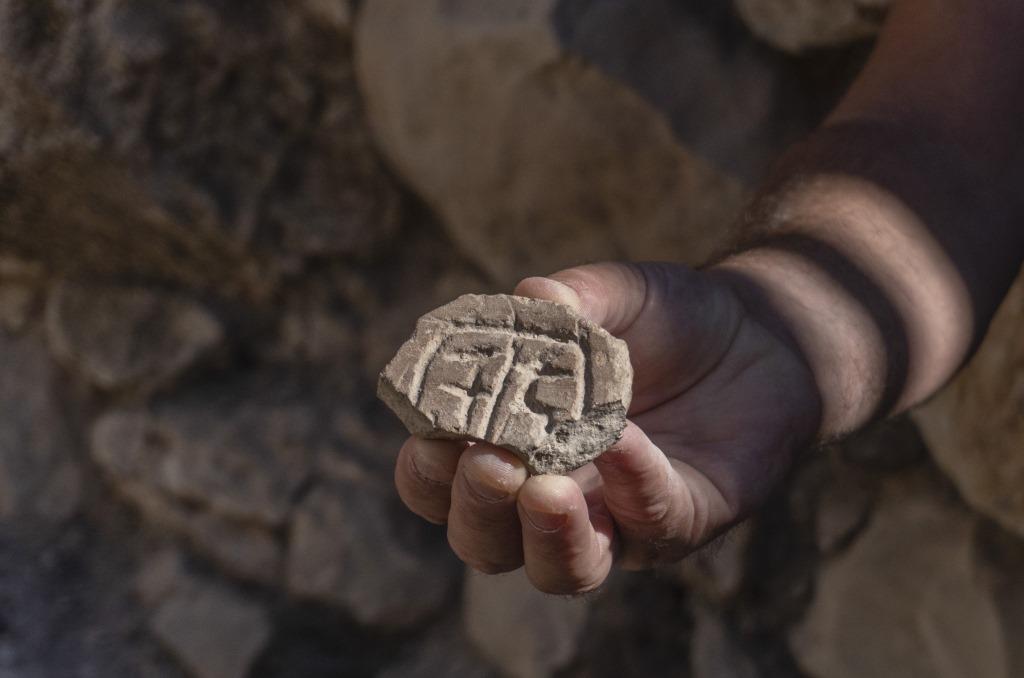

 According to Dr. Ido Koch of the Department of Archaeology and Ancient Near Eastern Civilizations at Tel Aviv University, only about 10 items of this style have been found in Israel in several places, including Ein Gedi and Jerusalem, which appear to have been used during the Persian period. Another bulla of this style, also from the context of the Persian period, was discovered in excavations conducted by Dr. Eilat Mazar on the eastern side of the City of David Hill. The seal is made from a large, locally made pottery fragment, on the outer side of which is engraved a circular frame divided into two sections with several linear engravings. It is possible that the engravings represent two figures, and it is possible that it is a pseudo-epigraphic seal (bearing drawings intended to resemble letters). A fragment can be seen on the back of the seal, perhaps indicating a handle that was attached there in the past. The size of the seal, about 8 cm in diameter, indicates that it was used to seal large objects. Along with these items, other finds were also found, including, for example, a fragment of a bass instrument decorated with a face. According to the researchers, "The discovery of the new finds on the western slope of the City of David Hill adds a great deal of information about the structure of the city during the period of the Return to Zion, a period about which we have known until now mainly from the books of Ezra and Nehemiah. "The paucity of finds from this period has made it difficult to understand the status and scope of the city. The finds from the excavation under the Givati parking lot shed light on the renewal of the local administration system, in a location similar to that where the administration existed even before the destruction of the First Temple, about a hundred years earlier." The findings will be presented tomorrow (Wednesday) at the 5th "Jerusalem Days" conference of Yad Yitzhak Ben-Zvi and the Israel Antiquities Authority. The conference, which will take place on Wednesday and Thursday, will be filmed and broadcast live on the websites of Yad Yitzhak Ben-Zvi and the Israel Antiquities Authority.
 Join the Haredim 10 Facebook page >>
 Join the X page of Haredim 10 >>
 Want more news, videos and stories? Join the Haredim 10 WhatsApp channel >>