Humans are divided into two types. There are the bold, the trailblazers, who set ambitious goals and try to reach them against all odds. And there are the cautious, the risk-averse, who see the difficulties and the possibility of falling and crashing.
Which of the two is right? Sometimes this and sometimes that.
The world would not progress without the former, but many failures would be avoided if it listened to the latter. If the daring succeeds, the daredevil will be praised, who went with his inner truth and did not listen to the little ones of faith.
But if it ends in a resounding failure, the latter will shake their heads and say that this is the end of adventurism, which ignores real reality.
Depends on who's leading.
This is apparently the essence of the confrontation between the ten spies who returned from their mission and presented the great difficulty of defeating the inhabitants of the land of Canaan, and between Joshua and Caleb. The spies say: "Why has the Lord brought us into this land, to fall by the sword, that our wives and children may be a prey." While Caleb replies: "We will go up and possess it, for it is a place of great destruction." This is apparently the story - they see the difficulties and dangers, while he clings fervently to his desired goal.
In everyday life, there is room for both approaches, and it is difficult to determine that one of them is clearly correct. Some initiatives succeed, and others fail. Sometimes daring is the secret to success, and sometimes it is the cause of failure – if the entrepreneur had listened more to the experience of others, he would have prevented himself from falling painfully. In life, a balance is required between daring and opening one's eyes and seeing the dangers and difficulties.
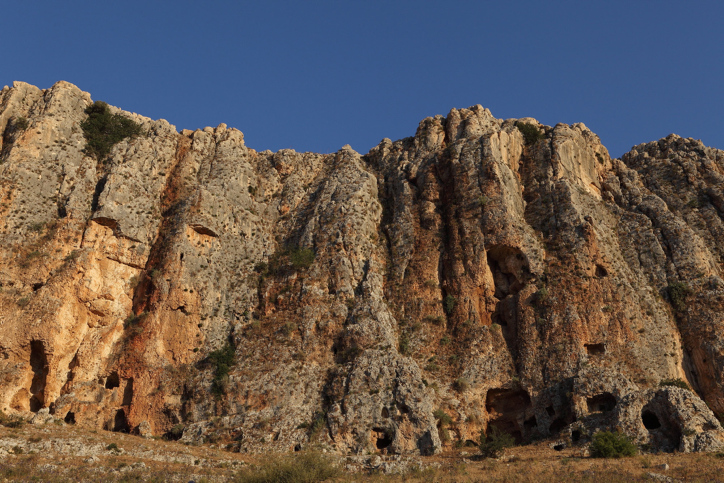
But there was something different in the story of the spies. Unlike human initiatives, which can be right and wrong, here was a goal led by the Creator of the world and its leader. God promised the Israelites that He would bring them to the Land of Israel and subdue the people of Canaan before them. How should a person behave when God tells him to climb a mountain, when he sees a steep wall and huge rocks in front of him?
Here there is no place for a cautious and hesitant approach, one that looks at risks and difficulties. If God says to cross the sea – we enter the water, despite the stormy waves. If He says to climb the mountain – we climb it, even though the climb seems impossible. Here absolute faith in the Almighty God, Who has the power to part the sea and turn mountains into plains, is required.
The Divine Move
And this is what Joshua and Caleb say to the Israelites: "But in the Lord, do not rebel." Your fear is actually rebellion against God. When you are frightened by difficulties, you express a lack of faith in the Creator's ability. "The Lord is with you, do not be afraid," Joshua and Caleb try to strengthen faith in the hearts of the people. But the people, who had sunk into little faith, were no longer willing to listen.
Anyone who looks at the course of history over the past few decades sees God's miracles, accompanying the return of masses of Jews to the land of our ancestors. Again and again, the unexpected and impossible happen, and contrary to all predictions, the people of Israel deepen their hold on the Land of Israel.
It is clear to us that this is the divine path in which God, the Holy One, is leading us. We should not be frightened by the difficulties – "We will ascend and inherit it"!
 Join the Haredim 10 Facebook page >>
 Join the X page of Haredim 10 >>
 Want more news, videos and stories? Join the Haredim 10 WhatsApp channel >>