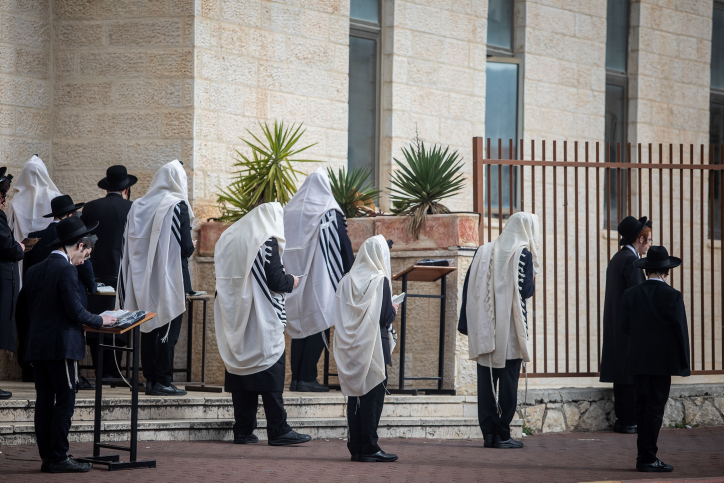
As part of the attempt to return to normal, synagogues, which have been closed for the past few months, are beginning to return. The minyans in the courtyards and balconies are slowly ceasing their activities, and the sound of prayer is beginning to be heard in the synagogues.
We return to the synagogues and have many reflections and insights.
First of all, we now know how to appreciate what was previously taken for granted. For most of us, a synagogue is part of the natural landscape into which we were born. The months we were away from synagogues teach us to appreciate them and to feel their great importance.
Honor of the synagogue
The renewed appreciation should lead to increased care in all things related to the honor of the synagogue. The Book of Psalms states, "We will walk with reverence in the house of God." We must sense the sanctity of the place and behave accordingly.
The Sages say that a synagogue is a 'little temple' – a kind of temple. Entering the synagogue also requires 'a little' of the excitement and holiness of entering the temple.
In our daily lives, we tend to forget this. The synagogue becomes a home, and we enter it without much thought. There is, of course, a positive side to this, but this should not come at the expense of respect for the synagogue and the feelings of holiness that we should feel when we are there.
The phase of returning to synagogues is a good opportunity for us to be even more careful about observing the laws related to behavior in the synagogue, especially during prayer. To refrain from talking during prayer and reading the Torah. To beware of clowning and frivolity, even when not praying. And especially to guard against disputes and quarrels within the Holy Temple.
It would be beneficial for every synagogue to hold a discussion on these issues, and for worshipers to make good decisions about them to strengthen the care for the sanctity of the synagogue and the respect due to the place of prayer to the Creator of the world.
We will not be left behind.
The period of prayer in the courtyards and balconies also brought with it a blessing. We learned to know our neighbors (and their children). We became acquainted with prayer formulas different from our own, the pleasantries of other communities, and the unique customs of the Jewish community. If all year round we preferred to pray in a synagogue of our own denomination and community, in recent months we have not been able to afford this indulgence, we have mixed together, and we have enriched ourselves from each other.
Many Jews who do not normally attend synagogue joined these impromptu minyans. Sometimes they joined in response to a request to complete a minyan, and sometimes they came simply because there was a prayer service right in front of their window or in their yard. We saw many responses that indicated how much these minyans brought joy and connection to Jews who were not regular synagogue goers.
And now, as we return to the synagogues, will we leave them behind?! For two months, they prayed with us, sang with us, joined us in prayer and reading the Torah – will we abandon them and go each to his own synagogue?! God forbid! This is the opportunity to invite our dear neighbors to come to the synagogue with us and continue to grow the tender seedling that has sprouted and sprouted.
We had a mission to bring holiness into homes and yards, sidewalks and parking lots. The homes and streets have absorbed the Kaddish and holiness, the recitation of the Amen and the reading of the Torah. Now we need to ascend to greater holiness within the synagogues, with all the new sparks that have been redeemed.
 Join the Haredim 10 Facebook page >>
 Join the X page of Haredim 10 >>
 Want more news, videos and stories? Join the Haredim 10 WhatsApp channel >>