The issue of the political perception of the Haredi street has been discussed in quite a few forums, studies, and newspaper articles. The various publications on the subject have a common ground that indicates - despite the semantic gaps between the approaches - the sector's clear inclination towards the right side of the political map. This perception was openly expressed in recent publications surrounding MK Yitzhak Pindros's statements that Rabbi Kanievsky opposes 'concessions in Judea and Samaria.' It seems that a more 'hawkish' statement than this is impossible to come by. However, in these statements that have not received too much publicity - is the Haredi ideology changing the line that has guided it in recent decades, or is it returning to its roots? This would not be pure historical vacillation, but an issue that may be practical in weighty political questions, when the historical position of the Haredi group will be put to the test.
The Grand Master of the Order of the Holy Sepulchre: Do not live outside the 67 lines.
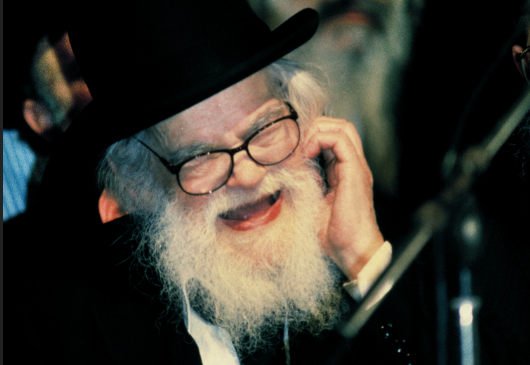
Even the radical right-wingers on the Haredi street will not be able to ignore the fact that their leader in the last third of the last century was not a 'right-wing man,' to put it mildly. The opinion of the late Rabbi, published in his writings and orally, did not differ significantly from the approach of Satmar Hasidism, despite the differences between them. The Gra'am Shach, a student of the Gri'z of Brisk, believed that one should not live outside the 67 borders, for fear of "provoking the nations of the world." Hence the familiar Lithuanian claim that because of this, the city of Emmanuel did not succeed, and therefore it took the city of Beitar Illit many years to be populated by Lithuanians, who to this day are in the minority compared to the Hasidic and Sephardic majority. It is also said about the largest Lithuanian city in the world - Modi'in Illit - that the developers deceived the Grand Rabbi, and presented him with fake maps, according to which the city was within the Green Line - out of fear that Rabbi Schach would reject the project. Another legend holds that Nati Grossman, editor of the mythical Yated, and one of the most powerful people on Lithuanian streets at the time, purchased an apartment for his daughter and son-in-law in Kiryat Sefer, but he himself never entered there in protest of the fact that they lied about Rabbi Schach. Are these stories true? It is difficult to know, but their narrative, as well as the open words of the Grand Rabbi Schach zt"l in his sermons and letters, leave no room for doubt regarding the views of the leader of the Lithuanian community at the end of the last century.
All in all, back to what it was
However, the supposed retreat of the ultra-Orthodox street from the positions of the Grahm Schach are nothing more than a return to the perception that prevailed before his leadership. However, this piece of historical information, for some reason, is almost unknown. This is not a historical research article, but I cannot avoid briefly mentioning the perception of the Torah scholars on the matter. Maran Mashgich Rabbi Yehezkel Levinstein zt"l believed that the six-day miracles should be mentioned twice a day, as was the case with the Exodus from Egypt, because since the Exodus from Egypt, such great miracles have not occurred for the people of Israel. Rabbi Brand - a student of the Ponevezh Yeshiva - says that after the passing of Rabbi Levinshtein, Rabbi Schach changed, and said in the yeshiva, "Shmues," the attitude of the Satmar Rebbe that it was Satan who defeated the Arabs! Maran Gaon Rabbi Moshe Mordechai Epstein, who supported immigration to the Land of Israel, said: "The immigration of the Knesset Israel-Slobodka Yeshiva to the Land of Israel was one of the stops on the way for Haredi settlement in the Holy Land. This was a deliberate intention." Thus, Maran Gaon Rabbi Moshe Mordechai Epstein wrote to his brother-in-law Rabbi Zvi Pesach Frank about the idea of immigrating to the Holy Land: "It is forbidden to leave the settlement enterprise to the Zionists." Even the greatest of the Zionist movement's opponents, Maran HaGarich Sonnenfeld, believed that the redemption of Israel was the settlement of Jews in Palestine. After the rabbis' journey to the flourishing agricultural colonies in the Land of Israel, he wrote 'Itchelta Degeula', and about the settlement of the city of Hebron by Jews, Rabbi Sonnenfeld wrote: "And it is almost fitting to call it: 'Itchelta Degeula', to make this holy city a place of Torah and worship properly." This quote from HaGarich Sonnenfeld is particularly important. Indeed, the HaGarich wrote his words after the riots of 1919 - in which dozens of Jews in Hebron were murdered and slaughtered. Nowadays, the students of the Grahm Shach do not live in Hebron, probably for fear of "provocating the nations," but the Grahm Sonnenfeld, as the scriptures show, had no fear of this at all.
The Rebbe of Gur: Not a Zionist Issue
And what is happening in the Hasidic world? The opinion of the Lubavitcher Rebbe zt"l seems to be known to everyone, but it turns out that the Rebbe of Gur zt"l - the author of the Amiri Emet, also supported the establishment of a Jewish settlement, with all that this implies, in the Land of Israel. We learn the Rebbe's opinion from a letter written by Rabbi Yitzhak Gershtenkorn, the founder and first mayor of Bnei Brak, from 1931. In a letter to his friend Rabbi Yisrael Zissel Dvoretz, the director of the bank in Hebron and the director of the Slobodka Yeshiva, he pours out his heart's anguish, which many yeshiva heads ask him: "What is this work to you? Establishing a settlement with a bank, a factory and orchards is a matter for the Zionists, and we must preach Torah and glorify it. "The first question of this kind," says the mayor, "was asked to me by the Rebbe of Gur, Shlita, in 1951, when I proposed to him my plan for the establishment of Bnei Brak. And I replied to him at that time: 'Sir, wasn't the Rebbe in the Land of Israel and must have heard at night at 12 o'clock how the bells ring in the Muslim mosques and call to prayer, at the same time that the righteous of the land sit on the ground and weep over the destruction. "And here is the war between those who lament the exile of the Divine Presence and those who reject impurity, which has been going on for hundreds of years until the satra achra despaired of victory, and here is another way - to wage a civil war by bringing to the Holy Land Jews who are destroying and destroying. How can we look like we are swallowing the Holy Land and remain silent?" And the writer of the letter testifies: "The Rebbe Shlita of Gur recognized my claims as being from the depths of my heart and promised me his help, and immediately paid me 10 liras in cash for a plot of land in Bnei Brak.".
Where did these voices go?
As mentioned, for some reason, these historical pieces of information are unknown. The attitude of the authorities on the Haredi street is that despite the clear inclination of the majority of Degel HaTorah and Shas voters to side with the hawk, Torah greats such as the rabbi Gra"m Shach zt"l and the Gra"a Yosef zt"l leaned towards the Ionian. The fact that a significant portion, and perhaps the majority, of Torah leaders in previous generations were in favor of Haredi Jewish settlement throughout the borders of the Land of Israel has almost been "erased" from the collective Haredi consciousness. Who took care to hide these pieces of information? Why did Pindarus' announcement not receive massive media coverage? This would require extensive sociological-narrative research. • Israel Shapira is one of the leaders of the Haredi content and history website - 400

 Join the Haredim 10 Facebook page >>
 Join the X page of Haredim 10 >>
 Want more news, videos and stories? Join the Haredim 10 WhatsApp channel >>