One of the most prominent features of the Tishrei holidays is the emphasis on Jewish unity. During Passover, the focus is on the family unit. The central event of the holiday, the Seder, is held at home, within the family circle, and the main focus is on passing on tradition and heritage from father to son.
In contrast, the main events of the Tishrei holidays take place in the synagogue, with us all gathering together.
The shofar can be blown at home on Rosh Hashanah, but the special power of the occasion is expressed in the synagogue, when crowds of Jews stand together and listen to the rising sound of the shofar. This is the case with the prayers on Yom Kippur, which are characterized by crowding shoulder to shoulder in the synagogue.
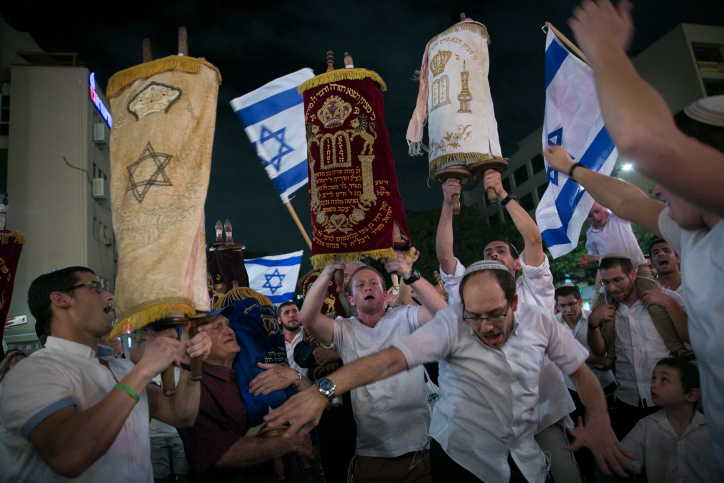
And so is Simchat Torah, where joy sweeps the crowds into dancing with Torah scrolls.
Even Jews who do not make the habit of coming to synagogue on Shabbat throughout the year feel an inner need to come to it on Rosh Hashanah, Yom Kippur, and Simchat Torah. Within them, too, a deep urge awakens to connect with the Jewish collective, which blows the shofar, pours out a discourse before the Creator of the world, and dances with love on Simchat Torah.
The beating heart
These holidays reflect our collective heartbeat, beyond being individuals, living each day in their own homes, with their friends and family. The influx into synagogues during the Tishrei holidays expresses the inner longing to be part of this togetherness and the shared experience that unites all members of the Jewish people.
It turns out that this need to connect with the Jewish collective is stronger than the prevailing trends today, which shift the emphasis from the collective to the individual. In the past, the individual felt himself part of the collective, and it was clear to him that the needs of the collective outweighed his personal aspirations.
Today, the focus is on the individual, on the particular, on the singular, and the prevailing perceptions today foster personal interest and the fulfillment of personal desires.
And here come the holidays of Tishrei and prove that deep within our souls we seek to feel part of the whole, to merge within the heart that beats in the depths of our collective being as a Jewish people. The individual comes to the synagogue, among other things, to be part of a Jewish community, part of Jewish unity.
When the partitions fall
It is important to remember this all year round, as we return to the daily debates and divisions into groups, communities and camps. Sometimes it seems that the Jewish people are splitting into tribes, each living within their own inner circle, and not necessarily feeling part of other social circles.
It turns out that this is only a superficial impression.
Deep down, we are Jews first and foremost, connected at the navel to Jewish identity. The routine of everyday life can make us forget this truth a little, but there are always times when Jewish unity is reawakened. This can happen during an external threat, such as war (not against us), and it happens every year during the holidays of Tishrei, when all the barriers suddenly fall, and the Jewish point within us bursts forth and shines.
It is exciting every year to watch the crowds dancing with enthusiasm on Simchat Torah. Fathers carrying children on their shoulders. Makeshift kippahs alongside shtreimels. Men and women lovingly kissing Torah scrolls.
Yes, that's who we are. Jews.
 Join the Haredim 10 Facebook page >>
 Join the X page of Haredim 10 >>
 Want more news, videos and stories? Join the Haredim 10 WhatsApp channel >>