In the recent heated debate about the new trends in the IDF, the argument that this creates difficulties for observant soldiers is heard most often. This is certainly an important argument, but it is not the main one.
For us, as believing Jews, there is an issue here that goes beyond the plight of religious soldiers, and concerns our very existence.
Since the beginning of the establishment of the state, and in fact even before, a struggle has been going on here over the image and character of the Jewish state.
The believing public fights for the Sabbath, kashrut, marriage and divorce according to the law of Moses, registration of Judaism, and the like – not so much for the needs of the religious public, but from a pan-Jewish perspective, which is the right thing for the very existence of the state.
The sanctity of the camp
As true as this principle is with regard to the Jewish character of the state in general, it is doubly true with regard to the IDF. Kashrut and Shabbat are observed in the IDF not only to allow religious soldiers to serve (because their unique needs can also be met in other ways), but from the perception that this is the minimum foundation necessary for it to be a Jewish army, upon which God's blessing rests.
The Jewish worldview establishes clear things regarding the nature of the army.
It should be holier and purer than civil society – "and your camp shall be holy." Precisely because military service involves risking one’s life, it requires more of God’s blessing, and therefore it should be conducted more in accordance with the will of the Creator.
In this sense, the new trends penetrating the IDF are no less serious than the desecration of the Sabbath and the trampling of kashrut.
They introduce destructive elements into military life and move it even further away from a place of holiness and purity.
This requires an uncompromising struggle and turning heaven and earth to stop these dangerous trends.
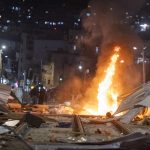
It is difficult to understand religious figures and heads of preparatory schools who were quick to condemn the style of the cry made about this dangerous process. The house is going up in flames, and here they are concerned with the question of whether the cry "Save!" is said in the right style and in the right tone.
Have they truly turned a blind eye to the spiritual abyss into which they are dragging the entire army?! And is it necessary at this time to deal with matters of style, manners, and conduct?!
More confidence
Jewish law is not limited to matters of kosher and Shabbat. It also has something to say about the character and conduct of an army.
Although we have not yet been blessed with the Jewish state being faithful to the values of the Torah, we certainly cannot allow the army to become the leader of trends of destruction and lawlessness, like the corrupt nations.
The voice of Judaism must be heard on this issue with all its strength and determination, and it is not enough to simply present the correct position, but we must use all the levers of pressure to stop these destructive trends.
We are convinced that the purer and holier the army is, and the higher its soldiers and commanders are at a spiritual level, the more we will merit God's blessing in the tasks assigned to the army.
The Torah explicitly states: "For the Lord your God walks in the midst of your camp, to deliver you and to give your enemies over to you," and this is the reasoning for the need for "your camp to be holy.".
The sanctity of the army means fewer casualties, more victories, and more security for all residents of the country.
 Join the Haredim 10 Facebook page >>
 Join the X page of Haredim 10 >>
 Want more news, videos and stories? Join the Haredim 10 WhatsApp channel >>