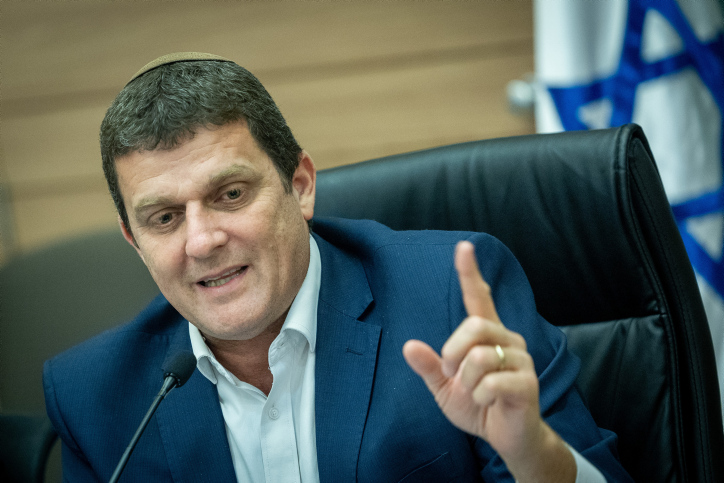
A member of the Foreign Affairs and Defense Committee, MK Amit Halevi, claimed today (Sunday), in an interview with Reshet B, that "the army must change its attitude towards democracy" - this after Prime Minister Benjamin Netanyahu's compartmentalization took place during the war on issues related to the fighting in the Gaza Strip.
Halevi said: "We are after a war in which there was compartmentalization of the prime minister and conversations behind his back - these things should not happen in a democracy. The army is not a private militia, neither Herzi Halevi's nor Eyal Zamir's.".
When asked what conversations took place behind Netanyahu's back, he replied that these were, he said, "conversations with international officials.".
He added and claimed that there was "compartmentalization of the Prime Minister not only on the evening of October 7, but throughout the war, on various issues related to activity in the Gaza Strip.".
Referring to the night of October 7, Halevi said: "On the evening of October 7, I think we all saw Ronen Bar's affidavits, including the commander who was with him at 3 a.m., as he described to the High Court of Justice. All these things, as they say - how did he define them in the affidavit? They feared that there would be some 'leakage' to a multi-layered event, but somehow one person in Jerusalem, Benjamin Netanyahu by name, decided not to update him on the issue of a leakage to a multi-layered event.".
When asked about establishing a state investigation committee, he replied: "First of all, what is important is to make amends, and the main task today facing the Chief of Staff is not only to find those responsible for the past, but mainly to make amends for the future. Two or three months after October 7, I approached my friends in the opposition with the proposal, which, by the way, is now being rolled out as a bill by Moshe Saada and Ariel Kellner - to create a private committee. Yes, this is an old proposal of mine.
""Unfortunately, my friends in the opposition opposed it, they didn't want it. And to this day, I say this with both sadness and astonishment, because ultimately, as you said, we want a commission of inquiry in which everyone can ask all the questions.".
He added: "A state investigation committee, as soon as it is appointed by the Supreme Court, in fact by someone who calls himself the President of the Supreme Court, this will lead to - you know exactly why, and everyone knows. And I think it's worth hearing all sides, by the way, that's the purpose of an investigation, of seeking the truth, of demanding and investigating all sides.".
 Join the Haredim 10 Facebook page >>
 Join the X page of Haredim 10 >>
 Want more news, videos and stories? Join the Haredim 10 WhatsApp channel >>