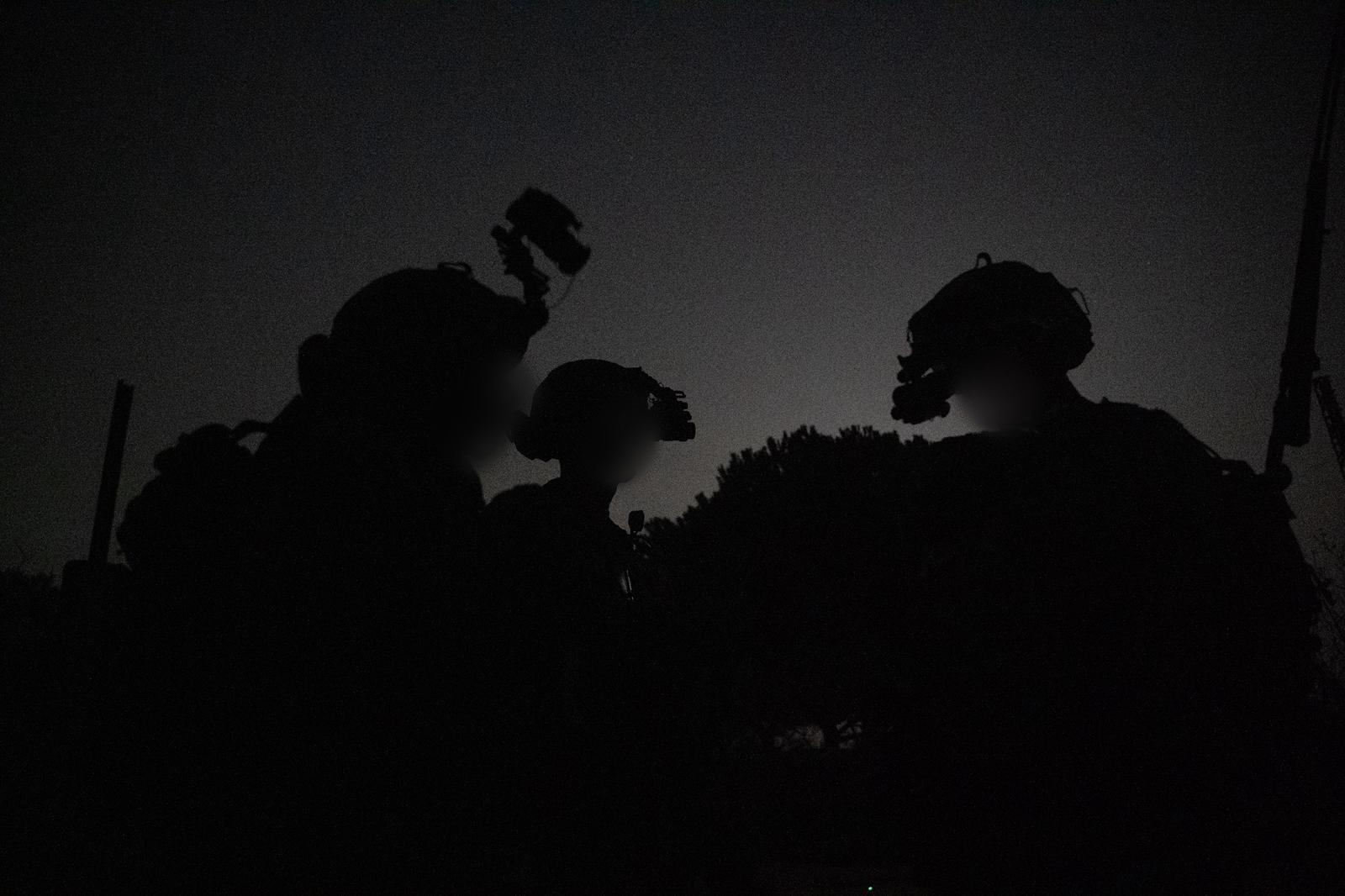
The first entry of the paratroopers into southern Lebanon in Operation "Raven's Roar" was led by the patrol.
The drone team focused on the Bint Jbeil area to gather intelligence.
""We positioned ourselves together with the horizontal force - collecting through traditional means, and from there we began to build a situational picture," said Sergeant R., a soldier in the team, in an interview withSivan Schwartzman from the IDF website.
What he actually describes are the moments leading up to the patrol's operation in one of the largest cities in southern Lebanon: "In the first phase, we activated attack drones, suicide bombers, and launchers. In this way, we identified 15 armed terrorists, and we closed a circle around them. In my mind, each one of those I identified is worth one less encounter for the teams operating in the area.
""In the second phase, we focused on destroying suspicious locations using large cargo drones and hundreds of kilograms of explosives.".
Sergeant R's team was tasked with destroying the 'Casbah' area. "It was not possible to bring in infantry forces there, because it is an extremely dense area that makes movement difficult, so we came out very strongly.".
The area's air superiority provided the fighters with control that would not have been possible otherwise, and thus the mission was successfully completed. "The mission of each squadron stood out in this activity. Whether in the exposure and attack, the raids, or the sabotage, everything worked in maximum synchronization - with minimal risk to our forces thanks to the use of drones," the fighter shares.
In the lead-up to the withdrawal, changes in Hezbollah's activity patterns in the area could be seen. In the early days, the terrorists would move in squads from a specific "nest," where the forces were able to carry out targeted ambushes. But slowly, they withdrew from the city area - and dispersed.
In parallel with the patrol's "gliders," the fighters of the Falkhaan - the engineering and sabotage company - also operated.
As their helmets, vests, and uniforms dried on wooden beams from the rain, they recalled a memory from one of the days of fighting: "Once, we received food packages from the country. In one of them we found a letter from a little boy who wrote, 'Thank you very much for looking after us,' and attached a phone number. So one of my friends called him and we talked to him for a bit - and it was truly a sweet moment that warmed the heart.".
 Join the Haredim 10 Facebook page >>
 Join the X page of Haredim 10 >>
 Want more news, videos and stories? Join the Haredim 10 WhatsApp channel >>