The State Attorney's Office filed two indictments today (Wednesday) with the Beersheba District Court in a serious case of organized, systematic, and sophisticated smuggling of various goods into the Gaza Strip in exchange for money - at a time when IDF activity in Gaza continues even after the ceasefire and when hostages are being held in the Strip by Hamas.
According to the prosecutor's office, "the defendants committed their actions while aware of the possibility that the prohibited goods would reach the Hamas organization, when they anticipated that it would be a near certainty that it would be worthwhile to assist the enemy in its war against Israel, given its strengthening, including economic, as a result of their actions - and for this reason they are charged with the offense of 'aiding the enemy in war'.".
The indictments filed by attorneys Hila Dreamer-Yair and Elia Fox of the Southern District Attorney's Office indicate that the smuggled goods included cartons of cigarettes, iPhones, batteries, communication cables, auto parts, and more, worth millions of shekels.
The statement from the Prosecutor's Office stated: "During the period of the events - starting in the summer of 2025, the Gaza Strip region was still at war, was declared a closed military area, and entry into it was permitted by security forces for operational needs only.
""In regulated goods crossings, the permit is examined as part of a regular inspection process, both with regard to the actual entry and with regard to the quality and quantity of the goods being brought into the Strip.".
According to the Attorney General's Office, "In the security reality that developed in the Gaza Strip, control over incoming goods was of paramount importance to Hamas, with its efforts in this regard including taking control of goods entering Gaza as well as "taxing" the goods in a variety of ways - all as part of its efforts to preserve its survival and restore its rule and power.".
""In addition, Hamas worked to smuggle prohibited products, both for its own use and for sale to Gazans," the prosecutor's office added. "Thus, Hamas caused excessive price increases, while the profits from the sale of the products enabled it, among other things, to pay salaries to terrorists and to recruit new terrorists.".
According to the Attorney General's Office, "a major prohibited commodity smuggled into the Strip is tobacco and cigarettes, which have brought Hamas a total of hundreds of millions of shekels into its pockets since the beginning of the war, in a way that helps it, among other things, maintain economic survival and a government grip on the territory.".
The indictments were filed against Eliran Al-Grabli, 38, of Kiryat Gat, his brother Avi Al-Grabli, 41, of Kiryat Ata, Imad Al-Din Abu Moch, 55, of Baqa al-Grabiya, Ofer Sankar, 41, Yosef Yochananov, 39, Yuri Yaqubov, 42, Menachem Abutbul, 39, and Nadav Halfon, 30, of Kiryat Gat, Meir Levy, 26, of Betar Illit, Oshri Dahan, 39, of Talmei Eliyahu, Yaron (Benny) Peretz, 52, of Ne'am, Atar Even, 37, of Shchedrin, and the Anona company owned by Avi Yaron.
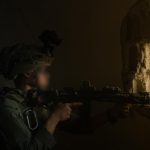
The defendants, some of whom are reservists, worked with others to smuggle prohibited goods into the Strip in a systematic and sophisticated manner, while exploiting the weaknesses in the crossings and military activity in the area, and while presenting false representations of entering the Strip as part of legitimate security activity.
The indictments detail the type of goods that were smuggled and the proceeds received in Aden.
In the initial stages, the type and cost of the goods were coordinated. After obtaining the required goods, Eliran Avi, Yaron, Menachem, Ofer and Emad - who often also served as suppliers of the goods - carried out the smuggling, coordinating the execution with the perpetrators, who included, among others, Ofer, who knew most of the defendants, Yosef, who worked for some of them, Nadav, Atar, Yuri and Meir, who were then in reserve service, and Oshri, who owned a warehouse in Telmei Yosef.
After the goods were delivered to a meeting point, they were transferred for repackaging and camouflage, loading, and transportation along a predetermined route. These operations were carried out using camouflage measures, including military clothing and the presentation of IDF-related activity.
After crossing the border, the goods were placed at an agreed-upon delivery point within the Strip, in accordance with coordination with the Gazan authorities and the operatives returned to Israeli territory. In some cases, the goods were brought into the Strip in exchange for payment to the defendants, who were serving in active reserve service at the time, and are accused of accepting bribes.
Yaron Eliran and Avi also contacted Amir Halperin, who was, among other things, responsible for transporting the goods into the Gaza Strip, to assist in bringing the goods in.
In addition, Menachem approached and offered a bribe to Bezalel Zini and Avial Ben David, who were then serving in the reserves in the "Uriah Team" and had authorization to bring convoys of equipment into the Strip, and suggested that they carry out the smuggling in exchange for a portion of the profits.
On one occasion, Menachem delivered a carton of cigarettes to Bezalel Zini's car, and from there Bezalel and Aviel transported the goods into the Gaza Strip.
In all the smuggling operations, the defendants or others on their behalf entered the Gaza Strip with the goods using false representations, in the face of the military forces, that the entry was for security purposes. The defendants and others knew that the smuggled goods could reach terrorist elements, including Hamas or those on its behalf, and be used and aided in strengthening their power and promoting and financing their operations.
According to the indictment, the defendants committed the acts detailed in the indictment for financial gain, knowing that in their actions they were circumventing the restrictions imposed by the State of Israel on the entry of goods into Gaza as part of the war effort, and despite the clear security damage inherent in their actions.
All of the defendants were charged with the offenses of aiding the enemy in war, prohibiting the use of property for terrorist purposes, receiving something by fraud under aggravated circumstances, and giving a bribe.
Liron, Menachem, Nadav and Atar were also charged with the offense of taking a bribe. The defendants were also charged with tax offenses, as well as offenses under the Anti-Terrorism Law.
The prosecution filed a request to seize the defendants' property, including vehicles, real estate assets, funds in bank accounts, and more.
The case was investigated by the Southern Military District and the Shin Bet.
Additional indictments in the case are expected to be filed in the coming days.
 Join the Haredim 10 Facebook page >>
 Join the X page of Haredim 10 >>
 Want more news, videos and stories? Join the Haredim 10 WhatsApp channel >>