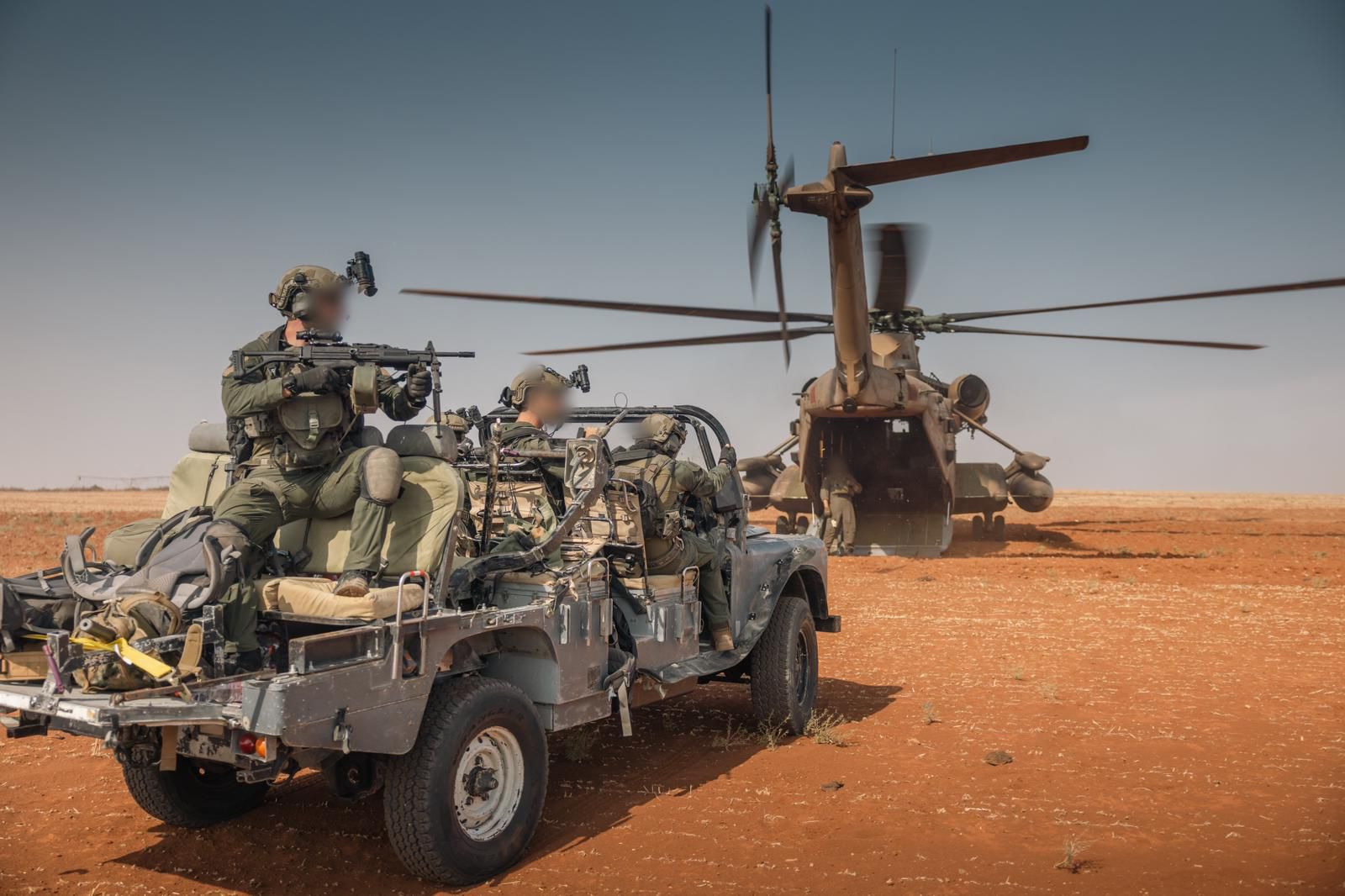
After completing the internal investigations within the security establishment following October 7: The Air Force today (Thursday) unveiled a series of systemic changes aimed at optimizing the response to any sudden attack scenario.
The changes include a new mission definition, extensive operational adjustments, and the decentralization of attack powers.
In accordance with the decision of the command echelon, the mission of "protecting the borders of the State of Israel" has now been added to the official designation of the Air Force - a component that did not exist in the past.
As part of the change, the name of the helicopter and participation group was also changed to the new name: "Participation and Borders Group.".
In terms of operational readiness, the IDF has determined that the Air Force will have at least 50 combat helicopters ready for action at any given moment - a change of direction compared to a previous plan to dramatically reduce the combat helicopter fleet.
In addition, a technological solution was implemented that allows pilots to make emergency calls directly from the cockpit using a mobile phone, and all squadrons were distributed with telephone numbers for all aircrews throughout the country.
One of the key innovations lies in the attack policy: fighter jets, attack helicopters, and drones have now received more flexible attack powers - even near civilian areas.
Thus, in cases of an explosive attack, it is more appropriate to carry out attacks within a range of about 100 meters from residential buildings in Israel, provided that the residents are in protected areas.
At the same time, command procedures were updated so that not every incident will be operated directly from the "pit" in the Kirya: in certain cases, field management authority will be transferred to UAV operators or pilots who are on the scene itself.
For deterrence purposes, the possibility of using measures such as scare tactics and supersonic booms was defined, even without a direct attack, at the discretion of the field commander.
The IDF also redefined the landing array for rapid intervention forces: dozens of operational landing sites were designated in all border sectors, and in the Judea and Samaria region alone, over 500 landing sites were designated, allowing helicopters with a rapid reaction force to land in the event of an unusual event.
The readiness of all Air Force formations increased significantly compared to the period before the attack: general readiness increased by more than 250%. Combat armament readiness by 275%. Combat helicopter readiness doubled. The air intervention formation was reinforced and expanded.
The IDF clarifies that all of these changes are intended to dramatically shorten response times - so that the time between making the decision to launch a fighter jet and attacking an operational target will be only a few minutes.
As part of the lessons learned, a dedicated fire center is currently being established at the Central Command, which will coordinate intelligence and operational data in real time and enable rapid synchronization between all fire elements, from the tactical echelon to the senior command.
In addition, a dedicated target bank was established at Central Command for the Air Force, a capability that did not exist in the past, allowing for precise adjustment of air operations to ground needs.
During the fighting, a new cell called "Oz" was established at the Air Force Headquarters, which operates continuously throughout the day. The cell's purpose is to provide a rapid and coordinated aerial response to all sectors in real time, while strengthening operational control and direct liaison with the ground forces.
In the technological field, the IDF's drone capabilities have been expanded extensively: in the past year, over 12,000 people have been certified to operate drones - for reconnaissance, attack, and logistics.
Hundreds of heavy drones were integrated into combat operations in Gaza and Lebanon, and 1,500 drop drones were put into use. The training system was expanded, and dedicated schools were established for the study and training of operators.
As part of the IDF's preparations for extreme events, a large-scale exercise called "The Roar of the Harrier" was held. Two divisions and approximately 180 aircraft participated in the exercise, and more than 40 complex scenarios were examined.
In the first hour of the exercise, 97 targets were attacked by the Air Force - a move designed to simulate an immediate response to an explosive event.
short:
• As part of the lessons learned from October 7, a fire center is being established in the Central Command, aimed at improving the synchronization, speed, and accuracy of fire operations in the Central Command sector.
• Following October 7th - a number of changes were made that were intended to facilitate and improve communication between the air and ground forces, including adding a telephone to the pilots' helmets and distributing the phone numbers of all the air force personnel in the country to all squadrons.
• On October 7, one cell was operating at the Air Force Headquarters. During the war, a new cell, 'Oz', was established, which operated throughout
24/7 and its purpose is to provide rapid air cover to all forces fighting in the various sectors.
• The information transfer route during an explosive event has changed, and today there are 5 routes for creating contact and transferring information, up to the use of civil communications to link the forces operating the event in the air and on the ground.
• Pilots will be able to attack armed groups on their own accord, suspected infiltration routes into our territory will be bombed within minutes, about 1,000 landing pads have been set up near the borders, companies on alert will be launched in Hercules, and intervention teams from elite units will be activated automatically.
• As part of the lessons learned and preparedness for the next threat, the 'Harry's Roar' exercise was held, in which two divisions, approximately 180 aircraft, and more than 40 extreme scenarios were tested. In the first hour of the exercise, 97 targets were attacked by the Air Force.
• As part of the lessons learned, a significant increase was made in the number of tools and in shortening the time it takes for them to arrive. The general readiness of all Air Force assets today increased by over 250% compared to the readiness on October 7th.
• Combat armament readiness increased by approximately 275%, reconnaissance readiness doubled, armament readiness increased to over 200%, and intervention helicopter readiness increased to over 400%.
• A reconnaissance squadron is scheduled to move north to raise the alert level in the sector.
• As part of the defense concept and drawing lessons from October 7, the 'Gilead' formation was established out of the understanding of the need to concentrate forces in the eastern sector for the defense mission.
• Over 8,000 people were certified on drones in the past year, with a total of over 12,000 people having been certified since the beginning of the war. The certifications were carried out on reconnaissance, attack and heavy-lift drones.
• In addition, this year, a drone logistical response capability was introduced into the ground wing, which operates in both Lebanon and Gaza. Hundreds of heavy drones were distributed and took an active part in the fighting, both in the logistical response and in neutralizing and opening routes.
• Approximately 6,000 drones were purchased and used for combat reconnaissance purposes, approximately 2,000 drones were produced and used for attack purposes, and over 1,500 drop drones entered service.
• In order to support the scope of the activity, training branches and schools dedicated to drone training were established in the past year.
• The Air Force has introduced a new command for an enemy invasion situation similar to what occurred on 7.10: The name of the new command is "Thunder", and it replaces the "Palestinian Infantry" command. This is a command whose name will be the same in all sectors, and any regional division commander will be able to activate the command in a situation where the enemy force that has invaded the areas of his sector is larger than the IDF forces in his sector.
 Join the Haredim 10 Facebook page >>
 Join the X page of Haredim 10 >>
 Want more news, videos and stories? Join the Haredim 10 WhatsApp channel >>