We are familiar with Yom Kippur prayers in community centers, malls, tents, and shelters, but this year a new phenomenon will occur in our country, the likes of which have probably never been seen before – prayers in the open air.
Jews dressed in white, wrapped in white shawls, will stand in the courtyards of buildings, in public parks, in shady squares, and from there the 'Kol Nidrei' prayer will echo throughout the surrounding area.
There is no doubt that there is a special splendor in the atmosphere of the synagogue, but it may turn out that there is also an advantage to praying in the open air. Over the past six months, we have learned that many Jews who did not usually go to the synagogue on Shabbat and holidays to pray, felt comfortable and at ease joining the local courtyard minyan, and there they discovered the beauty of prayer.
The excuses will fall away.
'The 'open synagogues', which have been established in recent years, are intended to provide a solution for the masses of Jews who did not feel comfortable coming to a synagogue, where they feared feeling like strangers. In the regular synagogue, there are places reserved for regular worshippers, and there is not always a suitable place for guests. The lack of familiarity with the prayer procedures is also a deterrent. In the 'open synagogue', however, everyone is equal, and there is also guidance and explanation of the prayer process.
And there are still many for whom even going to the 'open synagogue' is not part of their world. "I've never prayed," "I'm not religious," "I don't connect" - these and similar reasons you'll hear from these people. And sometimes it's just habit, and those who are used to spending Yom Kippur at home continue to do so.
But when the prayer is held in the courtyard of his house, and his neighbors and acquaintances gather there, all excuses fall away, and he too comes and joins in. Here it is natural for him to come and be part of the prayer.
There is no doubt that these minyanim will be attended by crowds of Jews who are joining in the prayers of the holy day for the first time, and thus something good will emerge from the oppressive restrictions.
Volunteering in times of emergency
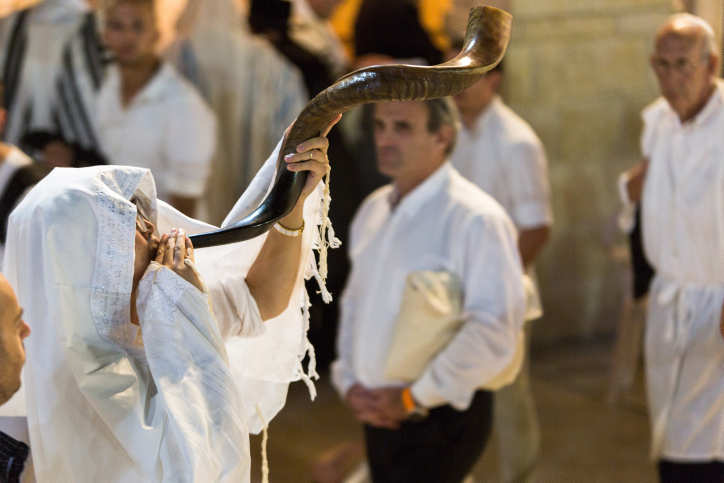
But this reality requires great preparation. This year, many more cantors, Torah readers, and shofar blowers will be needed. These will not necessarily be found in every minyan. Now is the time to volunteer. Anyone who is able to fulfill these roles, even if they are not a great cantor or a perfect Torah reader, should offer themselves to the minyans in need.
During the Six-Day War, the rule was applied - "Every pair of wings flies." Fuga aircraft, used for training, were converted for combat use and armed with rockets, bombs and machine guns, and were used to attack enemy forces. In emergency situations, there are no arbitrators, but all available means are used. This is the situation these days.
It should be announced in every city and town that courtyard minyans who need help with their prayers will receive it. Even those who have a permanent place in a synagogue, but can serve as a cantor or Torah reader in a minyan that needs it, should volunteer to do so. There is no doubt that their prayer will ascend to the one sitting on high much more than the permanent seat in an air-conditioned synagogue.
This is a wonderful opportunity to create a true connection between all parts of the people, and to have the opportunity to sign and conclude a good signature for a happy and sweet new year – Twas thatNat Pas a sign of AWe saw.
 Join the Haredim 10 Facebook page >>
 Join the X page of Haredim 10 >>
 Want more news, videos and stories? Join the Haredim 10 WhatsApp channel >>