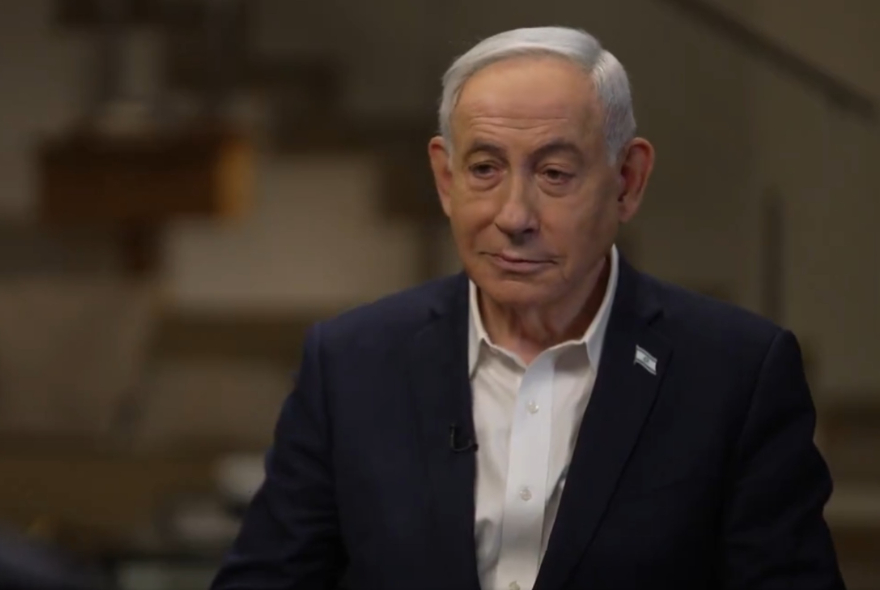
Prime Minister Benjamin Netanyahu gave an interview to the American CBS network's '60 Minutes' program last night (Monday) and addressed the war in Iran, negotiations on the nuclear program, and the fight against the terrorist organization Hezbollah.
During the interview, Netanyahu said that Israel has achieved significant achievements, but emphasized that the mission is not yet complete.
""I think we've accomplished a lot, but it's not over. Because there's still nuclear material, enriched uranium that needs to be taken out of Iran. There are still enrichment sites that need to be dismantled. There are still 'proxies' that Iran supports, and ballistic missiles that they still want to produce. Now, we've hit a lot of that, but all of that is still there, and there's work to be done.".
Regarding the attempt to replace the ayatollahs' regime, Netanyahu said that it is impossible to predict when the regime in Iran will fall - but it is possible. "I did not tell Trump that it is guaranteed. We said that there is a danger in taking action, but a greater danger in not taking action.".
Netanyahu later added: "The Strait of Hormuz problem has been understood over time. I do not claim to have predicted it.".
Netanyahu expressed the opinion that the Iranian regime's days are numbered, but made it clear that he did not know how long the war would last, and did not want to set a timetable. He said it would not take years, or perhaps even months.
Netanyahu referred to the situation of Supreme Leader Mojtaba Khamenei and said: "He is being held in a secret bunker, and I think he is trying to consolidate his power. He does not have the power that his father had.".
Netanyahu insisted on focusing on the achievements that would be attributed to him after October 7, especially in the Iranian arena where, according to him, many achievements were achieved in a short period of time.
Netanyahu said: "I'm not going to talk about military means, but what President Trump told me is, 'I want to go in there.' And I think it can be done physically, that's not the problem. If you have an agreement, and you go in and take it out - why not? That's the best way.".
Regarding the war against Hezbollah, Netanyahu emphasized that it must be separated from the war in Iran. Netanyahu was asked if he would accept a ceasefire on both fronts and replied in the negative.
When asked if he would agree to a ceasefire even in the event of pressure from the President of the United States, he replied in the negative, saying: "They want to harm our communities. If the regime in Iran weakens or is overthrown, it will be the end of Hezbollah and also of Hamas and the Houthis.".
Later in the interview, the Prime Minister was asked about the weakening of support for Israel among the American public and claimed that social media plays a central role in this. "Israel is under siege on the propaganda front. There are a number of countries that have manipulated social media to harm Israel.".
He said, "Israel made every effort not to harm innocent civilians. This is a war, and in war, armies sometimes make mistakes and civilians are killed. These are mistakes and not intentional.".
In an interview, Netanyahu claimed that the current situation allows for the expansion of existing agreements with Arab countries. "I hear from Arab countries that I won't go into detail, but they want to strengthen the alliance with Israel, and it's stronger now than before the war. I'm telling you that the degree of economic cooperation, energy, artificial intelligence is great, and they see the possibility of sharing the fruits of these successes.".
 Join the Haredim 10 Facebook page >>
 Join the X page of Haredim 10 >>
 Want more news, videos and stories? Join the Haredim 10 WhatsApp channel >>